
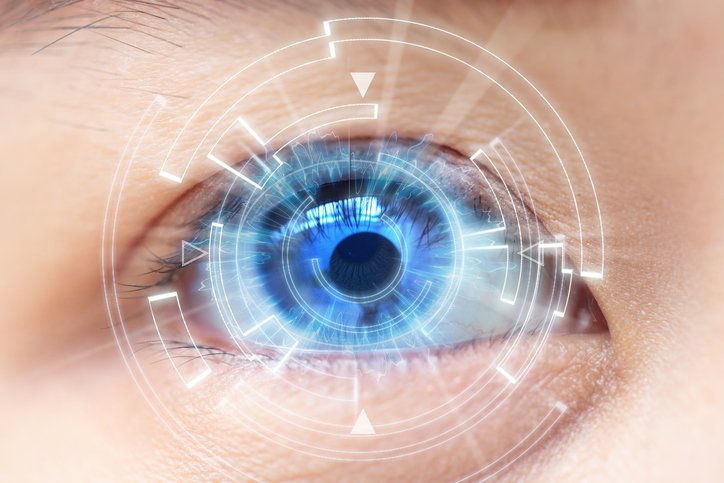
For generations, we’ve described the eyes as “windows to the soul.” Today, science is showing they may also be windows to the heart, brain, and body.
A recent U.S. News & World Report article highlighted emerging research that retinal scans can predict cardiovascular risk by mapping subtle changes in the eye’s microvasculature, a network of blood vessels responsible for providing nutrients to eye tissue including the retina. These findings add to a growing body of evidence that retinal imaging is rapidly evolving from a tool for eye disease detection into a powerful, non-invasive gateway for understanding overall systemic health.
The retina’s unique advantage
Unlike any other part of the body, the retina allows clinicians to directly visualize the body’s smallest blood vessels without ever having to make an incision. This imagery makes it a natural early-warning system for microvascular disease, the same process that drives heart attacks, strokes, diabetes, complications, and even some neurodegenerative conditions.
Blood vessels are the same size in the brain, kidneys, and other parts of your body as they are in the eyes. Changes in vessel width, branching and tortuosity, also known as twisting or bending of the vessel, can reveal inflammation or oxygen stress long before a patient feels any symptoms.
From the exam room to the whole-body dashboard
Artificial-intelligence (AI) models can now analyze high-resolution retinal photos to estimate “vascular age” and calculate risk for cardiovascular disease with accuracy that rivals traditional blood-based screening. Similar algorithms are being trained to detect signals for diabetes, hypertension, kidney disease, and cognitive decline, making eye exams crucial when it comes to preventative health.
These technologies could transform a routine vision exam into an early-detection touchpoint for multiple chronic conditions. In a single 15-minute visit, an optometrist may soon be able to identify not only glaucoma or macular degeneration, but also markers of systemic disease long before laboratory values shift.
Retinal imaging and Alzheimer’s: A look ahead
Beyond heart health, researchers are finding links between retinal structure and neurodegenerative disorders such as Alzheimer’s. Studies from Duke University and the UK Biobank show that changes in retinal vessel density and thickness can correspond to cognitive impairment, opening the door to vision-based cognitive screening in the near future.
This research suggests that eye exams could one day help identify patients at risk of Alzheimer’s or other dementias years before symptoms appear, and early enough for lifestyle or pharmacologic interventions to make a huge impact. The role of optometrists is changing from being protectors of sight, to sentinels of systemic health.
What it means for optometrists and vision-benefit providers
For practicing optometrists, this evolution is both empowering and urgent. We are poised to play a pivotal role in multidisciplinary health care. We are pivotal in connecting patients to primary-care physicians and specialists through the insights gleaned from the retina.
We see this as a transformational opportunity. Our mission has always been to empower independent optometrists and expand the value of vision care. Retinal imaging and data-driven risk detection can help us redefine vision benefits, taking “eye exams as a perk” to “eye exams as preventive medicine.”
Employers and brokers are increasingly receptive to this message: when vision care contributes to early identification of systemic disease, it delivers tangible ROI in reduced healthcare costs and improved employee wellness.
Building the infrastructure for what comes next
In order for optometry practices and payors to capitalize on this potential, they need to invest in advanced imaging tools such as OCT and OCTA, data-sharing protocols that have appropriate privacy safeguards, AI-enabled analytic partnerships that convert images into actionable insights and, most importantly, education for both doctors and patients when it comes to the eye’s role in systemic wellness.
My colleagues and I are currently exploring frameworks that connect these innovations to self-funded employer plans, providing a pathway for doctors and members to participate in a more proactive model of care.
Seeing the future, literally
As technology continues to bridge vision and systemic health, one thing is certain: the eye exam of tomorrow will not just measure visual acuity; it will measure vital acuity.
The convergence of AI, imaging and optometric expertise positions our profession to make one of the most significant contributions to preventive medicine in decades. By embracing this shift, we can ensure that the next time a patient comes in for an eye exam, we’re helping them see much more than just 20/20 vision.
Photo: Jay_Zynism, Getty Images
Dr. Steve Berry, OD, serves on the Board of Vision Care Direct, a physician-led prepaid vision plan option, and brings more than two decades of clinical practice and organizational leadership. He earned his Doctor of Optometry and a B.S. in Visual Sciences from the Illinois College of Optometry after completing a B.S. in Biological Sciences at the University of California, Irvine. His training included rotations at VA hospitals, military medical centers, and a regional eye institute, building depth in ocular disease, surgical co-management, and primary eye care. Since 2005 he has been a partner at Albuquerque Vision Clinic and has also provided care through Optomeyes, Inc., with earlier roles at Eye Associates of New Mexico, the Albuquerque VA Hospital, and practices in Colorado and New Mexico.
This post appears through the MedCity Influencers program. Anyone can publish their perspective on business and innovation in healthcare on MedCity News through MedCity Influencers. Click here to find out how.
