
Jim Jarmusch returns to the screen with Father Mother Sister Brother, a contemplative exploration of the unknowable figures we call our parents. The film marks a return to the anthology structure familiar from Jarmusch staples such as Cigarettes & Coffee, Night on Earth, and Mystery Train, with loosely connected characters linked through shared themes and experiences rather than plot.
“We can choose our friends and our lovers, but we can’t choose our family,” Adam Driver’s Jeff remarks en route to visit his double-dealing father, played with gravelly-voiced charm by longtime Jarmusch collaborator Tom Waits. It’s a line that encapsulates the central idea Jarmusch unpacks throughout the film’s three interconnected stories, each focusing on a pair of siblings and their parents.
The first story follows Jeff and his sister Emily (Mayim Bialik) as they make the long journey to their father’s remote country home, a place Jeff quietly bankrolls. They arrive to find a house cluttered with old belongings and vague signs of decline. Their visit, filled with polite concern and awkward conversation, captures the deep-rooted guilt many adult children feel toward ageing parents they seldom visit. However, a gleaming new Rolex, sharp suits, and stylish furnishings hint that the image of a lonely old man simply getting by may be a fugazi of sorts, designed to keep his children separated from the truth.
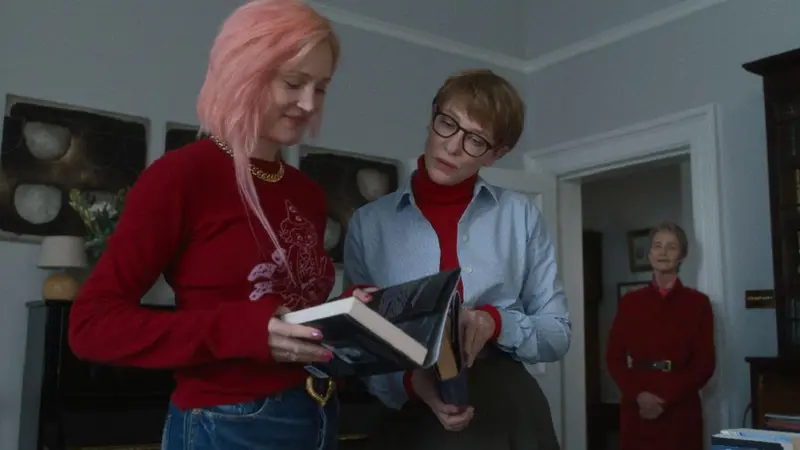
The second story follows Timothena and Lilth (Cate Blanchett and Vicky Krieps), two polar-opposite sisters in Dublin, making their annual visit to have afternoon tea with their mother (Charlotte Rampling). Rampling plays a successful author—the stiff-upper-lip type whose criticisms are more often felt rather than spoken. Lilth, pink-haired and evasive, hides her lack of money and transport by having a friend pose as an Uber driver so she can claim her new Lexus is being detailed. Blanchett’s Timothena is reserved and apologetically plain, with sensible shoes and a cheap haircut, doing her best to fade into the background. The three women exchange polite, stilted small talk and carefully crafted half-truths about their lives before making a swift, practised exit, promising, as always, to do it all again next year. The segment captures that familiar, unspoken pressure to exaggerate our achievements or mask our struggles in front of our parents—whether to win their pride or to shelter them from the weight of the truth.
The third, and most moving story, follows non-identical twins Skye and Billy (Indya Moore and Luka Sabbat) who are making a final visit to their childhood home in Paris, following the recent death of their parents in a plane crash. The two siblings walk around their old home, saying goodbye to the memories that live there, like that of their father’s cooking. They go through some of their parents’ belongings, discovering through old pictures and a fraudulent marriage licence, that their parents had richer and more complicated lives than they might have imagined. The story features the siblings sitting together in a quiet Parisian café, sharing coffee and conversation in a moment of understated connection. It’s a staple of Jim’s filmography, which captures the spirit of a Jarmusch joint.
In this collection of stories, Jarmusch slowly excavates the delicate truths that lie beneath the surface of family life. Through recurring motifs—families toasting with non-alcoholic drinks, the comical presence of new, fake, and well-worn Rolexes—he explores the illusion of uniqueness in the moments we share with our loved ones. These scenes suggest that the emotions we believe are singular—the guilt, anxiety, pride, shame, love, laughter, and memory tied to our parents—are, in fact, deeply common. Yet Jarmusch shows that this universality doesn’t diminish the weight of those experiences. Instead, it reveals how interconnected we all are, even in the most intimate corners of our lives. There’s something quietly profound in his conversational, measured approach to exploring what it means to have and to lose your parents.
In both comedy and tragedy, Father Mother Brother Sister also acknowledges that we can’t ever know who our parents really are. As a father, Tom Waits hides his wealth and verve for life, hiding behind a cluttered home and unkempt appearance. Charlotte Rampling gives her daughters a stern telling off when they pick up her published books in awe and wonder, as if whatever is inside might give them clues to her enigmatic inner life. Siblings Skye and Billy excavate some truth about their parent’s past, discovering a collection of fake driver’s licences and unseen pictures, but ultimately they have to shut the door of the storage container containing their parents many belongings, accepting that their things are only clues as to who they were, and that, in death, the yearning to understand them and discover their inner lives has died too.
In true Jarmuch style, Father Mother Brother Sister is a soft and deeply emotionally intelligent piece of filmmaking, lovingly shot, styled and acted. Neat cinematography, well-drawn characters and innovative music choices complement Jarmusch’s musings so well. Upon reflection of his filmography, we will think of this film as one of his defining works.
★★★★★
Screening at the 2025 BFI London Film Festival on October 18th and 19th / Adam Driver, Tom Waits, Mayim Bialik, Cate Blanchett, Vicky Krieps, Charlotte Rampling, Luke Sabbat, Indya Moore / Dir: Jim Jarmusch / Mubi / 15
Related
Discover more from
Subscribe to get the latest posts sent to your email.
