
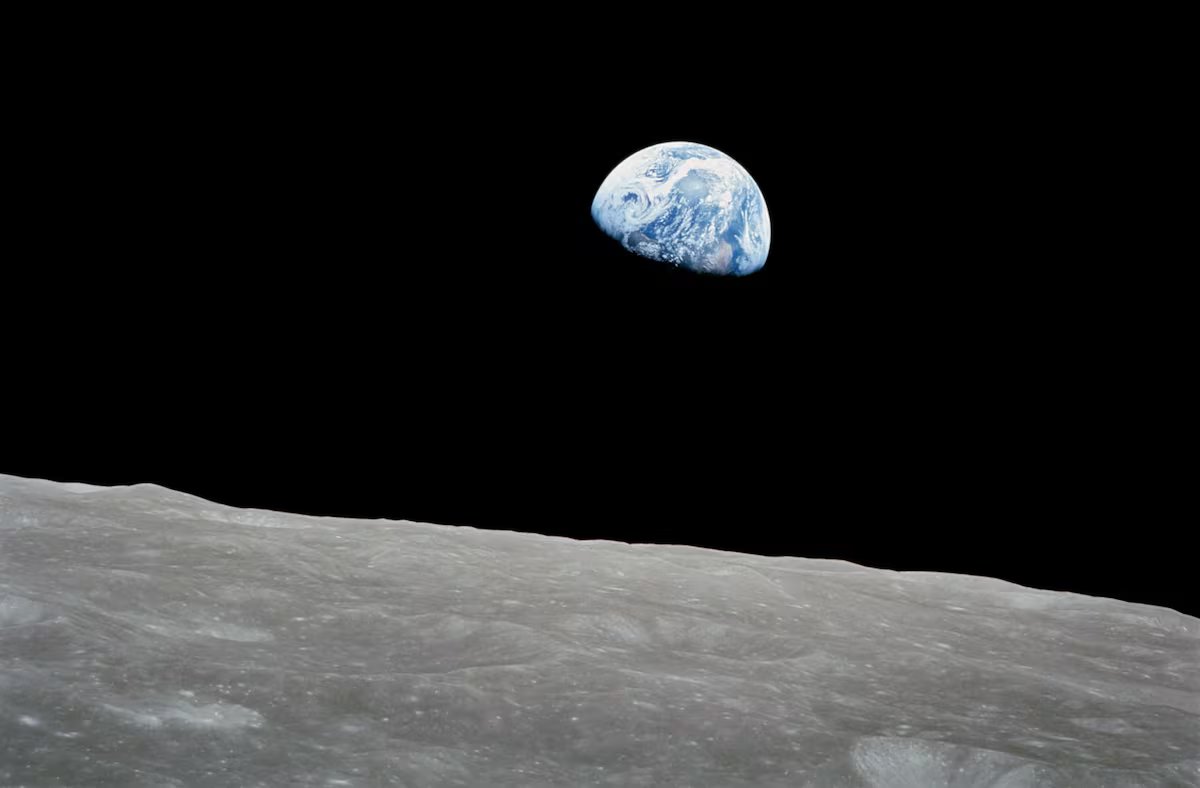
Everything is ready for the launch of the first crewed mission to the Moon in 50 years on April 1, NASA announced on March 12. For those who followed the adventure of the first flights to Earth’s satellite, it is impossible to avoid comparisons between Apollo 8, the first expedition to orbit the Moon in 1968, and the imminent Artemis 2. Nearly six decades later, preparations are underway for a new lunar tussle, but the geopolitical circumstances are very different. Today, Russian competition is nonexistent (that of China is another matter), and the sense of a “space race” has vanished. And with it, the pioneering epic that characterized Apollo 8.
The idea of sending that expedition to the Moon arose in the summer of 1968. It was a proposal put forward by George Low, head of the Apollo Spacecraft Program Office. The program envisioned a first flight of the main capsule around the Earth in October of that year; this would be followed by another, also orbital, which would include the lunar module. But the lunar module wouldn’t be ready until spring, which would delay the entire program, jeopardizing John F. Kennedy’s goal: “We choose to go to the Moon in this decade.”
Meanwhile, U.S. spy satellites had located the Russian N-1 super rocket (the equivalent of Wernher Von Braun’s Saturn V) installed at the Baikonur Cosmodrome. It might not yet be operational, but what was certain was that, using smaller Proton rockets, the Soviet Union could launch a Soyuz-type capsule on a circumlunar trajectory. It wouldn’t be a lunar landing attempt, but the propaganda impact would be immense.
Low sent his proposal to NASA’s top brass. If the first crewed Apollo flight was successful, the next one would be to our satellite. No lunar module. Just go, orbit a few times, and return.
The first manned mission, Apollo 7, was a success. A mixed bag, since all three astronauts caught colds that put them in a foul mood throughout the flight. This, combined with their exasperation at ground control’s constant changes and expansions to the experiment program, eventually erupted in the first mutiny aboard a spacecraft. None of the three ever flew again. But that’s another story.
Thus, in November 1968, NASA officially announced the change of plans. Apollo 8, with its three crew members — Frank Borman, Jim Lovell, and William Anders — would go to the Moon, taking advantage of the next launch window in December. They would spend Christmas where no human being had ever been before. There was a sense of urgency. By then, the USSR had sent two capsules on the same trajectory. They carried no people, but they did have a small menagerie: a couple of tortoises, flies, earthworms, plants, seeds, and bacterial cultures. These were the first living beings to visit the vicinity of our satellite.
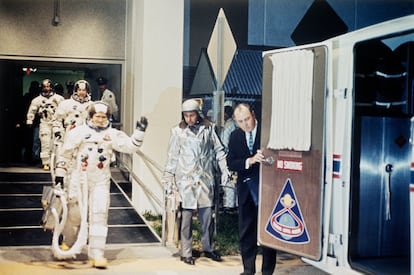
In retrospect, the Apollo 8 flight was an extremely high-risk endeavor. Almost reckless. Without a lunar lander, the command module was entirely dependent on its maneuvering engine both to enter lunar orbit and to break out of orbit and return to Earth. There was no alternative. In all likelihood, any catastrophe along the way would have been fatal. When, years later, Apollo 13 suffered an oxygen tank explosion, the crew was able to survive by converting their lunar module into a kind of lifeboat. The engine that was supposed to allow them to land on the Moon was used to maneuver them into a safe return trajectory to Earth (a trajectory very similar to that planned for Artemis 2). And it was by using up their reserves of air, water, and electricity that they were able to complete the journey.
Artemis 2 faces a similar problem: it also won’t have a lunar lander. This is the responsibility of SpaceX, Elon Musk’s company, and it’s still unknown when it will first fly. The contract with NASA requires demonstrating a successful descent and subsequent takeoff from the Moon under automated control before entrusting it with human passengers. That should happen in 2028, so time is of the essence.
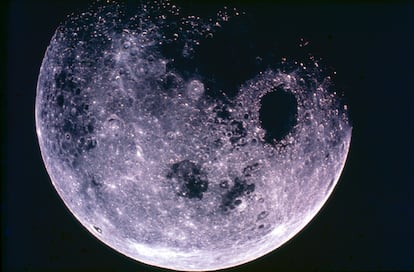
NASA didn’t want to take the same risks as in 1968, especially with a new spacecraft that has only flown once without a crew. That’s why Artemis 2 won’t orbit the Moon. It will simply follow a figure-eight trajectory, passing high above the far side before heading back. Even if all propulsion systems failed, the return would be guaranteed from the very first minute. For NASA, that’s the most important thing.
And what will the astronauts do during the journey? Essentially, thoroughly test all the onboard systems, from the cameras and the computer for star navigation (the Apollo missions made do with a sextant and a computer with 38K of memory) to the new toilet built into the cabin floor, complete with a door to ensure some privacy. Half a century ago, astronauts only had plastic bags and had to trust that their colleagues would look the other way while they used them.
Specifically, the astronauts will practice the approach and formation flight with the rocket’s final stage. This is a preparatory exercise for what their Artemis 3 colleagues will have to do, but this time to dock with the lunar lander. It’s a routine maneuver, both in manual and automatic modes: the Soyuz and Dragon capsules perform it every time they have to deliver new crews to the International Space Station. But for the Artemis 2 Orion spacecraft, it’s a first.
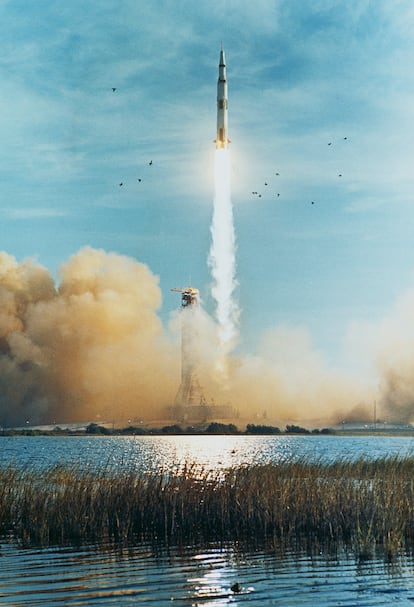
After all, NASA still remembers the problems that plagued another newly designed capsule — Boeing’s Starliner — in 2024 during its first attempt to dock with the International Space Station. Five of the 28 positional control engines failed, partly due to unexpected helium leaks and corrosion of the fuel valves. It was later discovered that the culprit had been ambient humidity while the rocket was on the launch pad.
The astronauts will serve as guinea pigs, and not just during the flight. For six months, the four have been providing blood, saliva, and urine samples to be compared with those obtained during and after the journey. The idea is to conduct a study of immune biomarkers. They have also provided bone marrow samples, which have been implanted in small, pen-sized devices to see how tissues respond to radiation and microgravity. And during the flight, their sleep, circadian rhythm, stress levels, and mood will be monitored. The attention to their mood is certainly intriguing. Not everyone has the opportunity to travel through space to contemplate, for a few hours, the side of the Moon that no one else sees.
Sign up for our weekly newsletter to get more English-language news coverage from EL PAÍS USA Edition
