
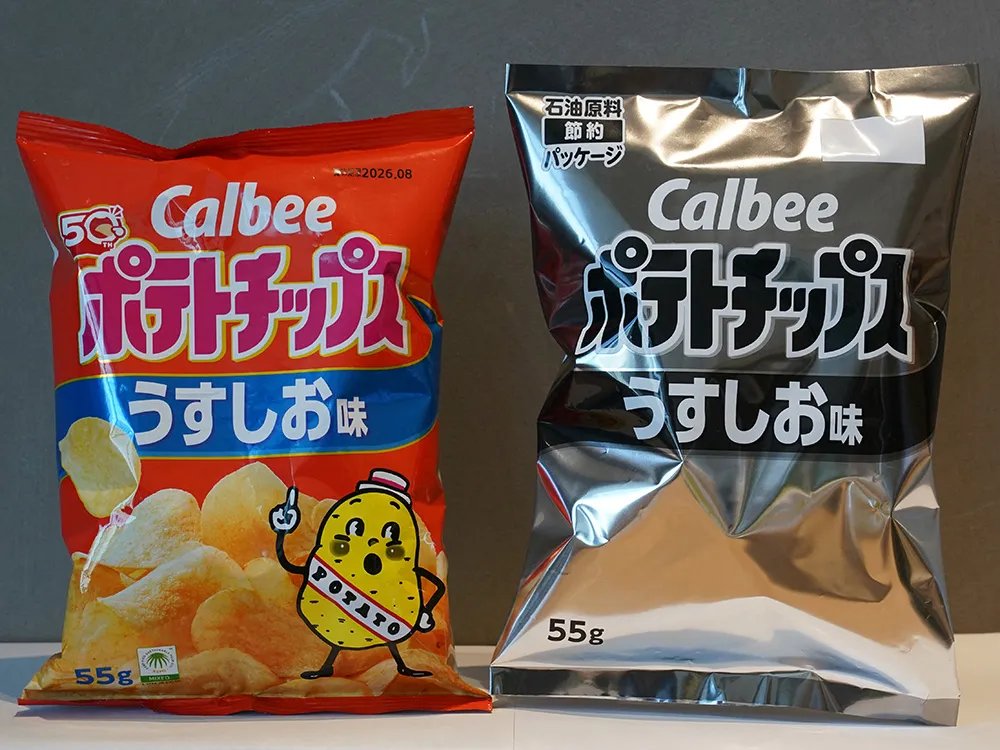
The ripple effect of the Iran war has moved beyond oil markets and has now reached everyday consumer goods. The nearly three-month war has triggered shortages affecting smartphones, snack packaging and restaurant kitchens. From monochrome potato chip bags to “Diet Coke parties,” here are five ways the conflict in the Middle East is wreaking havoc on global supply chains.
1. SNACK PACK INK
Japanese snack packaging is about to become a lot less vibrant due to a shortage of an ink ingredient. Calbee, Japan’s biggest snack maker with about half of the overall market, said shortages tied to the Strait of Hormuz blockade are forcing it to switch its brightly coloured bags to monochrome.
According to a statement released by the company, 14 product variants of potato chips, Kappa Ebisen snacks and Frugra cereal will temporarily switch to black-and-white packaging starting the week of May 25. Calbee said that the measure is an effort “to help maintain a stable supply of products” and is a response to “supply instability affecting certain raw materials amid ongoing tensions in the Middle East,” adding that it won’t affect product quality.
The greyscale packaging is reportedly due to a shortage of naphtha , a petroleum-derived ink ingredient. Japan imports almost all of its oil and nearly half of its naphtha from the Middle East via the Strait of Hormuz, which has been “ effectively closed ” since March 2.
Calbee isn’t the only snack maker affected by the Hormuz crisis. In March, difficulty procuring oil caused Yamayoshi Seika to suspend production of several products, including its popular Wasabeef (wasabi and beef-flavoured) potato chips. And the naphtha shortage is affecting more than just snack packaging.
The chemical is also used to make plastic. The New York Times reports that food manufacturers are contending with packaging constraints for products such as tea leaves and tofu. Car makers, paint and bathroom manufacturers have also reported issues securing naphtha, but a Japanese cabinet official offered reassurance when asked about the Calbee packaging change at a news conference in Tokyo on May 12.
“We have not received any reports of immediate supply problems for printing inks or naphtha,” Kei Sato reportedly said. “We believe that the necessary quantities for Japan as a whole are secured.”
2. DIET COKE
Diet Coke is scarce in India, where, unlike most other markets, it’s only sold in cans. Some orders aren’t being fulfilled due to a can shortage linked to the Iran war disrupting supplies of aluminum, suppliers told Reuters . The Gulf accounts for roughly nine per cent of global aluminum production.
The cans are disappearing from shelves as “Diet Coke parties” pop up across the country. Revellers are paying US$10-$16 entry fees for the pleasure of partaking in Diet Coke-centric drinks and activities, Reuters reports.
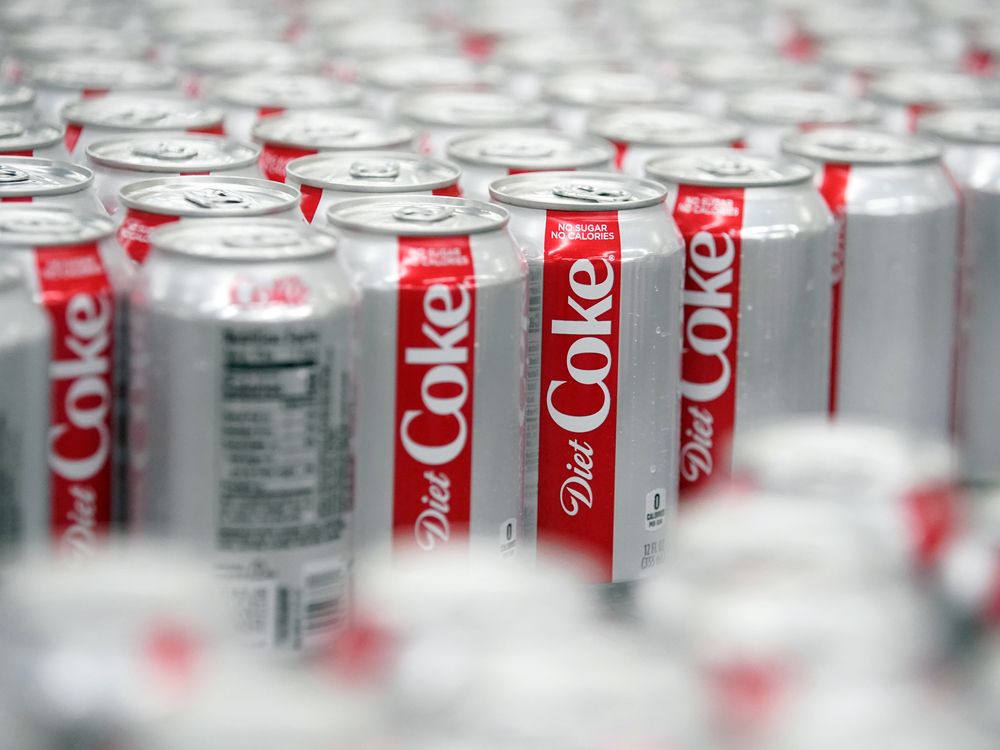
Marketing executive Ishika Gupta was reportedly the first to throw a “Diet Coke party” on April 26 in New Delhi. It started as a joke, Gupta told NBC News . “I thought only me and two of my friends would show up.” The alcohol-free event sold out. Roughly 150 Gen Zers showed up wearing Coke-themed outfits to dance to the house and pop music and drink “concoctions” inspired by Dua Lipa , who adds pickled jalapeño and dill pickle juice to her Diet Coke.
“We had a cocktail menu, which we call Coke-tails. The idea was to bring fans together,” said Gupta, a self-professed “big Diet Coke fan” who reportedly started an Instagram account devoted to the drink a month before the Iran war began. “It was some cosmic alignment,” she told NBC News. “We were celebrating the very thing that there was a so-called crisis for.”
3. COOKING GAS
Also in India, where millions depend on liquified petroleum gas cylinders for cooking, kitchens are running low, and restaurants and hotels are warning of potential disruptions and shutdowns, Reuters reports. India is the world’s second-biggest importer of liquefied petroleum gas and relies heavily on Gulf oil imports. Gas canisters are now in short supply due to the Strait of Hormuz crisis.
“Even in the black market, there is no certainty that I will get any gas or not,” Abhishekh Dixit, owner of Parawthe Wala, a restaurant in Delhi’s Chandni Chowk market, told NBC News . “Everything is being affected, and our suppliers have raised prices by up to five per cent.”
Dixit’s restaurant has reportedly relied on gas cylinders to cook its specialties, including the parathas stuffed with onion and paneer and brushed with butter that have people lined up, for more than a century. The crisis has “created an artificial inflation,” he said, which has forced him to raise prices and buy electric stoves to stretch his gas supplies.
The country’s ceramics industry has also been affected by shortages of propane and natural gas. In March, the BBC reported that most manufacturers in Morbi, producers of roughly 80 per cent of India’s ceramics, were forced to shut down for nearly a month. The country’s ceramic industry is estimated to be worth roughly US$8.1 billion, and around 400,000 employees work in Morbi factories.
4. FERTILIZER
The Gulf region isn’t only a key producer of oil products and natural gas but also of fertilizer. Thirty per cent of the fertilizer trade goes through the Strait of Hormuz, according to the UN’s Food and Agriculture Organization. The blockade could put up to 10 billion meals at risk, with the poorest countries the hardest hit, Svein Tore Holsether, chief executive of Yara, one of the world’s largest fertilizer companies, told the BBC .
Global food production hangs in the balance as the blockade upends fertilizer supplies. Without shipping traffic able to pass, the world could be approaching a “global agrifoods catastrophe,” the FAO warned in a new report .
Maximo Torero, FAO chief economist, said in a statement in March that if the conflict were to continue for more than three months, they expect the repercussions to be “significantly” more serious. “Not only in terms of prices of commodities, the prices of inputs, of fertilizers and energy, but it will also impact significantly the next planting season, and that will have a longer-term impact. So that’s why it’s so important not to allow this to continue to escalate (for) an extended duration.”
5. HELIUM
The Iran war is also disrupting the world’s supply of helium, which could have wide-ranging impacts. The production of smartphones, electric vehicles, semiconductor chips and medical equipment, including MRI machines, relies on helium.
Qatar, producer of roughly one-third of the world’s helium, halted production in March after Iranian strikes on two liquid natural gas facilities. State-run QatarEnergy told Reuters that the attacks destroyed 17 per cent of the country’s capacity. Repairs could reportedly take three to five years.
“The effects are already being felt,” Cliff Cain of Pulsar Helium, a helium exploration and development company, told CBS News . “Everything from vehicle chips to iPhones will definitely be affected.”
Our website is the place for the latest breaking news, exclusive scoops, longreads and provocative commentary. Please bookmark nationalpost.com and sign up for our cookbook and recipe newsletter, Cook This, here.
