
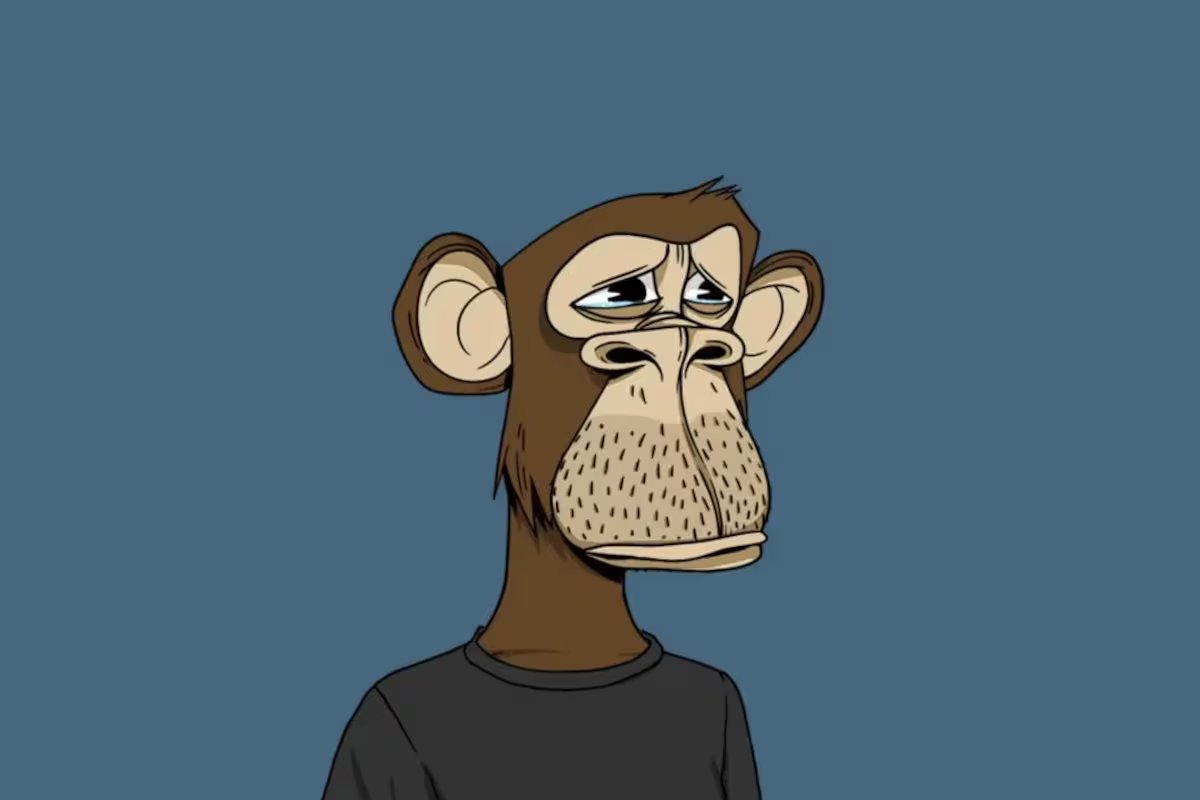
In January 2022, Justin Bieber bought a digital image of a bored monkey. He paid $1.3 million for it. The ape was No. 3001 of the Bored Ape Yacht Club NFT series, which at the time was taking investors by storm at similarly extravagant prices. A few months passed, and Bieber doubled down, adding to his collection another e-monkey from the same series. This time, it was No. 3850, for which he paid $440,000. Evidently, prices had already dropped substantially. But the plunge didn’t stop there: by the next year, and after the general plummet of the crypto market, both holdings had lost approximately 90% of their value, and were optimistically priced at around $120,000 for the pair.
Brad Troemel, an artist and online personality, posted on Instagram a collection of cases illustrating the spectacular investment disasters suffered by social‑media users who had bought NFTs (an acronym meaning “non-fungible token”). One person bought a manga drawing of an animal for $17,000 that was now worth $10. Another made off with a BAYC-style monkey for some $31,000, which seemed like a steal at the time, but its current market value is now practically zero. And on, and on.
A year and a half ago, EL PAÍS explained that the NFT market had plummeted immediately after its moment of glory in 2021 and 2022. Since then, the situation has not recovered, and most of those who once believed the NFT universe offered either a viable future for art or a quick and easy path to wealth now regret that temporary infatuation. NFTs have proven to be not only an artistic and aesthetic disaster, but a shortcut to financial ruin.
After the strict lockdowns of the Covid-19 pandemic — which had accelerated the adoption of digital transactions across many areas of life — the trade in NFTs, which were perceived as novel and promising assets, experienced a rapid surge, including in the art market. Although this type of, let’s say, artistic work had already begun to be sold since 2017 (Curio Cards was that year the first NFT collection on the Ethereum blockchain), 2021 and early 2022 would become the period in which the market reached its peak.
Examples include the sale of the video Everydays: The First 5000 Days by digital artist Mike Winklemann aka Beeple for $69.35 million in March 2021, followed by his HUMAN ONE ($28.9 million), XCOPY’s Right-Click and Save As Guy (over $7 million), and what is recorded as the most expensive NFT artwork ever sold: a digital image of two merging spheres resembling an infinity symbol, titled The Merge, by the artist Pak. It sold for a total of $91.8 million, which was split among a group of 29,000 collectors in December 2021.
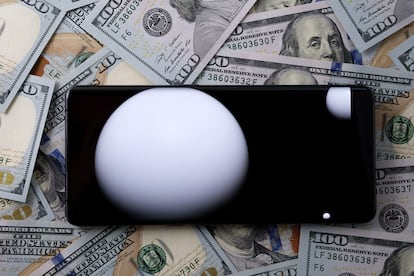
It’s important to note that the profile of these buyers is different from that of the typical art collector. They are often crypto investors and financial speculators, despite the artistic pretext of the assets. It would be difficult to estimate the current value of these works that were once absurdly expensive, since they remain unique cases, and in today’s landscape one would have to determine whether anyone would even want to purchase them at any price — or whether their current owners would be willing to part with them for whatever the market might offer. If an object’s value is determined solely by what a buyer is willing to pay — a variable that is particularly difficult to gauge in art, hence the interest in auctions and why they make enthusiasts and sellers so nervous — this uncertainty is even greater with NFTs.
The recently published Art Basel and UBS Global Art Market Report 2025 dedicated an entire section to NFTs that was penned by Gauthier Zuppinger, CEO and founder of NFT18.com, a platform created to support investors in the field. Zuppinger states: “As art-related NFT sales boomed in 2021, the focus was largely on their financial value and return on investment, with the technological challenges posed by this new medium less frequently questioned: it was all about catching the train on time. But in 2025, as the aggregate value of sales has stabilized at a considerably lower level, questions are being asked about what has become of all the promises made by the digital art movement, with much focus on the issue of centralization, and more specifically storage, which has progressively become one of the most pressing challenges in the field of digital art.”
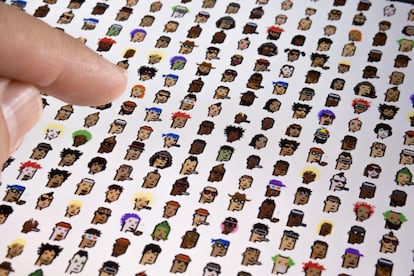
Zuppinger also writes that after the highs of 2021, the global market for NFTs went through a continuous decline until the end of 2024, when it partially recovered, returning more or less to the levels observed before the spike, around 2020 — and that its vertiginous heights have never been seen again. That modest bounce didn’t take place by chance. It coincided with the results of the last U.S. presidential elections in which Donald Trump, a staunch defender of markets in crypto-assets, emerged as winner. According to the analyst, “a Crypto Punks [from another digital image series inspired by the cyberpunk aesthetic and developed by North American studio Larva Labs] was still selling for around $120,000 at the end of 2024.” Still, it’s worth mentioning that the most expensive CryptoPunks, No. 5822, sold in February 2022 for the considerably higher price of $23.7 million.
It is also telling that an NFT of Twitter founder Jack Dorsey’s first tweet reached $2.9 million when it was sold in March 2021, only to collapse when its owner later tried to resell it. When its original buyer, the Malaysian crypto entrepreneur of Irani heritage Sina Estavi, put it back on the market in April 2022, its highest bid was $280.
According to a report by the data analysis and tracking platform DappRadar —which focuses on the Web 3.0 ecosystem and functions as one of the “audience meters” of the crypto world — between the peak of 2021 and early 2025, sales lost 93% of their value. In 2024, that total stood at $197 million, and it fell to $23.8 million in the first quarter of 2025. Meanwhile, according to the same report, the average price of an NFT transaction went from $2,044 in 2021 to around $400 in 2023, which is roughly the level they returned to in 2025 after a slight uptick the previous year.
According to British newspaper The Independent, the highest offer to acquire one of the Bored Apes that Justin Bieber bought would be around $2,800 today. And it should be noted that it could be much worse — according to some studies, it’s likely that 95% of NFT art has value at all.
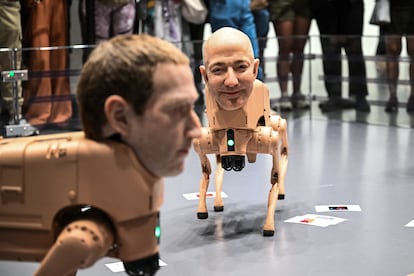
As luck would have it, some of those who benefited most from the NFT bubble have managed to continue to prosper, even after the great crash. One such case is Beeple, who at the most recent edition of Art Basel Miami Beach, held this past December, succeeded in making his latest work not only the most viral, but also one of the most lucrative transactions at the fair. That piece was Regular Animals, which was located in a new digital art section of the fair called Zero 10. It consisted of an installation of canine robots with the faces of the art market’s most beloved artists, like Pablo Picasso and Andy Warhol, in addition to those of magnates who have made their wealth in the tech universe like Elon Musk, Jeff Bezos, Mark Zuckerberg and Beeple himself.
Moving around a kind of enclosed park, the robots took photos of their surroundings and printed out certificates of authenticity from their rear ends. Printed QR codes on the certificates allowed buyers to acquire the NFT associated with the image. The robots were produced in duplicate, resulting in series of two, plus an artist’s proof, and each of the copies were priced at $100,000. All — except for the robot canine Bezos, which was not for sale — had been sold even before the fair opened to the public, during the VIP showing.
Sign up for our weekly newsletter to get more English-language news coverage from EL PAÍS USA Edition
