
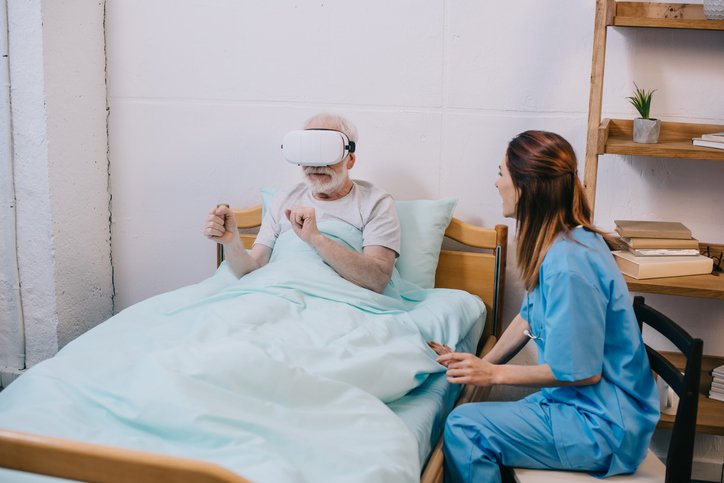
Virtual reality therapy has a strange problem. It can look clinically useful within minutes. A patient puts on a headset. Their attention shifts. Pain ratings drop. Anxiety eases. Clinicians see a practical effect, often in settings where traditional options are limited and then the pilot ends.
Not because immersive therapy has no value, but because it is hard to turn a compelling session into a repeatable clinical intervention. The obstacle is not hardware. It is not even evidence alone. The obstacle is the absence of dosage standards.
In medicine, dosage is not a minor detail. It is the difference between an intervention that can be prescribed and one that remains an experiment. VR therapy is stuck at this threshold.
Dosage is a measurable variable, not a metaphor
When people hear dosage, they often think of medication. But dosage is a broader clinical concept. It is the structure that makes an intervention legible to clinicians, payers, and regulators.
For VR therapy, dosage is the answer to simple questions that are still surprisingly inconsistent across studies and pilots.
A review on VR interventions to reduce pain and anxiety in older adults shows how wide the variation can be, even within a single population. Across studies, session schedules range from short single exposures to repeated sessions over weeks, with different frequencies, content types, and outcomes being tracked. That is not a criticism of the field. It is a sign that the field is still pre-standard.
We also see the scale of research growth without convergence. An analysis of VR in mental health care reviewed 1,333 articles published between 1999 and 2025, reflecting accelerating activity and diversity of applications, but also reinforcing how fragmented the evidence base remains when interventions are not consistently defined.
If we want VR therapy to move from pilots to protocols, dosage is where we start.
Why dosage standards matter for business adoption
Can this be implemented safely, measured credibly, and funded sustainably?
Dosage standards are the missing bridge between clinical interest and commercial viability because they enable three things.
Comparability – If one study uses 10 minutes of passive distraction and another uses 30 minutes of interactive content, and both call it VR therapy, results cannot be compared in a way that supports purchasing decisions or payer evaluation.
Reimbursement logic – Payers do not reimburse vibes. They reimburse defined interventions tied to measurable outcomes, delivered with predictable resource requirements.
Governance – Health systems need safety protocols, staff training requirements, escalation paths, and adverse event tracking. Dosage standards are part of that governance structure.
What the evidence already tells us, if we package it correctly
We do not need perfect evidence to start standardising. What is needed is practical structures that make the existing evidence usable.
Consider one example. A Frontiers in Virtual Reality study in a real world clinical setting reported that immersive VR sessions lasting about 10 to 30 minutes were associated with reductions in pain intensity and anxiety ratings after the session. The design is not a gold standard randomised trial, but it illustrates something important for clinicians and operators: short sessions can produce measurable near term change, and the measurements can be simple and repeatable.
A pragmatic dosage standard: the intervention card
If I could change one thing about how immersive therapy is evaluated, it would be this.
Every VR therapy deployment should come with a one page intervention card that is shared with clinicians, operational leaders, and evaluators. No marketing. No claims of inflation. Just the clinical shape of the intervention.
At minimum, the card should include:
- Clinical intent – Pain reduction, anxiety regulation, rehabilitation support, procedural distress, cognitive support, or another defined goal.
- Target population and exclusions – Who is intended, who is not, and why.
- Session length range – A defined range, not a vague statement like brief sessions.
- Frequency – How often sessions occur within a week.
- Course length – How many sessions constitute a course, and what triggers extension or stopping.
- Content category – Passive relaxation, guided breathing, interactive distraction, exposure style environments, embodiment based experiences.
- Delivery setting – Supervised in clinic, bedside, outpatient, home supported, home unsupervised.
- Primary outcomes and measurement timing – What is measured, and when, including baseline and follow up windows.
This sounds basic, but it is the foundation that lets a health system ask: do we have the staff, workflow, and evaluation plan to adopt this responsibly.
Measurement: stop overclaiming and start standardising
The fastest way to lose clinical trust is to promise everything and measure nothing well. A useful outcomes framework for VR therapy should focus on a small set of credible endpoints.
One primary outcome that matches the claim – Pain intensity, anxiety level, functional mobility, or another defined target.
A simple time structure – Baseline, immediate post session, and a defined follow up interval appropriate to the setting.
A safety and tolerability layer – Dropouts, adverse symptoms, and reasons for discontinuation.
This is also where dosage and safety intersect. A review on VR induced symptoms and effects highlights cybersickness and related side effects as real considerations, and notes that cybersickness can increase with exposure time. When you treat safety as a first class metric, rather than an afterthought, you make payer and provider conversations far easier.
Safety and governance: the checklist most pilots forget
Health systems do not fear innovation. They fear unmanaged risk. A minimal governance checklist should include:
Screening and exclusions – A clear policy on who should not use immersive sessions, and when.
Session environment rules – Seated delivery by default in clinical settings, supervision standards, stop criteria.
Adverse event capture – A simple reporting process for nausea, dizziness, disorientation, headache, and other symptoms documented in VR induced symptom literature.
Staff training – Not just technical training, but clinical workflow training: how to respond to patient discomfort, safely end a session, and document outcomes.
These governance basics are not bureaucracy. They are what make the intervention acceptable to risk teams and clinical leadership.
Evidence standards: borrow what already exists
The digital health world has already built useful evaluation scaffolding. We should use it.
The NICE Evidence Standards Framework applies a tiered logic that links evidence requirements to a digital health product’s function, risk, and claims. It does not validate products, but it sets a clear standard for what qualifies as credible evidence at different levels of clinical impact.
This is especially relevant for immersive therapy, where pilot findings are frequently used to justify broader clinical claims without meeting the evidence tier expected for adoption and funding decisions.
The real shift: VR therapy becomes boring, and that is good
VR therapy will become real clinical care when it becomes boring in the best way. That is when it stops being a pilot and starts being a service line component. We have evaluation frameworks that can guide evidence planning for adoption. What we lack is a shared habit: describing VR therapy as a dosed clinical intervention. When we build that habit, VR stops being a promise. It becomes part of care.
Photo: LightFieldStudios, Getty Images
Nargiz Noimann is a neuroscientist afounder focused on how immersive technology and AI can support cognitive resilience and emotional recovery in clinical and post treatment settings. She has more than 25 years of international experience across neuroscience, psychotechnology, and healthcare innovation, and has studied at institutions including Stanford University. Nargiz is the founder of X Technology, a UAE based healthtech company developing AI powered VR programs designed to support recovery experiences for patients and caregivers. She also leads the Scientific Research Center for Psychotechnologies in Kazakhstan, where her work explores structured approaches to mental resilience, attention, and recovery in high stress and chronic illness contexts.
This post appears through the MedCity Influencers program. Anyone can publish their perspective on business and innovation in healthcare on MedCity News through MedCity Influencers. Click here to find out how.
