
We all know that music is a powerful and empowering thing. It affects our emotions, our psyches, our very souls — and that’s exactly the kind of thing that frightens certain people about music.
They believe that music can be dangerous and needs to be carefully supervised, regulated and sometimes banned — all in the name of… well, something. Morality? Humanity? Some twisted political reason? Check, check and check.
In many cases, the morality police choose to blame the messenger — the music or the musician — instead of looking at why the song seems to resonate so strongly. But they know that societal and political change is often presaged by messages and movements in popular culture. They hope that by blocking the message and restricting the movement, they can stop or even reverse change.
The music morality police have been around for centuries. The word “censor” was used to describe the Roman official in charge of the census. Through a roundabout way, he also had the job of monitoring public morals. For example, if you were found singing an “evil” song — which could be, say, something unflattering about the emperor — the Code of Twelve Tables, a law passed in 450 BC, decreed that you were to be put to death by clubbing.

The Qin dynasty, which reigned in China some 2,200 years ago, was big into restricting art and literature. The emperor declared music to be a “wasteful” pastime and ordered all musical instruments and songbooks destroyed.
It is said that the Roman Catholic Church was big on something it called “the devil’s interval,” a particularly dissonant playing of three notes: diabolus in musica — the devil in music. The devil’s chord. Because it sounded evil, it must be evil. That’s why the use of this combination of notes was effectively banned from all western European music. The notes were suppressed so that any evil feelings were avoided. No evil feelings, no evil deeds.
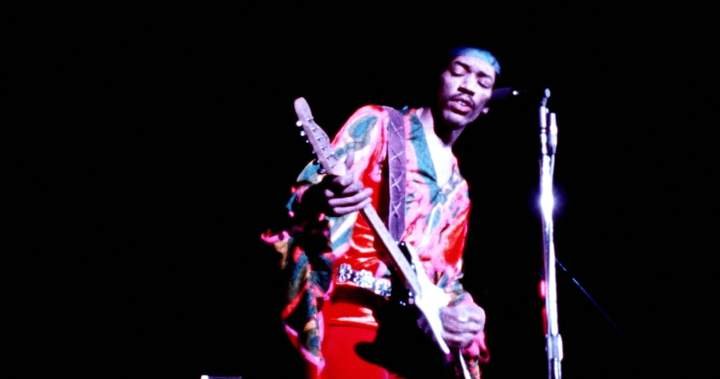
Things have changed a little. The opening chords of Jimi Hendrix’s Purple Haze might have gotten him burned at the stake a thousand years ago. Black Sabbath would have been branded as witches and demons. And had this by Blur been released in 1543, it would have literally been the death of them.
Actually, information has come to light that the devil’s tritone was not banned by the church, though the myth still resonates.
Speaking of 1543, that’s the year Henry VIII banned the printing of sheet music because it could “subtly and craftily instruct the king’s people and the youth of the realm.”
And the Nazis had their issues with music. During the occupation of Europe, the Reich’s Gauleiter for the Nazi protectorate of Bohemia and Moravia issued a 10-point decree regulating the playing of jazz.
I could read them out, but instead, I turn your attention to a song by Canadian violinist Hugh Marsh. In 1987, he released an album titled Shaking the Pumpkin. It featured a song called Rules Are Made to Be Broken featuring Robert Palmer and Dalbello on vocals. Have a listen.
When rock and roll was born in the 1950s, so was a never-ending campaign to have it banned. Parents, politicians, preachers and even doctors got involved. A certain Dr. Francis Braceland, who worked as a psychiatrist at a facility in Connecticut, was quoted in the media as saying rock music was a “cannibalistic and tribalistic form of music … a communicable disease … appealing to adolescent insecurity and driving teenagers to do outlandish things.”

Get daily National news
Get the day’s top news, political, economic, and current affairs headlines, delivered to your inbox once a day.
Pablo Casals, the famous classical cellist, called rock “poison put to sound.” Mitch Miller, the head of talent development at Columbia Records in the 1950s and early ’60s, hated rock music. He passed on Elvis, Buddy Holly, and some English group called “the Beatles.” I quote from Miller: “Rock ’n’ roll is musical baby food: it is the worship of mediocrity, brought about by a passion for conformity.”
Rock? Conformity?
Here’s another example of a piece of music that was banned by certain radio stations. This censorship had nothing to do with its lyrics, because it’s an instrumental. Stations refused to play it just because it sounded dangerous.
But here’s the best censorship story of the era. In 1963, a garage band from Portland, Ore., called the Kingsmen made a record called Louie Louie. They had no money. All they could afford was a cheap studio and one overhead mic dangling about 10 feet above the band.
Everyone had to be arranged around that one mic, including singer Joe Ely. He had to sing with his head all the way back, effectively singing straight up into the microphone. Complicating things was the fact that he had some big, heavy braces on his teeth. No wonder no one can make out what he’s singing.
Before we go any further, give this a listen and see if you can make out what’s going on.
Did you get any of that? Well, some politicians and parents thought they could. Rumours began to circulate that the lyrics were unbelievably dirty. Unspeakably dirty.
The governor of Indiana declared that the song made his “ears tingle” and imposed a statewide ban on it. Complaints from teachers, preachers and parents reached all the way to the office of the U.S. attorney general. No less than J. Edgar Hoover of the FBI was called in to investigate.
People were questioned. The recording was subjected to analysis. It was played forward and backward at a variety of speeds. The investigation lasted two years. And when the final FBI report came out on May 25, 1965, it was 118 pages long. The conclusion? “‘Louie Louie’ is unintelligible at any speed and is probably not obscene. Probably.”
Nothing gets a song banned faster than S-E-X. Such has been the case for centuries. I could quote you some lyrics from blues songs from the early 20th century that would get me fired. No wonder they didn’t make it on the radio. And if you want to have a little fun, do some Googling on the phrase “jelly roll” and you’ll begin to understand why so many blues songs use that phrase.
In the 1950s, some cities banned jukeboxes, which were cesspools of vice, apparently. And if you followed American law precisely, you could get busted for sending “lewd and lascivious” records through the mail. What constituted “lewd and lascivious” depended on who was doing the inspecting, I guess.
From the ’50s through to the ’80s, everyone from Chuck Berry and the Rolling Stones to the Beatles and the Doors had their problems with censorship crusaders. And one of the most severe was the British Broadcasting Corporation.


If you look at the history of the BBC, you might come away with the idea that they’re one of the most uptight broadcasters in the world — and you may be right. In the mid-30s, the BBC banned jazz. In 1959, it banned the song Charlie Brown by the Coasters because it contained the offensive word “spitballs.” No, really.
In January 1984, the producer of a BBC radio show came home to find his kids in front of the telly, watching the video for a song called Relax from this new band called Frankie Goes to Hollywood.
No big deal. He’d heard the song a number of times because the BBC had added it to the daytime playlist. In fact, the song had been aired close to 90 times by this point. But it wasn’t until he saw the video that he realized that — gasp! — it was about homosexual sex.
The next day, Jan. 11, 1984, he went into work and explained to his boss, DJ Mike Read, what he had learned. Read was the host of the morning show and had millions of listeners every day. After playing the song one more time, he, too, saw the light.
He branded the song obscene and announced that he would never, ever play it again. This put management in a tough spot. Their biggest star had made this outburst. Any attempt to countermand that would look bad. So the next day, Jan. 12, 1984, a memo went out across the BBC declaring that Relax should never, ever grace Her Majesty’s airwaves again — radio and TV.
There was just one exception: the weekly chart show. I don’t get that, but that’s the way it was. You know what happened, right? One week later, the biggest song in all of Britain was Relax by Frankie Goes to Hollywood. It stayed at No. 1 for five weeks. It sold a million copies in less than a month and 13 million worldwide. Thank you, Mike Read.
The BBC seems to get extra prickly about music in times of war. In 1982, Margaret Thatcher went to war with Argentina over the Falkland Islands in the South Atlantic. It was a controversial war, given that the fight was over a bunch of rocks that were home to more sheep and penguins than people.
Regardless, Her Majesty’s armed forces were sent to recapture these rocks, which they did over the course of 10 weeks. About a thousand people died, 255 of them British soldiers.
During this time, the ever-sensitive BBC was on guard, making sure that any songs critical of the government were not played on Her Majesty’s airwaves. This song — which had nothing to do with a war, a navy, or Argentina — was deemed unplayable.
The BBC also banned Everybody Wants to Rule the World by Tears for Fears during the first Gulf War. And during the invasion of Iraq in 2003, it banned the song Bandages by Victoria’s Hot Hot Heat. They thought the chorus would cause undue stress on relatives of soldiers fighting in the region.
Then, of course, there was 9/11. You may have heard about an infamous list of songs issued by Clear Channel, the big radio conglomerate in the States. This list did exist — but it wasn’t a list of banned songs. It merely contained suggestions of songs that might cause issues with the audience during such a sensitive time.
For example, the document urged programmers to think about airing songs with the word “jet” in the title: Bennie and the Jets by Elton John, Leaving on a Jet Plane by Peter, Paul and Mary, and Jet Airliner by Steve Miller.
There were 165 songs on this list, including this one, which completely baffles me. Is it the triggering word “fly?”
This has been just a short discussion of how music and censorship have intersected. We could go on for days and days and days on the subject: the issue of the Canadian Broadcast Standards Council and its Money for Nothing decision; the blowback caused by the Cure’s Killing an Arab; the crackdown on pop and rock music in Malaysia.
As long as there’s music and as long as there are people who are afraid of it, there will be censorship.


