
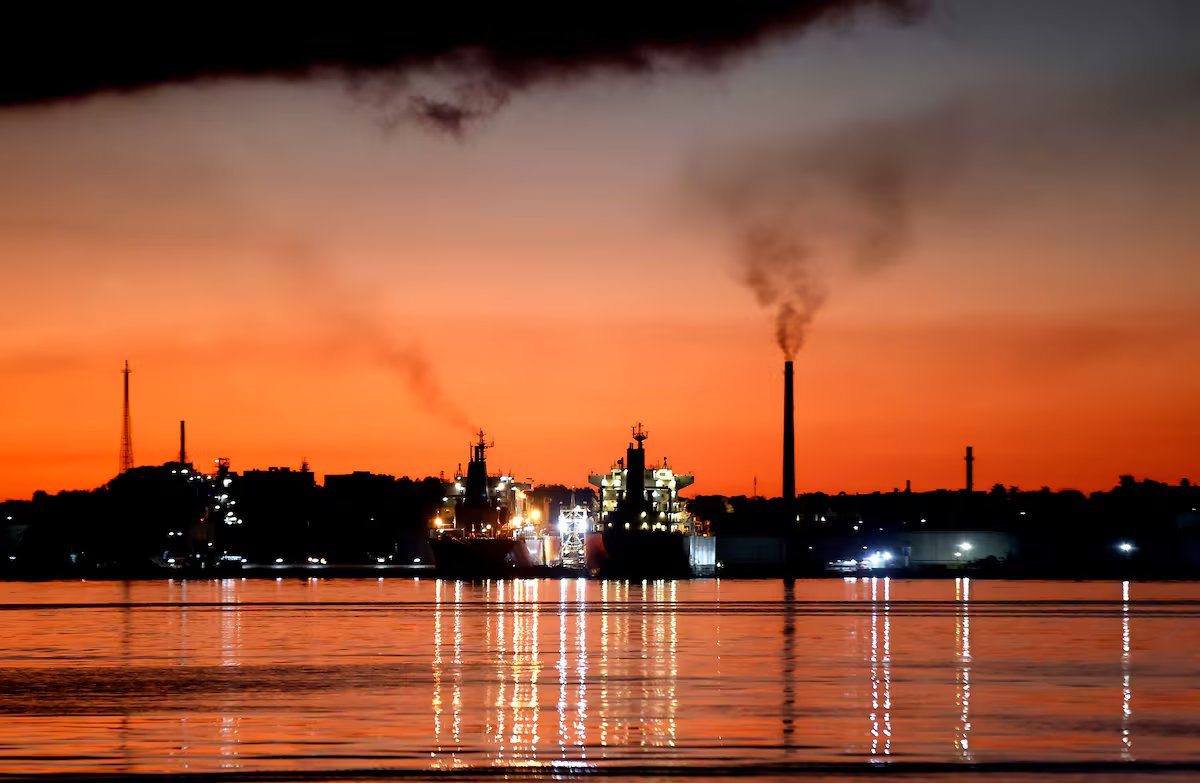
Fuel shipments are leaving South Florida for Cuba. It’s a low-profile operation that has gained momentum in recent weeks, before the Trump administration authorized a Russian oil tanker to reach the island. The shipments—which recent reports estimate at around 30,000 barrels so far this year—are far from meeting Cuban demand, but they have been more than enough to unleash harsh criticism from the exile community, among those who believe this move could indirectly provide a lifeline to the Havana regime.
The escalating pressure from Washington, which has tightened restrictions on fuel supplies and pushed the island to the brink, raising alarms about a potential humanitarian crisis, has an exception that is prior to the permit granted to the Russian-flagged vessel. Last month, the Treasury Department’s Office of Foreign Assets Control (OFAC) reiterated that the U.S. embargo against Cuba does allow the sale of fuel directly to private businesses on the island. OFAC also authorized the resale of Venezuelan oil to the private sector, provided that the transactions exclude all state and military entities.
Under this regulation, private companies on the island, known as MSMEs (micro, small, and medium-sized enterprises), are the final recipients of the fuel shipped from the U.S., although the import is carried out through Cuban state-owned companies. These are the only ones authorized to receive shipments at the port of Mariel, west of Havana, explains Diobel García, a Cuban living in Miami who recently shipped fuel from Port Everglades in Fort Lauderdale, north of Miami. “The importers are state-owned. But the client is private,” he says.
His Miami-based company, Flash Kingz, is licensed by OFAC to trade with the island. The process took him between two and three weeks, García says. The fuel is transported in specialized tanker containers that carry up to 24,000 liters. “Everything is strictly regulated by OFAC. Before the containers leave, you have to send the fuel information, and customs reviews everything and issues the authorization,” he explains.
Recently, García sent an ISO tank to a small business that sells food in Cuba, but the shipment was destined for the Cuban state-owned company MetalCuba, which acts as an intermediary. The private company pays the state-owned company for the service. He himself is paid via bank transfer in the U.S. by relatives of the small business owners in Cuba. Although the process was a bit cumbersome, there were no mishaps, García explains. “It’s unlikely that oil will leak because it’s sealed.”
But not everyone is comfortable with these operations. One businessman involved in the fuel shipment chain from South Florida, who prefers to remain anonymous, pointed out that, although the process is legal, it creates a moral conflict for him. “Most people are against sending oil to Cuba, including me. I feel uncomfortable when I do it, but it’s my job. I’m just complying with U.S. regulations.”
According to figures cited by Reuters, at least 61 ships have unloaded cargo in Cuba so far this year, including fuel, on routes that regularly connect with the U.S., Europe, and the Caribbean. Most of the operations have been concentrated in the port of Mariel.
The remittances have sparked criticism within the exile community, where hardliners, including Cuban-American lawmakers Carlos Giménez, María Elvira Salazar and Mario Díaz-Balart, have called for a suspension of the flights and remittance shipments to further increase economic pressure. Even the Miami-Dade Tax Collector’s office, a non-political position, launched an unprecedented crackdown in January on local businesses with alleged unauthorized commercial ties to Cuba.
Meanwhile, the Trump administration repeats week after week that the fall of the Castro regime on the island is imminent, without providing further details. This has generated renewed energy in the exile community, with demonstrations, agreements between opposition groups, and discussions about who could be the next president.
Secretary of State Marco Rubio, considered the mastermind behind U.S. policy toward the island, has openly supported trade with the private sector as a way to weaken state control. He has also, according to numerous reports, been behind talks with the Castro family, which have been vehemently rejected by exiles. The State Department referred questions from this newspaper to remarks Rubio made this Friday in Paris, France, following a G7 meeting on Iran, where he reaffirmed his desire for regime change in Cuba. He stated that the economy cannot be transformed unless its political structure also changes.
Meanwhile, given the deteriorating living conditions on the island, the United Nations has warned of a potential humanitarian emergency, and proposed establishing a mechanism to supply fuel for humanitarian purposes to hospitals and other essential services, but this has not yet materialized.
For energy expert Jorge Piñón, the cited figure of 30,000 barrels of oil shipped from Florida is barely “a drop in the ocean.” “Cuba consumes around 22,000 barrels of diesel per day. So if they’ve sent a total of 30,000 barrels in recent months, it’s nothing. If you take it all at once, it’s just a day and a half’s worth of demand,” he says.
“A country can’t survive on drops. These are drops, and there’s a severe drought. The impact on the economy is minimal; the main impact is on these small businesses that need it to supply their trucks, which they use to travel all over Cuba delivering packages to the families of the people who send them from Miami,” Piñón adds.
On the other hand, Piñón anticipates that the increase in fuel prices in the U.S. as a consequence of the war with Iran will affect shipments to Cuba. “The price of diesel is double what it was three or four weeks ago. That increase has to be passed on to the consumer, and people in Cuba can’t take any more of the inflation. So we’re going to see a decrease in shipments, because in the end someone is going to have to pay the distribution costs.”
Sign up for our weekly newsletter to get more English-language news coverage from EL PAÍS USA Edition
