
The plasma physicist Troy Carter leads the U.S. fusion energy program at Oak Ridge National Laboratory. It’s one of science’s hottest and most humbling pursuits: trying to understand plasma, the superheated, electrically charged gas at the heart of stars—and, since the 1950s, every hydrogen bomb test and fusion experiment.
Unlike the fission reactions that power the world’s 440 existing reactors, fusion promises relatively safer, zero-carbon power, with far less radioactive waste. For decades, it has been one of those breakthroughs supposedly just around the corner.
Carter has spent much of that time focused on the physics. After two decades studying and teaching plasma at UCLA, he joined Oak Ridge in 2022 to lead its fusion program, just as the field was catching fire. That December, researchers at the National Ignition Facility in California achieved fusion ignition for the first time, producing more energy from a fusion reaction than the lasers used to start it. The milestone capped years of momentum: Fusion startups raised more than $13 billion in private capital between 2020 and 2025, compared with less than $2 billion in all the years before that, according to a report from the European Union released last year.
That money has fueled a zoo of approaches to the plasma problem, from conventional donut-shaped tokamaks—these use magnetic fields to confine the superheated gas—to designs that federal labs had shelved decades earlier. Hyperscalers building AI data centers, meanwhile, were beginning to grasp that the grid could not supply the electricity they needed, and were signing power purchase agreements with fission and fusion companies that had yet to produce a single watt.
But money alone can’t tame plasma. The sun confines fusion reactions with gravity. On Earth, companies are using powerful magnets, extreme temperatures, and new materials to push toward commercial power. For example, Commonwealth Fusion Systems’ SPARC depends on a new kind of superconducting magnetic tape; Helion Energy, which aims to deliver electricity to Microsoft by 2029, is targeting 500 million degrees Celsius (932 million Fahrenheit) inside its machine.
Fuel is another challenge. Fusion works best with some of the lightest nuclei, including hydrogen isotopes, which are far less radioactive and produce less waste than fission fuels. But while deuterium is abundant in water, tritium and helium-3 are exceedingly rare on Earth. And ignition is only the beginning. After scientific breakeven comes engineering breakeven, when a reactor makes more energy than it needs to operate, and then commercial viability, when it makes enough electricity to sell to the grid.
Carter’s role puts him at the intersection of these problems. At Oak Ridge—one of 17 national labs and a bastion of nuclear research—he works directly with startups, helping tackle challenges no single private company can solve alone. That includes companies selected in 2023 for a Department of Energy (DOE) program that provides funding based on reaching scientific benchmarks.
At the same time, cuts to federally funded research haven’t helped plasma science, nor would the administration’s $755 million request for the DOE’s Office of Fusion Energy Sciences. That’s a $50 million drop from the previous year’s $805 million, and far below the $1.11 billion granted by the CHIPS and Science Act of 2022. Meanwhile, Beijing is pouring millions into R&D at dozens of startups and academic labs across China, and backing a giant public fusion experiment, the Experimental Advanced Superconducting Tokamak (EAST). Already setting records, the machine is China’s contribution to the decades-long, perpetually delayed ITER project that the U.S. and other nations are building in France.
Those geopolitical stakes helped put fusion on the Trump administration’s list of energy priorities, after AI and quantum. In April, as part of a new fusion roadmap, the DOE’s ARPA-E pledged $135 million to fusion companies over the next 18 months, a record single amount for the agency. But the companies need even more cash. Last week, Helion said it raised $465 million in a Thrive Capital-led round that valued the company at $15.5 billion—nearly tripling its January 2025 valuation. In December, California-based TAE Technologies announced it was merging with Trump Media & Technology, the parent company of Truth Social. The deal would value the new company at $6 billion and put one of the country’s best-funded fusion firms partly under the leadership of the former congressman Devin Nunes. Fusion, Nunes said at the time, “will be the most dramatic energy breakthrough since the onset of commercial nuclear energy in the 1950s.”
Carter is enthusiastic about the private fusion boom, but acutely aware of the gap between the industry’s monetary momentum and its technological maturity. Speaking from Tennessee, he explained why some of the most ambitious approaches face the steepest physics, what the public and investors still misunderstand, and why the race to build the world’s first fusion power plant cannot be won by private capital alone.
He also offered an educated guess about when fusion will finally come to the grid. It’s sooner than you might think. No, really.
This interview was lightly edited for length and clarity.
There’s a lot of momentum in fusion globally. The CEO of one company was just appointed to the president’s tech advisory board. What’s on the top of your mind now?
We’ve made a lot of progress technologically, scientifically, especially with recent breakthroughs. We have this strong growth in the fusion industry. But we’re kind of at an interesting point. We haven’t yet demonstrated fusion electricity generation, and a lot of the technologies are still at relatively low technical readiness levels, and yet we have $12 billion plus, depending on how you count, invested in the private sector.
And the companies are moving quickly to try to build demonstration facilities, and at the same time developing technology. There’s a strong need for coordination of public sector investment and the private sector to really have it be successful.
What makes fusion so hard?
Fundamentally, what you’re trying to do, of course, is make energy like what happens in the core of stars.
You can release a lot of energy from taking light elements and then fusing them into heavier elements. But the challenge is: These elements that you’re trying to push together are positively charged, and they don’t like to get next to each other, so you have to really give them tons of energy to get them to come close to each other. They have to be really hot. In fact, the conditions we’re seeking actually exceed the core of stars, at least in temperature. It’s a grand challenge to get to conditions like that. And it’s a testament to the long investment in the public sector to get the capability to do that in the first place.
But the first challenge is, again, making that fuel hot enough so it will fuse. getting the hydrogen isotopes to the temperatures where they have enough energy to basically run up the hill that’s presented by this electric repulsion, and get close enough that the strong nuclear force will take over and make fusion happen. That’s going to be with some magnetic field, some laser technology—whatever you need to heat it up and confine it. The first challenge is sustaining that, getting plasmas that are hot enough, dense enough, and sit still for long enough.
The second challenge, if you can get that to work, is materials. It turns out the fusion reaction that we’re likely going to start with—because it’s the easiest one to do—uses deuterium and tritium. You fuse these two things together and then the energy that comes out is two particles that go flying, and basically their kinetic energy of them flying out is where energy is released.
But: One of those is a neutron. And that neutron, in a magnetic device, just flies past the magnetic field, doesn’t care about it, goes ripping through the materials that are around that device. And so you have to find materials that can withstand this bombardment of these very energetic neutrons that are flying out.
On top of that, you’ve got an exhaust that is made of very energetic particles. Hydrogen and helium are the other byproducts of the reaction, and that helium alpha particle stays in the plasma usually, but then it gets exhausted to the materials that surround it. So you’ve got this very high, intense flux of hot stuff that hits your material, along with these neutrons that fly through it.
And so finding materials that can maintain their properties—not erode away, not break because of this bombardment of heat flux and neutrons—that’s a challenge. We don’t have a solution for that yet. We have some candidate materials, but nothing that can check all the boxes that you need.
And then you need to make the fuel.
That’s one final challenge that we talk about. If we use deuterium and tritium, heavy isotopes of hydrogen, deuterium is readily abundant. Any glass of water you pour, a fraction of the water molecules have deuterium in them. And so that’s easy to find.
But tritium is radioactive, and decays away in 13 years, so it’s not naturally abundant, and so you have to breed it. That’s also a challenge that we have spent less energy, money, time on, and have a lot of work to do there. Almost all of the companies are focused on the sustaining of a plasma, and not much on the materials and breeding space. And so this need to work together on all these challenges is evident.
What recent fusion milestones have excited you?
There really has been progress in understanding the behavior of these super gases, the plasmas that are the core of fusion devices, I think because of the steady federal investment. It’s happening in national labs and universities, and that’s really a large fraction of the progress. And we really have come up with theoretical computational predictive capabilities that couldn’t have happened without the experiments that were going on like DIII-D [in San Diego] and JET [the now-closed Joint European Torus in Culham, England], the NIF [National Ignition Facility] experiment of course.
NIF has now hit ignition multiple times, and so they’ve improved the game multiple times. You also have the results. The JET energy record—getting to that performance level in that device, with JET making fusion power for an extended period, 60 megajoules of fusion production—all of that was enabled by a significant improvement in our capabilities, driven by high performance computing and validated experiments.
There have been real breakthroughs on the technology front too. The big one was the MIT-CFS [Commonwealth Fusion Systems] collaboration on high temperature superconducting [HTS] magnets. CFS is using HTS to make their SPARC and ARC devices, and that enables them to make them more compact, because the magnetic field is a lot higher strength. That really enabled many players in the industry, including Tokamak Energy, Type One, a lot of players, to do demonstration devices and first-of-a-kind plants that are much lower cost and not as big as they would be otherwise.
And then there’s been progress in high average power lasers. That’s happened mostly because of investment on the defense side. The NIF result is very impressive, but the laser system they use is very low efficiency. It’s less than 1%. To make 2 megajoules of laser light, it takes something like 400 megajoules of electricity. You get out 5 megajoules [from the fusion reaction], but you still have a big deficit energy-wise to actually make that net gain. Of course, that device was not built for energy; it was built for [weapons] stockpile stewardship.
However, more modern lasers can be up to 20% efficient. This is orders of magnitude improvement over what NIF has, and actually makes the target gain that you have to get to to have a power-plant-relevant system.
Speaking of weapons, how do those concerns intersect with the current fusion energy push?
Project Matterhorn at Princeton [the US’s first fusion energy effort, launched in 1951] was the attempt to peacefully use what was used for the hydrogen bomb, of course. So this is tied historically to weapons. There’s a lot of overlap there, and some challenges.
You have to worry about proliferation issues, and that is something that maybe hasn’t gotten a lot of attention until now. We’re in a place where we’re starting to think about working very hard on some aspects that intersect that issue.
Fusion is very different from fission in that regard, but nonetheless, care has to be taken as we get into R&D and as the companies get into spaces that intersect nuclear weapons. And so that’s something that has to be addressed as we move forward. We are trying to take a stance here. The national labs have expertise in that space and are trying to work with DOE to develop some R&D in that space, and some policy.
What’s next for private companies and U.S.-funded fusion energy projects?
We have some things we are building in the public sector that will enable further progress. But the private sector forces are moving fast. CFS is starting to put the SPARC device together and the magnets are nearly done. They’re hoping to have operations commence in a year or two. That’ll be very interesting to see. That device is attempting to not yet hit engineering breakeven necessarily—so, not get enough gain to have the energy out be bigger than the electricity in—but certainly scientific breakeven and beyond. They have said that they’re trying to get big Q, meaning energy out versus how much power you pour in the plasma. We also have other companies that are building demonstration systems, so we should see a lot more experimental tests of fusion concepts coming very soon.
That’s alongside what’s happening in the public sector. We’re building a device here called MPEX [Material Plasma Exposure Experiment] that’s going to enable us to develop materials that are needed for these devices to withstand the harsh environment. The ITER project [in France] is proceeding and doing well right now, even though the schedule is pushed out.
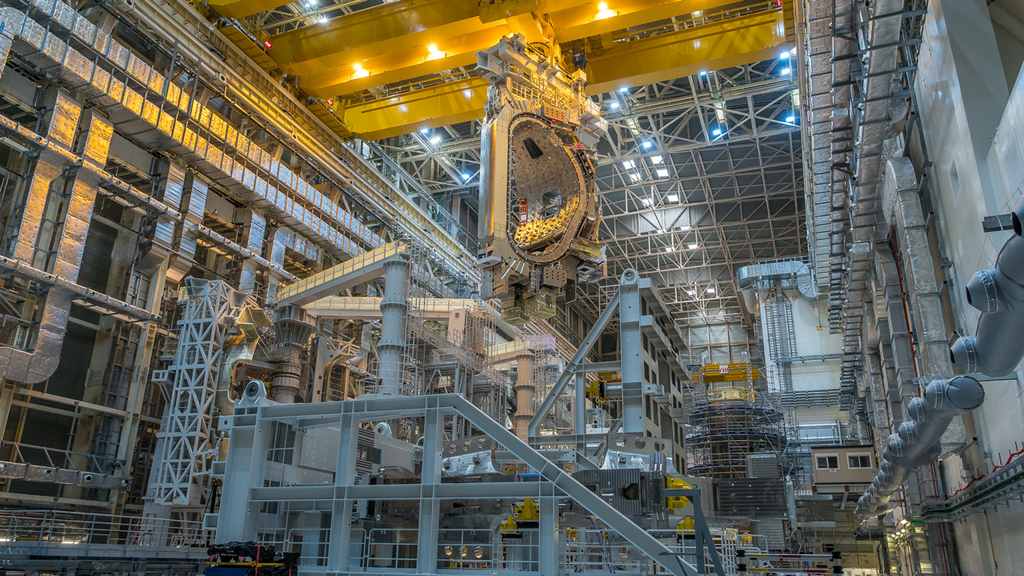
That experiment will provide a platform for well-diagnosed burning plasmas. The companies’ devices are really targeted at getting demonstration of milestones for the companies. They will not be investing a lot in the diagnostics and capabilities. And so the spiel I usually give is: This is our lowest risk path to get to a successful U.S. fusion industry, a world fusion industry. You have that ITER platform to use to develop the burning plasma physics in a highly diagnosed way. Because a lot of these first-of-a kind plants are probably going to be low availability, they’re going to have materials issues. There’s going to be a lot of work to be done to get us to the commercial fusion pilot plant that we’re really looking for, and having tools like ITER impacts other test stands that we’re trying to build in the public sector, which are going to be essential.
What do you make of the current timelines for fusion?
I wrote a report for DOE in 2021, and at that stage there was a private sector, but it was not very well capitalized. We just assumed that the U.S. government would bear much of the cost. And with that in mind, we were confident that a 2040 timeline for a first electricity producing plant was not out of the question.
And now the timelines are moved maybe a decade earlier, based on not just the private sector but also the national academies. There’s a “Bringing fusion to the U.S. grid” report that basically said if we want to get to deployment of fusion electricity by midcentury—and there’s many reasons to want to do that, and the report was looking at mitigation and climate change and other things—you really have to have a target of trying to do it by 2035 or earlier. And arguably, with the investment from the private side, you now have an amplifier and accelerator of the timeline now.
So, can we get a first fusion pilot plant in the 2030s? I think it’s feasible. We’ve got our work cut out for us, though. And you need a strong public program alongside it too, to solve all the challenges that are in front of the companies—the materials, the breeding, as well as the plasma physics, confinement. One company solving that all on their own? It could happen. They could just innovate like crazy and get enough money to get it done. But it’s very high risk. Basically, the companies are proceeding with unsustainable risk unless we can work together.
There’s a lot of secrecy in the industry now. How well do you even understand the progress that’s being made at these companies?
We understand the need to balance protecting IP and secret sauce, but at the same time, given where we are with this unique position the industry is in, being open about things that are not so secret. . . . There’s a lot of companies that have published significant amounts of information about their concepts and about their progress and the performance that they’re getting, and those results aren’t necessarily the secret sauce they’re focused on. They’re focused on things like magnets and other enabling technology.
My plea to the companies is: to the fullest extent possible, be open with your progress, understanding IP constraints, because it gives confidence to the whole industry and lets us evaluate progress and see where we need to help. Part of the issue is lining the public and private sector up and making sure that we’re all rolling in the same direction. And to the extent we can do that within the IP constraints, we want to work closely together.
This has become a global race with geopolitical dimensions. What do you think of the fusion progress happening in China?
China, we know they’re doing a lot. They’re investing tremendous amounts and in a mixed way. There’s direct investment from the government. There’s some private capital that’s coming in with a lot of support from the government, and they are moving really fast. And they’re building things. It’s not an approach that we use in the U.S. to build things, where they have 24/7 shifts with people welding and building, to the point where they stand up very impressive facilities in very short order.
[CFS’s] SPARC is, for a magnetic device, the closest to getting to a burning plasma condition in terms of the timeline that they’re claiming to have things operating. But the BEST device in China [the Burning Plasma Experimental Superconducting Tokamak]—which is very close to a SPARC clone—that’s going to probably turn on quicker, just because the Chinese have been faster and thrown a lot more money and people at it. The question is: Who’s going to turn on a magnetically confined burning plasma first?
Of course, NIF was the first to do it in a confined way, and that’s a U.S. activity. But in China, they’re building basically something like NIF and something like the machine that Pacific Fusion is trying to build, and so forth and so on. We probably can’t compete with the investment, scale, and the people that China is throwing at it. But we need to be smart in the U.S. and in our investments to support the growth of the industry if we want to have a big role in the ecosystem and the future.
Do you have a sense of how fusion is seen in Washington these days, and how the situation in the Middle East and associated oil shocks are driving the conversation?
It’s complicated. Fusion has had bipartisan support for a while and now it is spoken about among the top three DOE priorities, but it tends to be third: AI, quantum, fusion. And it does matter where you are in that pecking order in terms of getting support.
I haven’t necessarily seen anything or heard anything about the current situation. But I can’t imagine it doesn’t help with the argument that we need to deploy fission and develop fusion faster.
Policy changes have curtailed a lot of the U.S.’s global science collaborations over the past few years, particularly with Russia and China. I wonder what that shift has meant for progress in fusion?
All this progress was international. We had a collaboration with the U.K., with Europe, Asia. We used to work more closely with our Chinese colleagues. The progress that we made was because of that international collaboration. As we get towards generating energy and commercialization, you can understand there’s some competitive issues here, and having a bit of an eye towards trying to protect IP that’s happening in the U.S. and so forth, that’s perhaps an expected change.
But there’s also been a lot of geopolitics of course that have led to changes. Our interaction with China has changed a lot because of that. There are certain allies that we have grown closer to in terms of our fusion interactions—the U.K. is one, Japan is another, Germany is another. But it is a very different landscape right now because of the changes in geopolitics, and because we’re in a period where commercialization is starting to be a focus.
There are concerns about secrecy, as you said, especially about theft.
It is tricky. I think that fundamentally, there’s a lot of thorny issues here in terms of IP and what you want to share with your competitors and with the rest of the world, and trying to navigate that is challenging. It’s just helpful to have some information so we can assess where everybody is.
Every company has a little bit of hype as they try to sell to their investors and they have to be optimistic, I think. But you have to balance that with getting real milestones completed as a company and if possible, sharing those publicly. So we get confidence in the whole industry and that it’s headed in the right direction.
You recently visited Helion, which says it’s on track to start running the world’s first fusion power plant by 2028. I wonder how you compare their linear approach compared to more conventional designs like the tokamak and stellarator?
There are new ideas out there, but a lot of the ideas that the companies are based on are ideas that were in the public sector research. The approach that Helion is using—field reversed configuration, specifically using this merging and compression approach—Los Alamos did work on a device called FRX-L [Field-Reversed Experiment-Liner] that’s very much connected to Helion’s concept.
There’s ideas like that that have been explored, and the reason is, they’re much simpler from an engineering complexity point of view. The upper end of the complexity might be the stellerator. The stellarator has a lot of engineering complexity to it, but it’s an idea that has a lot of advantages in terms of its stability properties.
The FRC [Field-Reversed Configuration] has a lot of challenges from the plasma physics perspective. [The plasma] likes to flip over and do all kinds of stuff that prevents you from being able to accomplish the goal, which is to confine a plasma that’s hot enough and dense enough for long enough to make fusion reactions in copious enough amounts to make energy. That device has challenges in the confinement time: Basically, how long can you hold it still before it breaks itself apart? What we don’t know still is: What’s the density of that thing, and how long does it stick around?
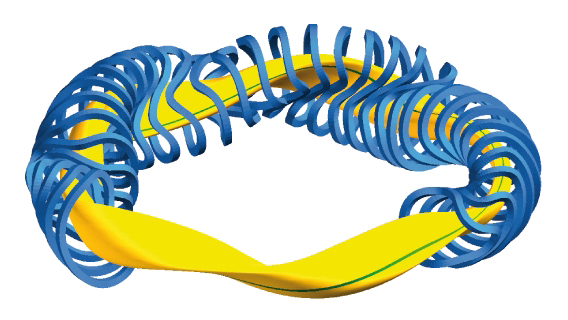
Whereas in the stellerator [plasma] can sit still forever. It has its instability challenges too. But this magnetic cage you form using these sometimes complex coil sets: That’s a very robust configuration to instabilities. It has advantages over the tokamak, which is the one that we’ve probably investigated the most. And yet, as you look at trying to make this into an energy source, tokamaks and stellarators may not be the lowest cost, or the opportunity that gets you to economic fusion, because of the engineering complexity.
As of now, we are looking at it in terms of the energy mission, rather than just driving the science of confining plasmas. And some of these other concepts that were thrown out or thought would be too challenging are being revisited by the companies, and they’re making progress.
Oak Ridge is the birthplace of a lot of older concepts that startups are now excavating, as I once learned about molten salt reactors for nuclear fission. Are there other early concepts that might be promising?
There’s a lot of ideas that we didn’t get a lot of time to explore. Zap Energy in Seattle, they are trying to use a very simple idea—V pinch—that people had given up on. Another company, Open Star, emerged from an idea from MIT and Columbia to use a levitated dipole of magnetic confined plasmas, based off of how that confinement works in the magnetic sphere of the earth.
There was a program at MIT that DOE funded for a while, but the plug was pulled on that and many other programs back in the early 2000s. And arguably, the fact that that program ended is why a lot of these companies were born. Because the funding kind of went away, they looked for alternative ways to fund themselves. ARRA-e had a fusion program called Alpha back around that time, and a lot of these ideas that had been funded by DOE pitched themselves to ARPA-E, which of course has a kind of tech-to-market focus, and so that resulted in a lot of the companies that spun out.
A number of the companies are now working on other pieces—the complex power equipment, the supply chain, the workforce and regulations. Some of them are also pursuing side businesses; CFS is now selling its magnets. Is there an opportunity for more companies to work together on some of their problems?
If you can’t make electricity, but you can still make enough fusion neutrons, you can do things like make medical isotopes. And that’s actually an early stage potential profit revenue generator. TAE is another good example.
And it’s interesting, a lot of the companies do have common supply chain issues. For example, Helion is making their own capacitors. I saw the operation, the “capacitor kitchen,” they call it. Other companies, like Pacific Fusion and Zap Energy and Xcimer, which also work with pulsed power, also need capacitors and switches.
They could potentially work directly together. But these are the kinds of things where this public-private partnership can help—where you identify these supply chain gaps, technology gaps. And perhaps DOE can make an investment in switches for pulsed power or capacitors that work with the right specs for all these companies that are trying to do this.


