
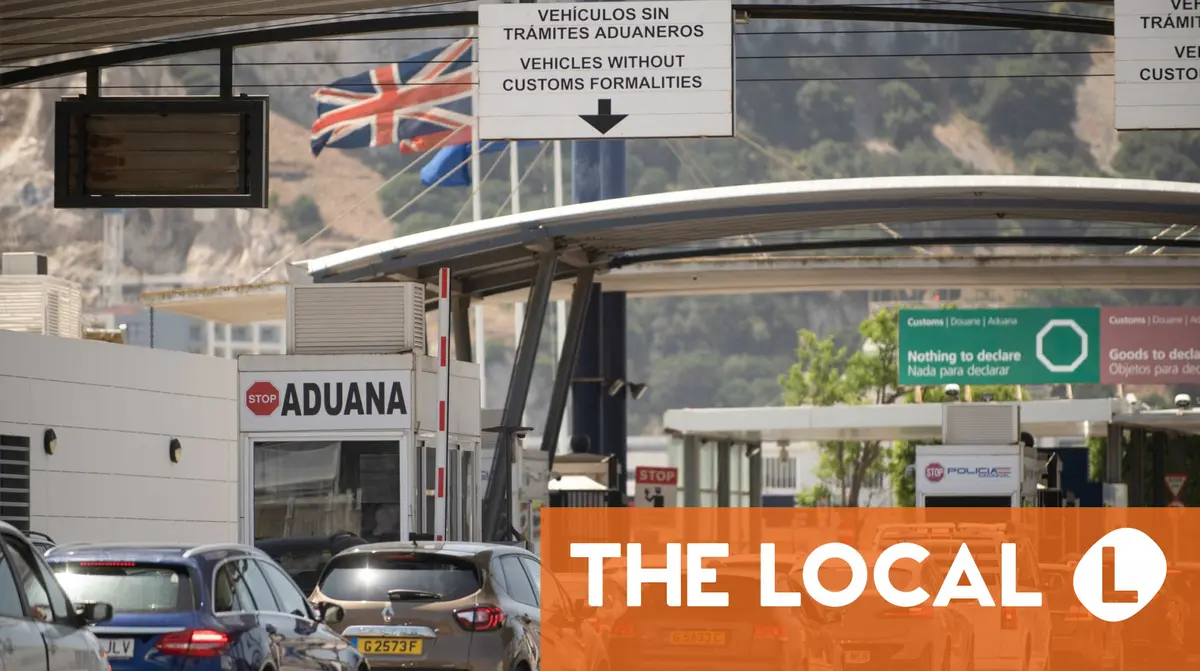
Spanish authorities will gain the right to veto entry to Gibraltar and block Gibraltarian residency applications as part of the British overseas territory’s post-Brexit deal, Spanish media reports suggest.
With the text of Gibraltar’s post-Brexit treaty finally due for publication nearly a decade after the referendum, media reports suggest that the deal will give Spain the power to veto entry and residency of non-EU citizens, including Britons.
The treaty, expected to be published on Thursday according to the Gibraltarian press, comes almost a full decade after the Brexit referendum in 2016 and is intended to finally end the legal limbo that the overseas territory has existed in ever since.
Spanish daily El País reports that the post-Brexit treaty also provides for the symbolic demolition of the border fence — known as La Verja in Spanish — that has separated Gibraltar from Spain for more than a century.
READ ALSO: IN DEPTH – Should Gibraltar be British or Spanish?
Article 7 states that “All physical barriers shall be removed in accordance with the plan contained in the administrative agreement between the United Kingdom and Spain regarding Gibraltar”.
If approved, this could allow for the removal of the border from April 10th, when the agreement will begin its provisional implementation phase.
Advertisement
Andalusian local media reports state that the April deadline is linked to the entry into force of the new European Entry/Exit System (EES), which will change border controls in the EU.
However, El País, which has had access to the text, also reports that treaty creates a system where Spanish authorities will not only have the right to veto the entry of non-EU travellers into Gibraltar, including UK nationals, but crucially also to grant or renew Gibraltar residence permits on the overseas territory when they claim that applicants pose a risk to security, public health or international relations.
Before issuing or renewing a Gibraltar residence permit, British authorities will notify their Spanish counterparts who will retain the right to veto certain applications if in accordance with Schengen rules the applicant is considered a threat to security, public health or international relations.
El País notes that in the aforementioned cases, British authorities will not grant the permit and will inform the person concerned that they may lodge an appeal with the Spanish authorities, who will have 28 days, extendable to 42, to reach a decision.
Advertisement
The deal essentially makes Gibraltar part of the Schengen Zone, but will do nothing for sovereignty claims on the territory.
A leak of the text published in Spanish media this week outlined Article 2 of the treaty, which states: “This Agreement, any supplementing agreements as referred to in Article 3, any administrative arrangements or other arrangements related to this Agreement, and any measures or instruments or conduct taken in application or as a result thereof, or pursuant thereto, shall be without prejudice to, and shall not otherwise affect the respective legal positions of the United Kingdom of Great Britain and Northern Ireland or of the Kingdom of Spain with regard to sovereignty and jurisdiction, and shall not constitute the basis for any assertion or denial of sovereignty including in legal proceedings or otherwise.”
As this is a treaty between the EU and the UK, the text must be legally ratified by both the European and British parliaments before entering into force.
READ ALSO: 90-day rule, borders and taxes – What the Gibraltar deal means in practice
