
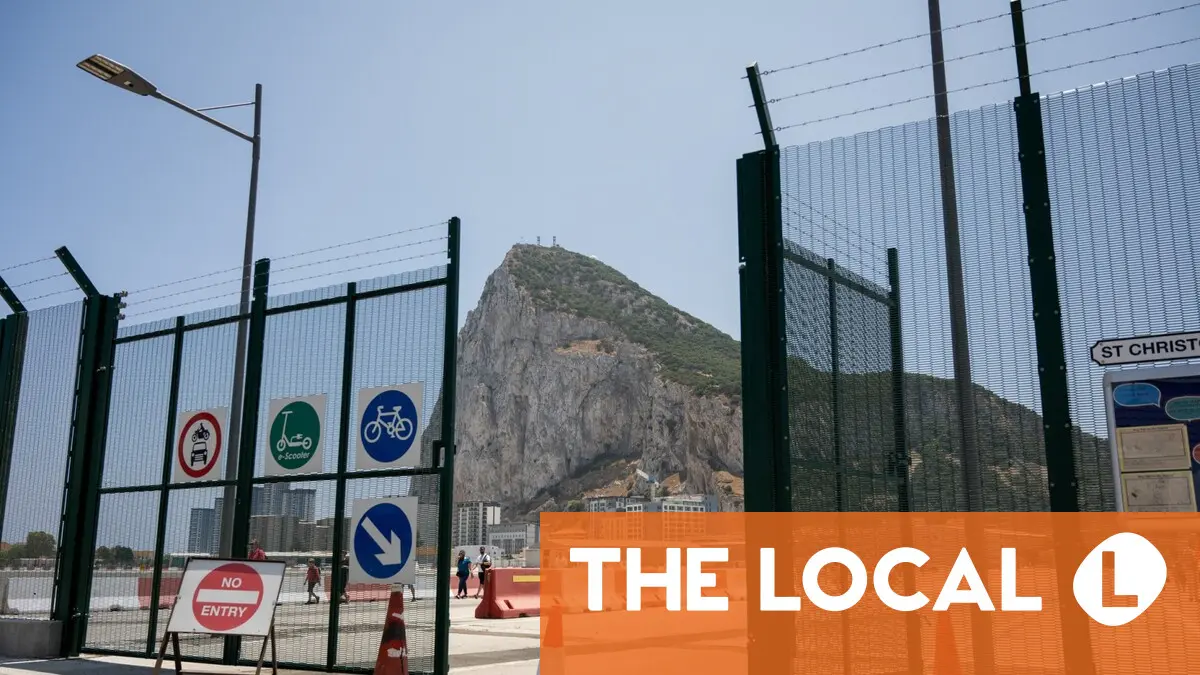
Following a statement from the European Commission, the British overseas territory at the tip of southern Spain is set to move beyond its post-Brexit legal limbo and implement a new treaty, including freedom of movement.
A decade on from the EU referendum, Gibraltar could finally see its Brexit deal implemented following a statement from the European Commission suggesting that it is moving toward the final formalities ahead of an April launch.
In a press release from February 17th, the body noted that: “The European Commission has adopted its proposals for the signature and provisional application, as well as for the conclusion of an agreement in respect of Gibraltar between the European Union and the United Kingdom.”
Advertisement
“The main objective of the EU-UK agreement in respect of Gibraltar is to secure the future prosperity of the whole region. This objective will be reached by removing all physical barriers on persons and goods circulating between Spain and Gibraltar, while fully safeguarding Schengen, the EU’s Single Market, and its Customs Union,” it adds.
READ ALSO: EU, UK and Spain agree next step for Gibraltar’s Brexit treaty
This could allow for the removal of the border fence with Spain from April 10th, when the agreement will begin its provisional implementation phase.
Andalusian local media reports state that the April deadline is linked to the entry into force of the new European Entry/Exit System (EES), which will change border controls in the EU.
European Commission spokesperson Markus Lammert recently told The Local that “the progressive deployment of the EES will end on April 9th 2026”.
Brussels considers it essential that the Gibraltar agreement be ratified and operational before the new system is comprehensively rolled out.
With the April deadline approaching, in its press release the European Commission also outlined the next steps and stated that the treaty must now be approved and ratified by other European institutions: “The proposals will now be transmitted to the Council. The Council will proceed with the necessary steps leading to signature and conclusion of the agreement. The European Parliament will need to give its consent, in accordance with the EU treaties.
If approved, it would mean that Gibraltar regains freedom of movement rights with Spain and the Schengen area, as well as the symbolic removal of the land border.
Maroš Šefčovič, Commissioner for Trade and Economic Security, stated: “Our goal has been clear and strategic: to secure long-term prosperity for the region, while fully safeguarding Schengen, the EU Single Market and our Customs Union.
Advertisement
With 15,000 people crossing daily between Gibraltar and Spain, this is about legal certainty, confidence for businesses and people as well as a cooperative future that reinforces our mutual relationship,” he added.
Gibraltar, a British overseas territory, voted overwhelmingly in the 2016 referendum to remain in the EU but has existed in legal limbo ever since.
The Rock’s post-Brexit status was not covered by the EU-UK Trade and Cooperation Agreement, signed back in 2020.
Following the finalisation of the political agreement in June 2025 between Commissioner Šefčovič and Spain’s Foreign Minister, José Manuel Albares, with Gibraltar Chief Minister Picardo and the then UK Foreign secretary David Lammy, the final legal text was drafted in December.
READ ALSO: 90-day rule, borders and taxes – What the Gibraltar deal means in practice
