
Gilead Sciences is expanding its cell therapy pipeline and technological capabilities through the $7.8 billion acquisition of Arcellx, its partner in the development of a multiple myeloma treatment designed to offer advantages over currently available therapies in its class.
In the acquisition agreement announced Monday, Gilead said the FDA has accepted the submission for the partnered multiple myeloma therapeutic candidate, anitocabtagene autoleucel (anito-cel). A regulatory decision is expected by Dec. 23.
Multiple myeloma is a type of blood cancer affecting plasma cells in bone marrow. Anito-cel is a CAR T cell therapy made by engineering a patient’s immune cells to target BCMA, a protein abundant on the surface of these malignant cells. That target is already addressed by Carvykti, a cell therapy commercialized by partners Johnson & Johnson and Legend Biotech.
One limitation of Carvykti is safety. In addition to an excessive immune response and neurotoxicity — risks that are associated with the CAR T therapy class broadly — clinical testing of Carvykti also showed some patients developed parkinsonism, a movement disorder. Results from anito-cel’s pivotal Phase 2 study showed no signs of parkinsonism. Anito-cel has maintained that safety advantage with longer follow-up. During the annual meeting of the American Society of Hematology this past December, Arcellx and Gilead reported continued improvement on measures of progression-free survival and overall survival and no parkinsonism. In a research note at the time, Leerink Partners analyst Daina Graybosch said anito-cel’s manufacturing and safety advantages are enough to drive physician enthusiasm and uptake of the therapy.
For 2025, J&J reported more than $1.8 billion in Carvykti revenue, a 96% increase compared to the prior year. Bristol Myers Squibb markets a BCMA-targeting cell therapy called Abecma. But sales of this product lag behind its rival, accounting for $427 million in 2025 revenue.
Gilead’s current presence in the cell therapy market is through Yescarta and Tecartus, which have regulatory approvals for treating certain blood cancers. In a briefing with journalists during the annual J.P. Morgan Healthcare Conference last month, Gilead CEO Daniel O’Day described anito-cel as offering best-in-class potential for multiple myeloma.
“The reason for that is we’re seeing efficacy that is as good as some of the other agents in this field with a safety and tolerability profile that will be able to provide greater impact for people in a curative potential aspiration that we have for multiple myeloma, similar to what we’ve shown in lymphoma and leukemia,” he said.
The Gilead and Arcellx partnership began in 2022 after anito-cel had posted positive Phase 1 results. Gilead paid $225 million up front and made a $100 million equity investment in its new partner. In 2023, Gilead expanded the collaboration and made an additional $200 million equity investment in Arcellx. Gilead said Monday its equity stake in Arcellx is about 11.5%.
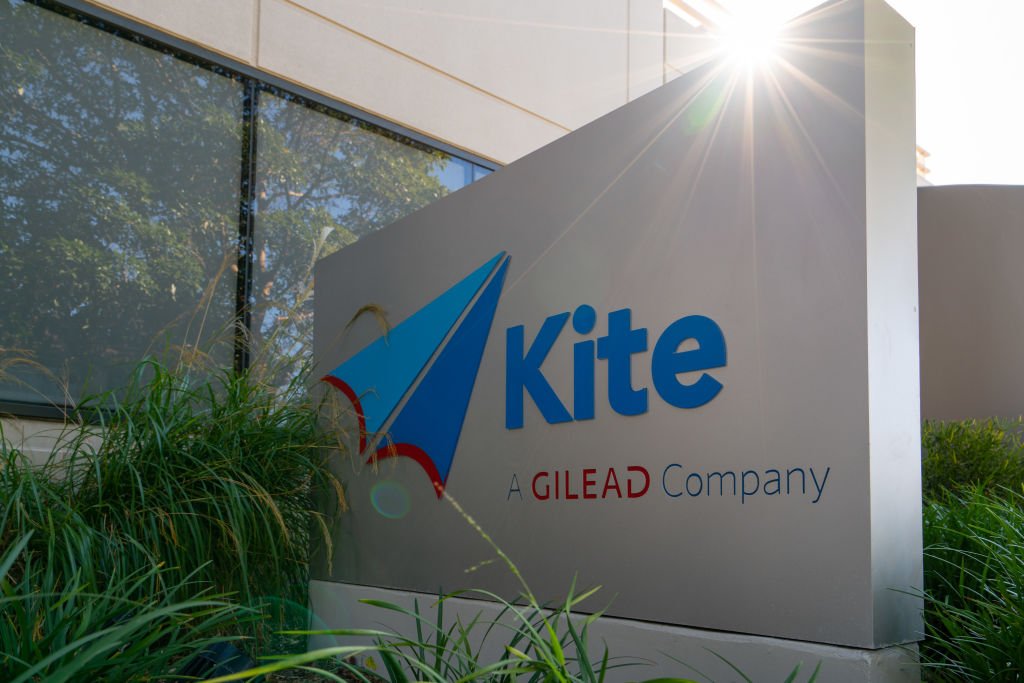
Anito-cel was partnered with Kite, the Gilead subsidiary that makes Yescarta and Tecartus. Kite has established global infrastructure to make the manufacturing of these therapies faster and more efficient. Arcellx had said it would be able to leverage this Kite network to support commercialization of anito-cel.
The initial collaboration agreement put Arcellx in line for up to up to $3.9 billion in milestone payments. When the acquisition closes, Gilead will no longer need to share in the economics of a commercialized anito-cel. The company will also gain broader access to Arcellx’s platform technologies, which may find additional applications addressing solid tumor targets as well as conditions outside of oncology, such as autoimmune diseases. In a note sent to investors, William Blair analyst Sami Corwin said Gilead’s ongoing commitment to the collaboration made it likely the alliance would lead to a buyout.
“While we believe the deal was largely motivated by Gilead’s confidence in anito-cel and desire to participate entirely in this economic potential of anito-cel without the burden of future collaboration-related payouts, we believe the company also saw long-term value in Arcellx’s D-Domain and ARC-SparX platforms, further supporting the acquisition premium,” Corwin said.
The acquisition agreement calls for Gilead to pay $115 in cash for each share of Arcellx, a 68% premium to the stock’s 30-day average price as of last Friday and a 79% premium to its Friday closing price. When Arcellx went public in 2022, it priced its shares at $15 each.
Arcellx shareholders could receive more from the Gilead deal. The acquisition agreement includes a contingent value right (CVR) that will pay an additional $5 per share, triggered when anito-cel reaches $6 billion in sales from launch date through the end of 2029. That goal is likely achievable. William Blair forecasts $7.8 billion in cumulative total global sales for the cell therapy by the end of 2029.
Photo: AaronP/Bauer-Griffin/GC Images, via Getty Images
