
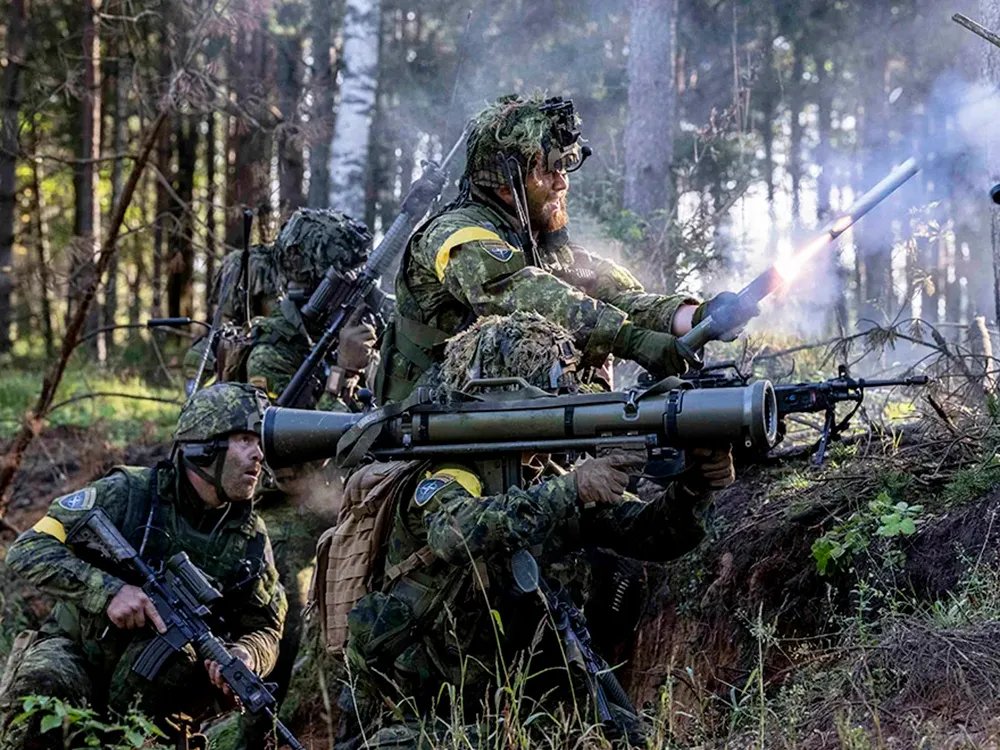
A new program aimed at attracting skilled recruits from foreign militaries is “nothing new,” according to a professor at the Canadian Forces College.
Immigration Minister Lena Metlege Diab unveiled a new scheme on Wednesday that she said would help “attract the best talent” to the Canadian Armed Forces.
“There are lots of people who began their military careers in one nation and end up in Canada,” Paul T. Mitchell, a professor at the Canadian Forces College in Toronto, said Thursday in an email.
Potential drawbacks to hiring experts from foreign militaries “is the security aspect,” said Michel Maisonneuve, a retired lieutenant-general.
“These people — you have to vet them properly,” he said. “To bring (Canadians) into our own armed forces is taking months. Is somebody going to stick with it who’s coming from outside?”
Whether they should be accepted by the Canadian military would depend on where recruits are coming from and their level of experience, said Ken Hansen, a military analyst and former Royal Canadian Navy commander.
“If they’re coming from Sweden and the United States, and Australia, then fine. They’re familiar with our system of operation and how governments let contracts and how programs are run,” he said. “But if they’re coming from a third world country or China or North Korea, I would say that they should weed those fellows out.”
But the “value of such recruitment is that you can bring in experience at the right level, rather than having to develop it yourself,” Mitchell said.
That wouldn’t mean, for example, recruiting a “civilian engineer to a middle management level within the military as they have never gone through all the basic and important formative training at lower levels,” he said.
“Sometimes this is done in wartime, but generally those people are brought in for very specific tasks and aren’t expected to be promoted or moved into an area outside of their specialty.”
The deputy commandant at the Canadian Forces College is a former member of the Royal Australian Air Force, and one of the school’s program officers is a former member of Britain’s Royal Air Force.
“I have seen a variety of other nationals who have transferred, including even Americans during my career,” Mitchell said.
The immigration knife can cut both ways, he warned.
“The Aussies relentlessly recruited experienced Canadian submariners to the point that we ultimately cancelled some of our cooperation with Australia in this area because of the drain on personnel,” Mitchell said.
Diab specified that Canada will be looking to recruit foreign professionals including doctors, nurses and pilots.
“We are creating a new category for skilled military recruits to attract highly skilled foreign military applicants,” she said Wednesday.
“This new category will support our government’s commitment to strengthen our armed forces, to defend our sovereignty and to keep Canadians safe,” she added. Diab said Ottawa would be proactive in finding the workers it wants to safeguard Canada in an era the prime minister has defined as increasingly dangerous, with the U.S.-led rules‑based international order crumbling.
“We’re not waiting for the right people to find us. We will go out into the world to recruit the people our country needs,” Diab said.
As of late December, this country’s regular force was sitting at 65,677 — 5,823 people short of the 71,500 target set for March 2032. The average strength of the primary reserve at the end of 2025 was 24,393 — 5,607 less than the 30,000 target.
“I think it’s a necessity,” Hansen said of the push to recruit from foreign militaries.
“Because they haven’t got anywhere near the number of skilled people they need.”
Maisonneuve, who once served as Canada’s assistant deputy chief of the defence staff, called it “sad that we have to go outside the country to attract people into our military.”
There are likely to be “a few takers,” Maisonneuve said. “But I really feel we’re grasping at straws here. They want to attract pilots and so on. If you think about it, a lot of our own pilots and our own technicians have been attracted by Australia and other countries. Now we’re asking people to come to Canada and join our military.”
His wife, Barbara Krasij-Maisonneuve, a retired Royal Canadian Air Force major, chimed in: “Come to Canada and fly my grandfather’s plane.”
Maisonneuve predicted the new measure would have a “minimal” impact on recruiting targets.
“I guess they’re looking at every single way” to boost the numbers, he said.
National Post with additional reporting from AFP
Our website is the place for the latest breaking news, exclusive scoops, longreads and provocative commentary. Please bookmark nationalpost.com and sign up for our daily newsletter, Posted, here.
