
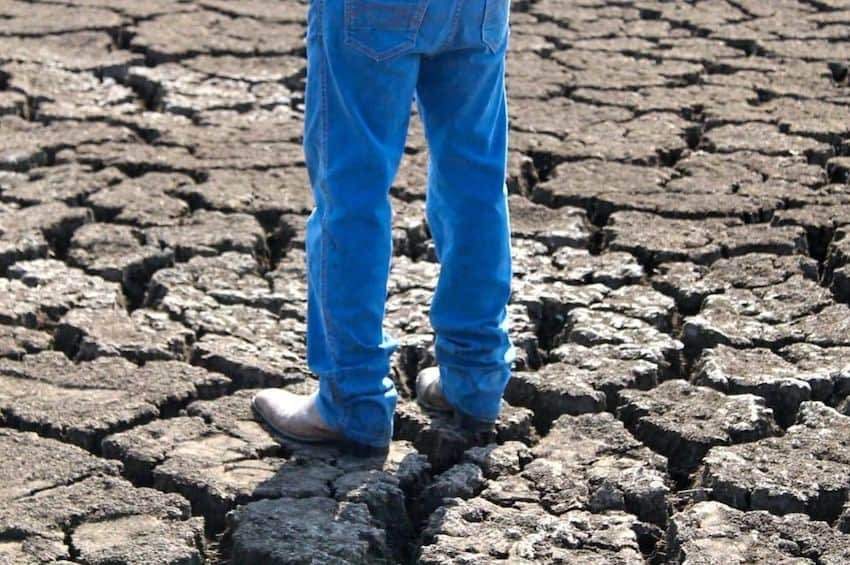
Extreme heat in North and Central America caused more than 125 deaths in Mexico alone last year. But intense climate variability, shifting mercilessly between cold and hot spells, rainfall and drought, has been felt most strongly in the borderlands.
Fluctuations in temperature and dryness are a natural effect of the El Niño–Southern Oscillation climate phenomenon (ENSO), a natural cycle of warming and cooling in the Pacific Ocean. However, its impacts are being intensified by climate change, from heat extremes to weather volatility.
Severe storms in the South Texas-Mexico border region killed at least four people last March. The Southwest United States and Northwest Mexico are experiencing a megadrought, their driest period in 1,200 years. Climate models suggest annual average temperatures will increase 2–3 degrees Fahrenheit by 2050, most intensely felt in the Western Sonoran Desert and the Northern Chihuahuan Desert. Annual precipitation will decrease by 20%.
Water
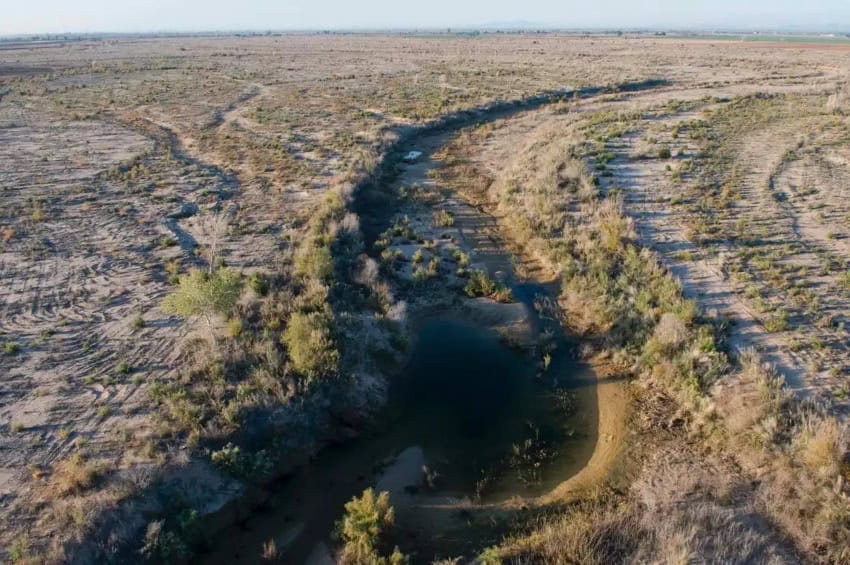
Water systems are under severe stress. Droughts, heat wave duration and average temperatures are all increasing throughout the border region. Precipitation loss is greatest along the coast and parts of the Arizona-Sonora border, while the Chihuahuan Desert is experiencing increasingly frequent dust storms and the streamflow of the Colorado River is decreasing rapidly.
Overextraction of central water sources, including the Colorado River and Rio Grande, is having significant impacts on the agricultural and livestock sectors. Manipulation of these channels through dams, diversions and other water management practices, as well as overallocation, is both the cause and effect of water shortages and increasing salinity.
This impacts everyone along the supply chain from farmers to consumers. Unsustainable water usage has led to the Colorado River Basin losing 27.8 million acre-feet of groundwater since 2005, and the Rio Grande’s natural flow has been depleted by 85%.
Wetland environments are particularly sensitive to changes in water, and those in the border regions could face irreversible degradation and biodiversity loss. Estuaries at particular risk include the Tijuana River and the Rio Grande, as well as the Laguna Madre coastal lagoon.
Pollution
Beyond human-induced precipitation modification, water sources in the borderlands are also experiencing harmful pollution. In 2022, the U.S. and Mexico together emitted 5,341.6 metric tons of carbon dioxide; 91% of this was by the U.S.
The Rio Grande has long been plagued with contamination from a wastewater treatment plant in Nuevo Laredo, Mexico.
The Tijuana River, which flows from the city of Tijuana in Baja California into Southern California and the Pacific Ocean, is no different. Health and environmental experts highlight this issue as a leading public health crisis in Mexico. Additionally, industrial byproducts and border traffic cause high levels of atmospheric pollution in the borderlands.
Human rights issues
Growing economic, social and public health concerns are often the result of unpredictable and intensifying rainfall, flooding and drought periods, which are threatening already poor infrastructure and affecting energy, food security and traditional livelihoods tied to agriculture.
Climate change will unevenly impact border populations due to economic, cultural and institutional differences, revealing a significant threat to human rights. The borderlands’ predominantly urban population is concentrated within the 14 city pairs that line the border on each side.
While higher poverty levels and poorer housing quality and urban planning characterize all these cities to some extent, the severity of these structural vulnerabilities is felt more severely in those of Mexico. Tijuana, Nogales and El Paso are examples of critical underinvestment in infrastructure and drainage. Rapid population growth is also putting further pressure on resources.
Particularly vulnerable communities are migrants and low-income residents living in lower-quality or overcrowded housing. But rural populations in the borderlands, living in colonias and unincorporated communities, are also at high risk due to their isolation from water and sewage systems and similar struggles with poor housing and infrastructure, highlighting socioeconomic marginalization as a regionwide problem.
Displaced peoples and migration
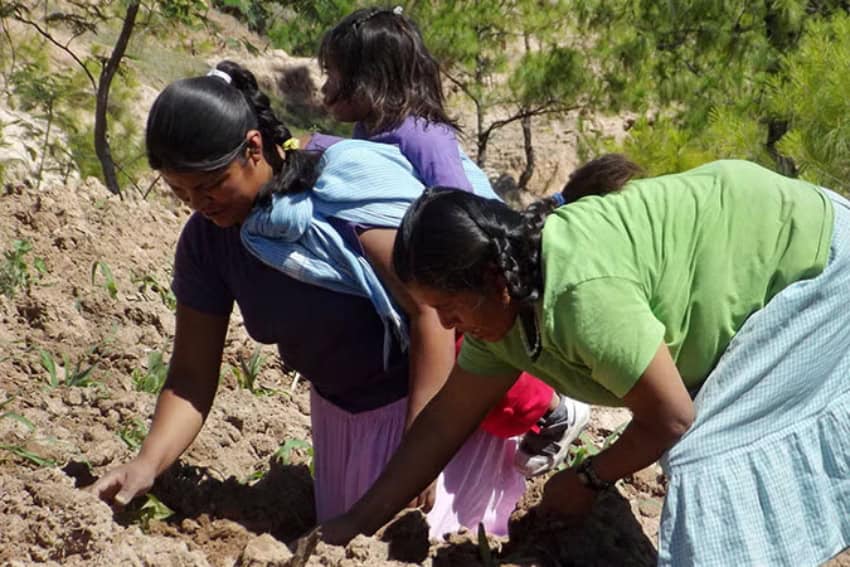
Extreme weather in the borderlands has a direct impact on the number of people migrating from Mexico to the U.S. Decreasing crop yields, encouraging migration, is particularly prevalent in communities without irrigation systems, further underlining issues of rural vulnerability.
Migrant and agricultural workers also face increased risk to their health and economic stability due to lower, less reliable wages and dangerous working conditions. In the U.S., farmworkers are 20 times more likely to die from heat than other workers.
Undocumented migrants are most heavily affected by climate-induced migration, as their journey is both the most politically and physically tumultuous. Migrants and displaced people in transit threatened by restrictive asylum and border policies undertake more treacherous routes, resulting in their further exposure to severe weather and environmental dangers.
Transboundary agreements
Dissonance regarding national climate agendas creates a thorny environment for transboundary cooperation, in addition to the reality that both Mexico and the U.S. are not model governments when it comes to tackling global warming.
The Trump administration has made its point to reverse many of Biden’s efforts, including pulling out of the Paris Agreement, freezing environmental funding and disbanding the Interagency Working Group on the Social Cost of Greenhouse Gases on its first day alone.
In April of last year, the Trump administration replaced Maria-Elena Giner as head of the U.S. section of the International Boundary and Water Commission with the ex-Environmental Protection Agency official from Trump’s first term, William McIntosh, a decision under some degree of fire as Giner was in the process of tackling cross-border management of the Colorado River.
Meanwhile, Climate Action Tracker has characterized Mexico’s attempts to tackle climate change as “critically insufficient.”
While frameworks are in place to improve environmental protection in the borderlands, they are not making sufficient progress to tackle cross-border pollution and water management. Additionally, weak data-sharing practices and inconsistent technical standards continue to undermine transboundary governance, leaving agencies on both sides of the border to work with fragmented or incompatible information.
The Border 2025 Program between the U.S. Environmental Protection Agency and Mexico’s Ministry of the Environment and Natural Resources is insufficient in that it is not legally binding. Meanwhile, the 1944 Water Treaty is struggling due to rising political tensions as the U.S. is holding back on scheduled water releases, claiming Mexico is in an “accumulated water debt.”
It is clear that more permanent and rigid frameworks need to be implemented between national governments, strengthened by cross-border transparency and multilevel governance. Transboundary cooperation is critical to fortify adaptive capacities in the borderlands and successfully manage climate change.
Looking to 2026
With megadrought intensifying, pollution crises worsening in the Tijuana River and Rio Grande, and vulnerable populations bearing the brunt of environmental decline, 2026 offers a narrow but critical window to redesign binational governance before climate pressures outpace institutional capacity.
The current domestic and binational agreements around the Colorado River will expire at the end of 2026, while the success of the signing of Minute No. 333 in response to the strained 1944 treaty is notable.
Whether the region moves toward deeper cooperation or further fragmentation will depend on the willingness of the U.S. and Mexico to adopt more permanent, enforceable mechanisms, expand transparent data sharing and meaningfully include Indigenous communities whose knowledge and rights have long been sidelined, especially in the aftermath of the 2025 United Nations Climate Change Conference.
Millie Deere is a freelance journalist.
