
Ten days and nearly 300 movies later, the Toronto International Film Festival (TIFF) has come to an end. It was a particularly big year for the festival, which is celebrating its 50th anniversary. This resulted in some highly-anticipated movies featuring at the show, from big genre titles about monsters and murder mysteries to emotionally-charged family dramas.
This year, I got to attend TIFF for the first time as media, which was a dream come true as a burgeoning cinephile. In total, I got to see 22 movies, which isn’t half bad considering I was balancing that with our usual tech coverage on MobileSyrup. The full list of movies and my rankings of them can be found on my Letterboxd, but for the website, read on for my thoughts on my top five movies.
5. Wake Up Dead Man: A Knives Out Mystery
Josh O’Connor as Jud Duplenticy and Daniel Craig as Benoit Blanc in Wake Up Dead Man. (Image credit: Netflix)
When it comes to religion, I tend to be cynical. Chalk it up to years of my now-estranged family shoving their faith onto me while being incredibly hypocritical about it all. That’s why I so adore something like Wake Up Dead Man. In his Knives Out threequel, the ever-inventive writer-director Rian Johnson uses the series’ anthological framework to break the mould in a bevy of clever ways. Outside of a brief opening shot, we don’t even see Daniel Craig’s Benoit Blanc for perhaps half an hour, the focus instead shifting to Josh O’Connor’s tortured but well-meaning young reverend, Jud Duplenticy, who’s commendably trying to make amends for a sinful act that haunts him.
It’s a pivot that immediately grounds the film in something more emotional than the previous Knives Out films. And even when Blanc does fully enter the story, Jud plays off him beautifully, with our Southern detective’s status as a self-proclaimed “proud heretic” clashing with the devout reverend. At the same time, Johnson mines this not only for comedy, but for an introspective arc for Blanc, who comes out of this with a more nuanced look on faith.
That profundity is another area in which this feels like a different beast entirely to the last two films. Yes, the film still has that sharp Knives Out humour, especially in its send-up of a far-right influencer shitheel. But in the surprisingly heartfelt third act, Johnson leans more into sentiment than comedy. Shortly before my screening, I got to attend a TIFF talk with the director and co-star Glenn Close, and in it, Johnson talked about how his “evangelical” upbringing has led him to develop a more complicated view on religion now.
You feel that in every frame in Wake Up Dead Man. It’s a fascinating exploration not only of how faith gets weaponized by bad actors, but also of its capacity for beauty and healing. I never expected to be touched by a Knives Out movie, but here we are.
Wake Up Dead Man will have a limited theatrical release starting on November 26 before it begins streaming on Netflix on December 12.
4. Train Dreams

Robert Grainier (Joel Edgerton) in Train Dreams. (Image credit: Netflix)
I went into Train Dreams knowing very little about either the film itself or the original novella upon which it was based, and I was much better for it. That’s because it packs such an emotional wallop, eventually becoming something entirely different from what I expected. Directed by Clint Bentley and co-written by him and Greg Kwedar (who worked together on last year’s sensational Sing Sing), Train Dreams is a staggeringly powerful meditation on the passage of time, American expansion and finding purpose after tragedy.
Joel Edgerton (The Gift) gives a masterfully understated and introspective performance as logger Robert Grainier, an honest man who struggles with his place in a changing world. Impressively, Edgerton conveys so much in single, contemplative gazes from his weathered and increasingly greying face. Indeed, Robert says very little in the film overall, but his acting, alongside Adolpho Veloso’s stunning naturalistic cinematography, Bryce Dessner’s achingly melancholic score and the gravitas of Will Patton’s narration, leaves a tremendous impact. This leads into one of the most viscerally moving endings I’ve seen in ages, bringing me to tears by the time the credits rolled. To say more would reveal too much, but suffice it to say that this is a profoundly affecting yet ultimately uplifting film.
Train Dreams will have a limited theatrical release starting on November 7 before it begins streaming on Netflix on November 21.
3. Hamnet

Agnes (Jessie Buckley) and William (Paul Mescal) in Hamnet. (Image credit: Searchlight Pictures)
Co-writer and director Chloé Zhao’s Hamnet is a deeply moving and spiritual meditation on parenthood, grief and the healing power of art. This could have easily been a reference-filled dramedy in which the camera winks at us every time we see an inspiration for Shakespeare’s biggest works, but thankfully, Zhao and Maggie O’Farrell, in adapting the latter’s 2020 novel, have much loftier ambitions. While there is the occasional nod to a few of Shakespeare’s biggest works beyond obviously Hamlet, what I appreciate most about this story is that it isn’t even really about him.
Instead, it’s admirably centred around his wife, Agnes. If anything, the film uses the absence of the legendary playwright — the result of his being away to work on Hamlet — to double down on Agnes and their children. It’s an effective setup that simultaneously adds weight to Agnes’ struggles of having to regularly take care of their kids on her own while also leaving you to contemplate William’s headspace as he toiled away at his writing.
But of course, none of that would matter without the absolutely mesmerizing performances of Jessie Buckley (The Lost Daughter) and Paul Mescal (Aftersun). The real revelation, though, is Jacobi Jupe (Peter Pan & Wendy) as their titular son. He’s simply magnificent as this lively, caring and brave little boy, delivering one of the best child actor performances I’ve ever seen. Even more emotional weight comes from naturalistic cinematography, from the lush yet empty English wilds of their secluded home to the more abstract and spiritual imagery that illustrates the floundering mental states of the grief-stricken parents.
But the film truly comes together in its third act, a breathtakingly soulful examination of the transformative impact of the creation, performance and communal viewing experience of a play like Hamlet. Outside of the stage actors delivering their lines from the actual play, this is an entirely dialogue-free sequence, and yet, so much is said through the blocking, layered performances and Max Richter’s heart-wrenching score. It’s one of the most emotional endings I’ve seen in a long time, and I could even hear people throughout the entire theatre crying during it.
Hamnet is a tough watch, to be sure, especially for parents, but it’s also an undeniably powerful one, making it a well-deserved winner of the TIFF People’s Choice Award.
Hamnet will open in select theatres on November 27 before releasing widely on December 12.
2. Nirvanna the Band the Show the Movie 🇨🇦

Matt Johnson and Jay McCarrol as fictionalized versions of themselves in Nirvanna the Band the Show the Movie. (Image credit: Elevation Pictures)
Full confession: I’ve never seen Nirvanna the Band the Show. I’ve always had an interest, though, especially since I first discovered Toronto filmmaker Matt Johnson through his fantastic 2023 BlackBerry film. But even without any prior connection to the Canadian cult classic mockumentary series, I had one of my absolute best theatre experiences in ages with Nirvanna the Band the Show the Movie.
The film follows the lead characters of the series, the fictionalized versions of Johnson and longtime collaborator Jay McCarroll, as they once again try to book a gig for their titular band at the Rivoli in Toronto. After years of failures, Matt has now cooked up his craziest scheme yet – inventing a time machine so they can return to 2008 and start over. (Well, after a side-splitting base jumping scheme involving the CN Tower and Skydome Rogers Centre.
It’s an irreverent premise that paves the way for an infectious mix of humour and heart. Naturally, there’s a great deal of fun to be had in revisiting the Toronto of the late aughts. From nostalgic nods to the likes of The Dark Knight and The Hangover to elements of Toronto culture, like a joke about disgraced former CBC personality Jian Ghomeshi and even a temporary switch to old camcorder quality, Johnson and McCarroll make the most of this older setting.
The love letter to Toronto that extends well beyond gags involving an outrageous CN Tower basejumping stunt to a live CP24 police chase and a Budweiser Stage performance. Above all else, the film celebrates the heart and soul of the city, from its multiculturalism to its artistic spirit, through authentic hidden camera exchanges with the people. (One particular highlight is a Canadian Tire employee who’s baffled by their bizarre questions related to the CN Tower plot but is still patient with them as he tries to help.)
All the while, Johnson and McCarroll get surprisingly contemplative about the passage of time and what that’s meant not only for Toronto, but for them as artists. Even if you’re not a longtime Nirvanna the Band fan, you can still appreciate the sincere exploration of the strained but ever-resilient bond between these friends, even as things have drastically changed. Hilarious and heartfelt, Nirvanna the Band the Show is not only legitimately exceptional Canadian cinema but one of the best comedies of the year.
Nirvanna the Band the Show the Movie will hit theatres sometime in February 2026.
1. Sentimental Value

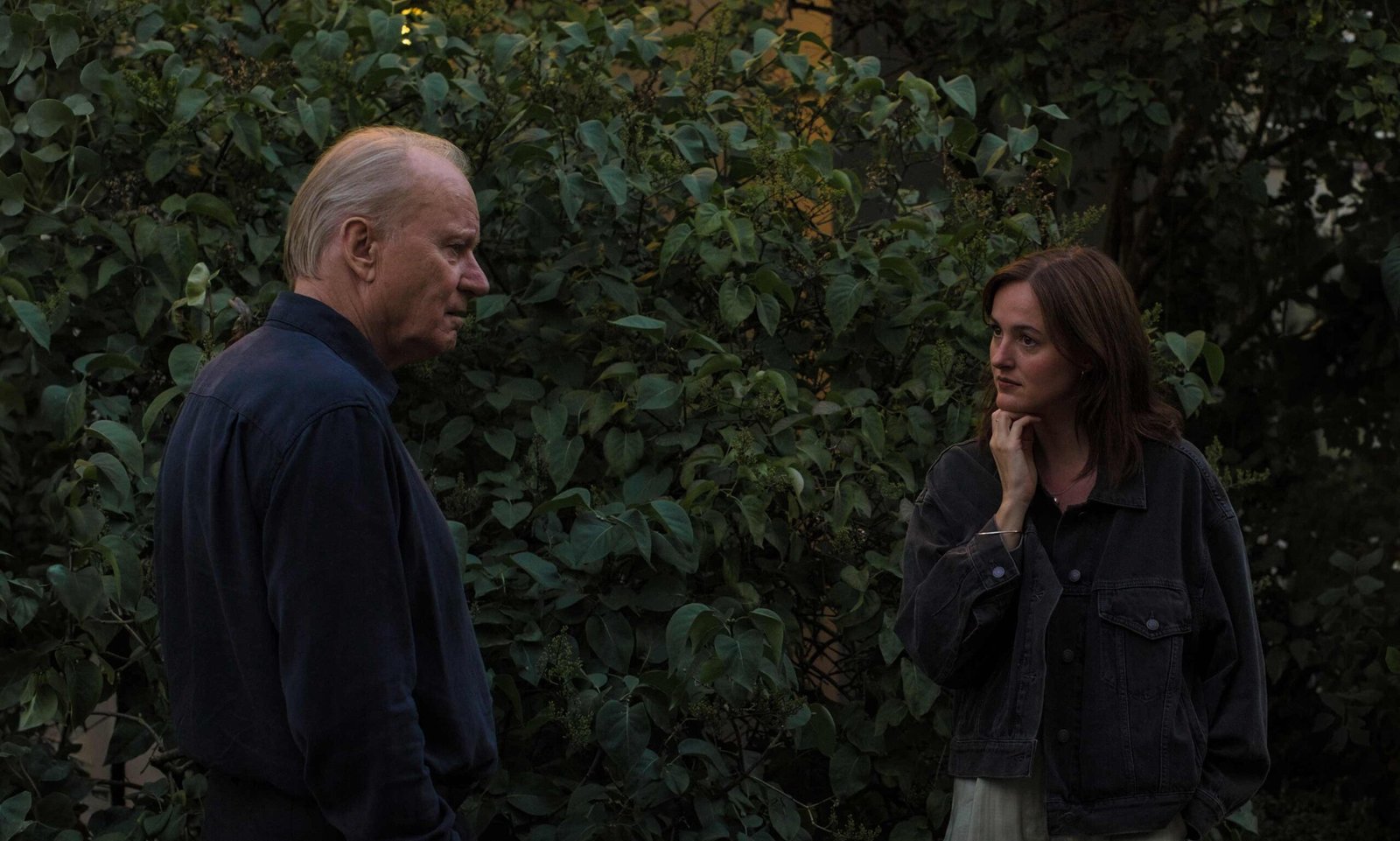
Nora (Renate Reinsve) and Agnes (Inga Ibsdotter Lilleaas) in Sentimental Value. (Image credit: Neon)
I’ve been pretty open about my struggles with having an estranged father. It’s a particular void that you always try to fill, however fruitless it might be. But that’s also the beauty of art; it can speak powerful emotional truth to what you’ve gone through, helping to provide validation, comfort and even healing. I say all of that to give context for how much Sentimental Value, the latest film from Joachim Trier (The Worst Person in the World), absolutely floored me.
It’s a soulful and oh-so cathartic treatise on resentment, regret and reconciliation. Truly, I connected so much with Nora (a magnificent Renate Reinsve, The Worst Person in the World), a talented and kindhearted young actress who’s also dealing with feelings of aimlessness and self-loathing. I went into Sentimental Value expecting it to go big with these heavy scenes between her and her father, the acclaimed director Gustav (the ever-excellent Stellan Skarsgård, Andor), and we certainly get some of that.
But to my pleasant surprise, the film is, on the whole, much more understated and introspective in its examination of the effects of familial detachment. Everything from Nora’s struggles with self-worth to the ways she tries to shut out her father when he returns hit close to home. So much is said in the quiet moments, like a simple scene in which Nora and Gustav smoke outside together and struggle to maintain eye contact as they awkwardly smile and fail to say anything to break their tension. Indeed, their inability to connect on any meaningful level is a recurring part of the story, and a particular scene in which Nora calls him out for not even truly knowing her or her sister (a lovely Inga Ibsdotter Lilleaas) proves especially relatable.
Altogether, it’s an achingly authentic depiction of the complicated swell of emotions one feels from lacking a parental figure. (And in Nora’s case, she was missing both, given that her mother actually passed away.) At the same time, Trier and screenwriter Eskil Vogt still manage to make Gustav feel like a three-dimensional character instead of the “big bad villain.” Sure, they don’t shy away from his failings as a father, which can manifest in admittedly droll ways, like how he gives arthouse movies to his grandson as part of his genuinely well-intended effort to reconnect with everyone.
But we also see a more tender side of him, as he’s ironically able to better empathize with and console his latest lead actress (Elle Fanning, The Great), than his own daughters. There are also a series of flashbacks which shift to a stunningly classic film aesthetic to convey the history of Gustav’s family home and the tragedies that took place within it, making him more sympathetic than you’d expect.
Admittedly, this all culminates in a conclusion that’s probably predictable for many. But it also feels emotionally true, never losing sight of the struggles and warmth and humanity and everything else that make up the wonderfully well-realized cast. Much like life itself, Sentimental Value doesn’t wrap up cleanly and with everything resolved, but it does, at least, show how we can try to move forward together. How we’re not defined by our pain. How we’re all worthy of second chances. How we’re all worthy of being loved.
Sentimental Value is easily my favourite film of the year, and I’m dying to see it again when it releases in theatres on November 7.
Honourable mentions: No Other Choice, It Was Just An Accident, Frankenstein, Mile End Kicks 🇨🇦 and Bad Apples
Header image credit: Neon
