
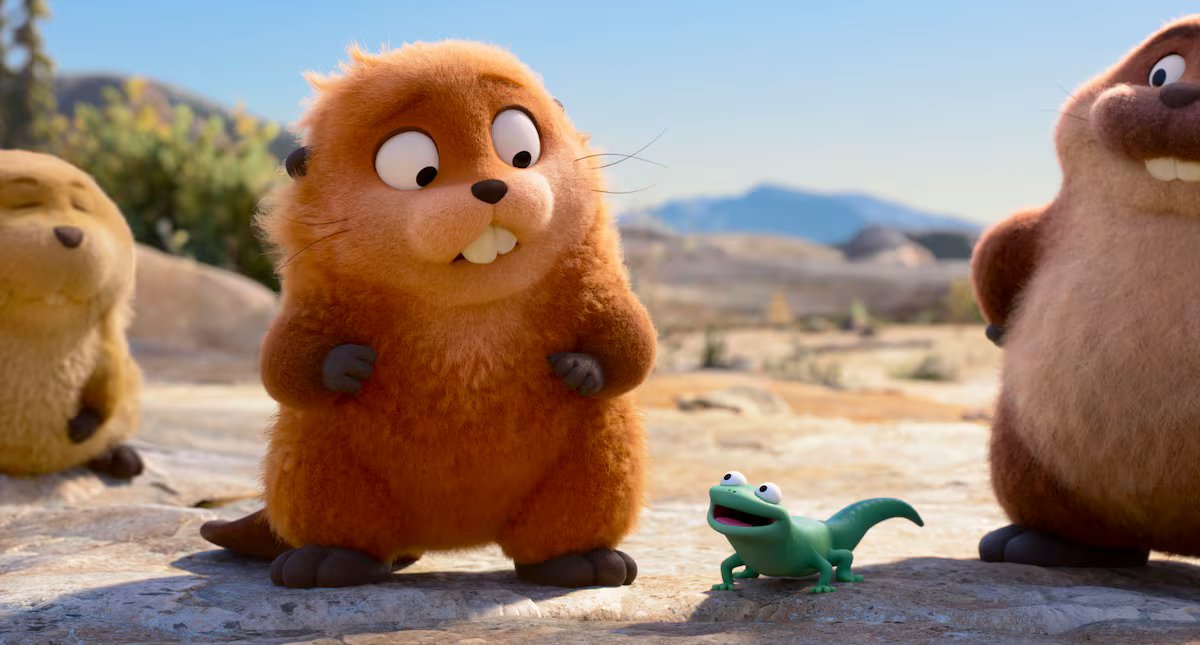
Pixar really knows what it’s doing. It has for 40 years, ever since it first opened its doors as an independent animation studio. Twenty years ago, it became part of Disney (that fruitful marriage will celebrate its 20th anniversary in May), and it’s long since gotten the hang of what its ever-growing audience is looking for. As such, it no longer puts out small projects. Hoppers, its first movie of the year, is no minor affair — though it does seem secondary in importance for the studio in 2026. The fourth sequel to the smash hit Toy Story, a franchise that has been around for two decades, is slated to arrive in mid-June. But in the meantime, Pixar is making it clear that it has more to offer its viewers.
Perhaps that is why the studio embarked on a film in which nothing is particularly novel, yet everything is different — an approach that ticks all the brand’s requirements. Its production company, located in the small San Francisco Bay Area city of Emeryville, has been working on the story for more than six years, and has bestowed upon it the patina of care and quality for which it has become known. As in other recent Disney hits (like Zootopia 2, the highest-earning animated film of all time), animals are the protagonists, and the film blends humor with refined technology and a dash of fantastical futurism, the perfect ingredients for a solid script. It features the most logical kind of environmentalism, that which simply seeks to prevent the destruction of what we hold dear, with Pixar’s characteristic nostalgia and modern family structures. Not to mention, a somewhat dark and punk edge.
Our lead is young Mabel, accompanied by her grandmother Tanaka, who teaches her to care for and respect her environment. They are joined by a handful of animals who become friends and adventure companions. Rebellious, complaining, messily coiffed, chaotic Mabel — a normal girl, one might say — literally comes to insert herself into a beaver’s body to save her city from the construction of a new highway. Daniel Chong is the creator and director of the project. He’s no stranger to creatures and laughs, having started out at Pixar (working on Cars 2 and Inside Out) before leaving for five years to create and direct the animated series We Bare Bears and its subsequent film adaptation. Upon returning to the studio, he became a part of the teams that made Lightyear, Inside Out 2, and Elio, before getting his first Pixar directing credit with Hoppers. He’s joined on the new release by veteran producer Nicole Paradis Grindle, who has been a part of the studio almost since its founding.
The professional duo explain that at first, the film wasn’t going to feature beavers, but rather, penguins. They were counseled to shift gears — penguins were already well-represented in animation. When they learned of the skills and goodwill of beavers, who are able to build dams and help preserve the freshness and greenness of areas experiencing drought, as well as help to prevent fires, they were convinced. They traveled to natural areas and reserves, including Yellowstone National Park, where they rose at dawn to inspect the area, researching the animals and how they behaved in their natural environment. “They told us to simply listen. To listen to nature and to spend time in it, in communion,” explained Chong. That helped them to get to know how beaver communities behave, and they even worked with a university expert on the animals, all of which made their movie more truthful, with more realistic references.
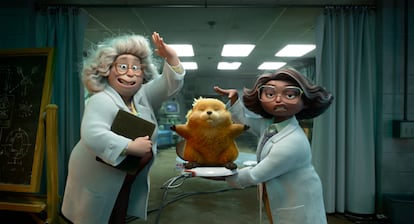
Beyond beavers, Chong always had in mind “a secret organization that did something special, like in those 1990s films Sneakers and Hackers.” Such was the inspiration for the technological process — featuring some vintage equipment — through which young Mabel becomes a beaver. In fact, there are many cinematic throwbacks in Hoppers, from Studio Ghibli nods to references to Invasion of the Body Snatchers and Wallace and Gromit.
In another instance of the Pixar touch, the beavers change based on who is perceiving them: if the scene takes place between the rodents, they look closer to an animated cartoon, round with big eyes. If there are humans involved, they look more realistic. Chong explained that he worked freehand in the early stages of the film’s design, but then switched to 3D. “We wanted them to fit into nature, to be believable, real yet stylized.”
Born in South Dakota with familial roots in Singapore, the director also found it difficult to strike the right tone with the film’s lead Mabel, who has Asian heritage. Paradis Grindle explains that Mabel had to have a kinder, more empathetic touch, “because at first, people didn’t like this young girl who shouted at everybody.” “That was a challenge,” Chong confesses. “But then you see her as a child, with her grandmother, and you understand her better.” The director admits that he wanted his characters, and particularly his protagonist, to become iconic, like so many others created at the animation studio. “But one of the things I remember most about growing up watching Toy Story, A Bug’s Life, Monsters Inc. and Finding Nemo was the fun. You laughed a lot and you loved those characters. I’ve been on a profound search for that fun,” he explains. “And this studio is really good at helping you find the emotion.”
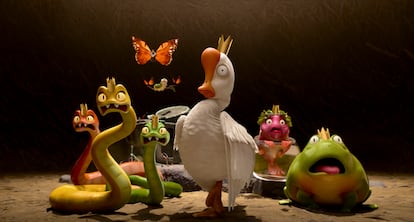
Another of the most complex parts of making the film is its core battle between forces of good and evil. Pixar and animated films aren’t only for a child audience, and the film has dark, threatening moments, with snakes and other elements that are quite capable of frightening its primary audience of young people. Producer Paradis Grindle says, “In my experience with this public, and in my own life experience, parents are often more worried about what will scare kids than what kids want. And being a little afraid is part of the story. It’s part of the Brothers Grimm tales. And kids, like adults, like to stand on the edge of the precipice,” she reflects. “I don’t think we’ve gone too far; we’ve thought about it a lot, we had notes from past screenings with audiences. And we backed off where we had gone too far. But it’s more interesting when a children’s story makes you feel that hint of fear, and then backtracks. My children, of course, are perfectly fine,” she laughs. Chong says that as a child of the 1980s, he grew up with films that were a little scary, but intended for family audiences, like Gremlins, and that he believes Hoppers arrived at “a good point.”
In the film, characters are voiced by actors like Jon Hamm, Dave Franco, and Meryl Streep, who makes an appearance as the leader of the monarch butterflies in what is perhaps its funniest scene. We still have a few months to wait until the arrival of Toy Story 5 — but if in its anniversary year, Pixar was hoping to deliver nostalgia and humor, the studio has already managed to do just that.
Sign up for our weekly newsletter to get more English-language news coverage from EL PAÍS USA Edition
