
Saba Yamani is a Kyiv-based dental professional and 2SLGBTQIA+ woman who was born in Saudi Arabia and raised in Ukraine. She speaks Ukrainian fluently, completed medical university training in Kyiv, and works at a private dental clinic. She has described being baptized in the Orthodox tradition, coming out, and living through wartime pressures on queer visibility and safety. Yamani has also spoken publicly about refugee-status hurdles, including lacking a Ukrainian passport, while continuing to build her life and career in Kyiv.
Scott Douglas Jacobsen and Saba Yamani discuss how Russia’s full-scale invasion reshaped 2SLGBTQIA+ visibility and risk in Ukraine. Yamani says large Pride marches paused for security, then reappeared with limited, tightly protected actions in Kyiv. She describes prewar and wartime harassment, including online threats and stereotyping based on clothing, and notes sharper stigma in some western regions linked to conservative religiosity. The conversation also covers civil-union advocacy: Yamani recounts a 25,000-signature petition that received a presidential reply but no immediate legal change under wartime constraints, and she emphasizes the stakes for partners’ hospital access and burial rights during active combat.
Scott Douglas Jacobsen: We will focus on the wartime LGBT experience. Has Kyiv Pride been running since the full-scale invasion?
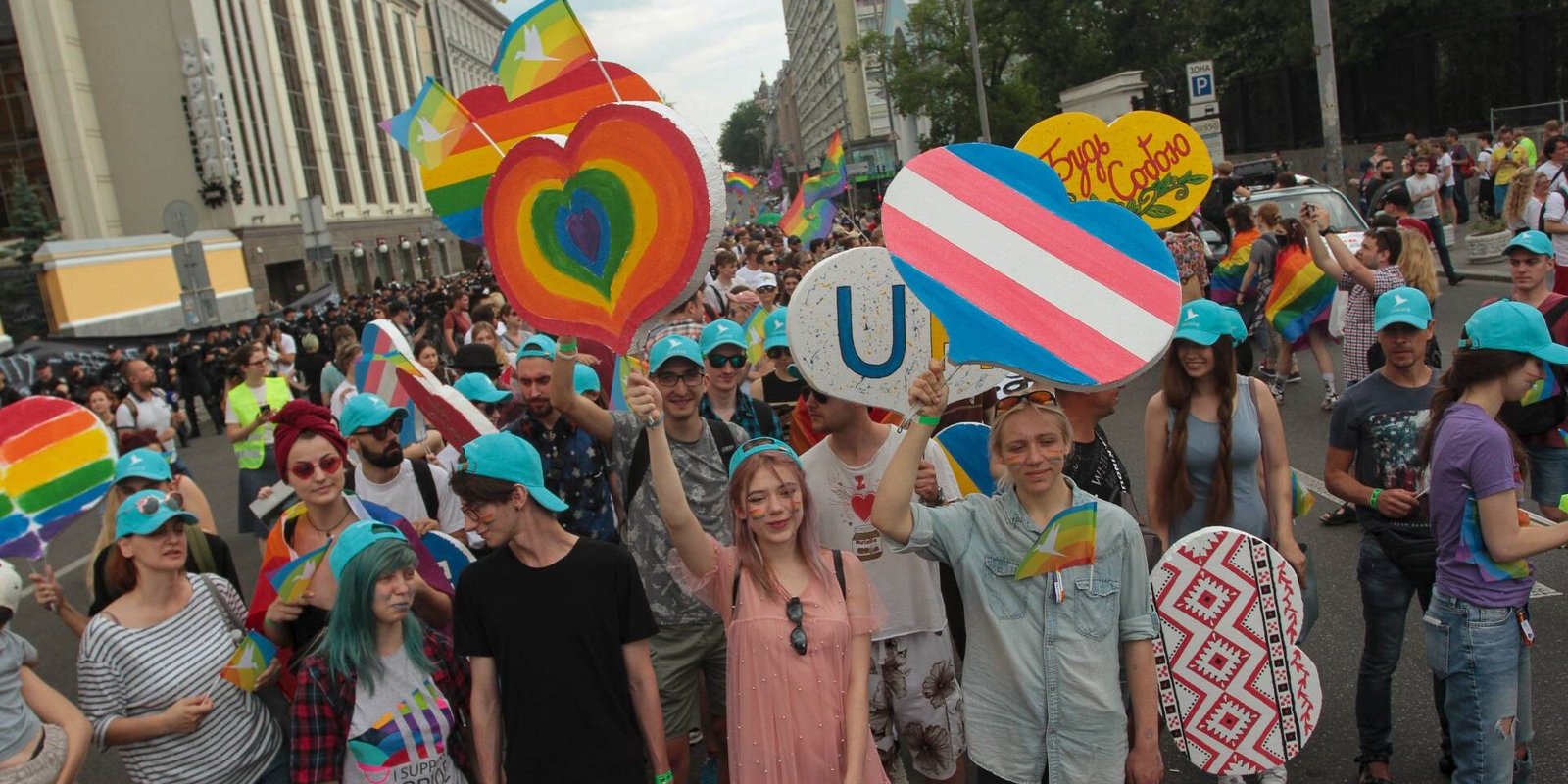
Saba Yamani: Not in the usual way inside Ukraine, especially in the first years of the full-scale war. Large public marches were largely paused or moved abroad for safety. KyivPride later resumed a march in Kyiv under heavy security, with limited attendance.
Jacobsen: Why did they stop? What reasons were stated?
Yamani: Safety: avoiding mass gatherings that could become targets during missile or drone attacks, and reducing the risk of violent clashes.
Jacobsen: Have LGBT citizens in Ukraine been targeted before the war, to your knowledge?
Yamani: Yes. There have been attacks and threats against LGBT people in Ukraine from various extremist and anti-LGBT groups and individuals.
Jacobsen: You mentioned the Right Sector. In what way?
Yamani: Some people I associate with that label, or with far-right circles, have threatened or targeted openly gay people. During the war, many of those people are fighting; some still harass LGBT people online.
Jacobsen: What is the nature of that trolling?
Yamani: Messages such as, “Tell me where you are if you want to get stabbed.”
Jacobsen: So these are openly homophobic threats of violence.
Yamani: Yes.
Jacobsen: How do recipients feel when they read them?
Yamani: I find them funny, possibly because I am a woman. If I were a man, I might feel more threatened because the risk of physical confrontation can be higher. Some homophobic men claim they are “protective” of women; others treat women as objects to degrade. It depends on the person. As a woman, I can be more open about my queerness. I do not think I could be as open right now if I were a man.
Jacobsen: In North American culture, heterosexual men sometimes use accusations of homosexuality to police other heterosexual men, keeping them within rigid gender roles. Is that happening here as well?
Yamani: Yes. Americans have the F-slur. Here, people often use a derogatory term like “pidor” (a slur historically linked to “pederast”), aimed mostly at gay men, though it is also used as a general insult.
Jacobsen: Does it have other meanings, or is it mainly that?
Yamani: It is mainly used at gay men, but it is also used as a broad insult for someone viewed as contemptible.
Jacobsen: Research shows that when LGBTQ adolescents are exposed to this kind of language and bullying during identity formation, mental health outcomes worsen, including higher rates of depression, self-harm, and suicidal ideation and attempts. Is this also a concern in Ukraine, regardless of the war?
Yamani: Right now, I do not feel that it is as severe. The previous generation, yes, absolutely.
Jacobsen: When you say “previous generation,” what age range do you mean?
Yamani: Millennials through baby boomers. In our generation, those born in the 2000s, we have mostly been supportive of each other. At university, I met some men who considered themselves right-wing. During Pride 2019, we were seeing each other. They were banned from attending with us. When I was marching, I saw him standing on a hill above the route. We were walking through Khreshchatyk. He was watching.
He had texted me before the event, saying, “Do not go. It will be dangerous.” It was going to be dangerous because his group planned to attack us, including throwing objects.
Jacobsen: He was the only one who texted you?
Yamani: Yes. Because security and police presence were strong, the situation was mostly controlled.
Jacobsen: So the police were supportive?
Yamani: Yes. There were only two incidents. One man was pepper-sprayed in the face. We had to pass through security checks. We were told not to bring knives or other objects. We could bring water, a bag, milk, and pepper spray. Milk helps reduce the effects of pepper spray. The man who was sprayed had milk, and it helped.
One effective measure involved the metro. Stations along the Pride route were closed to the general public. After the march, we were instructed to remove rainbow clothing before entering the metro. There were three lines—green, blue, and red—and we boarded without public information about stops. There was no online information about the route.
Now, we have Telegram bots and groups that report missile and ballistic threats. Anti-LGBT groups use similar chats. If someone identifies a gay person, they message each other with the location, such as “Spotted a gay person in Pechersk district,” followed by the street name, and people gather.
Jacobsen: That raises an interesting sociological question. Ukrainian culture seems technologically capable and IT-friendly. Not at the level of Japan or South Korea, but highly digitally connected. At some point, that familiarity with technology can become sophisticated coordination. In this case, it is being used to target gay people.
The deeper psychological question is: when they identify someone as gay or queer, how do they decide? What markers are they using? Prejudice often relies on stereotypes. What does their stereotype look like?
Yamani: Every country has its styles and trends. In the 2000s, skinny jeans were popular. In the 2000s, skinny jeans were associated with gay men. Straight men wore baggy jeans. If you wore skinny jeans, you were called a slur. That was one way people targeted others. Now it has reversed. If you wear baggy jeans, you are labeled gay; if you wear skinny jeans, you are considered straight.
Jacobsen: So it is simply a shifting marker of dominant culture.
Yamani: Yes. It is about how we dress and express ourselves. Being queer in Ukraine, especially in Kyiv, is less stigmatized than it used to be. We can express ourselves openly. That also makes it easier for hostile people to identify us. In 2019, people took photos at Pride and later targeted those individuals.
Jacobsen: In a war context, people outside the country often need shorthand explanations. I sometimes use humor, such as saying, “It is cloudy with a chance of missiles,” to ease anxiety. A more direct explanation and analogy is that threat levels vary by region. Large eastern cities face greater danger, while villages in the west face less, though residential areas are still bombed. If we are speaking specifically about being openly queer, how does it vary by region?
Yamani: Western Ukraine is also difficult. Kyiv is relatively open. Western regions can be more conservative because of strong religious influence. Even Lviv has significant homophobia. That is interesting, given its reputation for historic architecture and European culture. Lviv is close to Poland, and Poland has strong conservative and Catholic traditions. Culturally, there are similarities.
Jacobsen: In Poland, Roman Catholicism plays a central role. In Western Ukraine, Eastern Christianity—both Orthodox and Greek Catholic traditions—is influential. What similarities in those religious cultures reinforce homophobia beyond ordinary prejudice?
Yamani: Even young adults our age will stare if I walk down the street with my partner. Older and younger generations both do this. If you rent an Airbnb while traveling in Western Ukraine, you cannot openly say you are traveling with your girlfriend.
Jacobsen: I have heard stories of married or common-law same-sex partners being denied hospital access when one partner is dying. That is one of the worst situations. It reflects a broader international problem for LGBTQ people. It is a recurring global issue.
Yamani: Since 2022, one of the first things we pushed for was legal change. We organized a petition and collected over 25,000 signatures, which meets the threshold for official consideration.
Jacobsen: Was that in Kyiv alone?
Yamani: I am not sure whether the signatures were only from Kyiv or from across Ukraine, but 25,000 signatures are enough to require a response from the president. He replied that he sees us and understands the issue, but under martial law he cannot change the law during wartime.
Jacobsen: Because of the martial law context?
Yamani: Yes. At the time, that was legally accurate. However, recently there was discussion of a proposal that would allow 14-year-olds to marry under certain circumstances, such as pregnancy.
Jacobsen: A side question for the transcript: has Ukraine ratified the Convention on the Rights of the Child?
Yamani: Yes, Ukraine ratified it years ago. In this recent case, the proposal did not pass. Public backlash was intense. I personally wrote that I left Saudi Arabia to avoid being forced into early marriage, and I could not believe such a proposal was being discussed here. Some women responded by asking what pregnant teenagers were supposed to do.
Jacobsen: As if abortion is not part of the discussion. Is abortion legal in Ukraine?
Yamani: Abortion is legal in Ukraine. My concern was that if such laws were adopted, it could signal a broader conservative shift, similar to what has happened in Poland regarding reproductive rights.
Jacobsen: Fourteen is a child.
Yamani: It is a child having a child. At fourteen, I was listening to pop music and worrying about celebrities. That is not an age for marriage. The proposal would have allowed minors who become pregnant to marry. In many cases, pregnancy at that age involves coercion or abuse, especially when the other person is significantly older. We are not talking about consenting adults.
Jacobsen: In many cases, that would amount to statutory rape.
Yamani: Yes. That is why the LGBTQ community was angry. We cannot obtain even civil unions, yet there was discussion of allowing children to marry.
Jacobsen: A civil union, not even marriage.
Yamani: At the same time, many LGBTQ people are serving on the front lines. People ask why they should risk their lives for a country that does not legally recognize their relationships. If something happens to them, their partner may not be allowed to visit them in the hospital or claim their body if they die.
Jacobsen: In ordinary circumstances, when people grow old and one partner dies first, that is tragic but legally straightforward. I have heard cases of same-sex couples who were together for 10-20 years and still had no legal recognition. I did not even know what to say.
Yamani: There was a positive development last year. In the district where I grew up, a court recognized the union of two men.
Jacobsen: Was that recognition by the state or by a religious institution?
Yamani: By the state. The government acknowledged their marriage.
Jacobsen: So it was recognized in civil law, not religious law. That leads back to the earlier point: what is the position of the churches? There can be a difference between official doctrine, church leadership, and ordinary believers.
Yamani: Official religious doctrine opposes same-sex relationships. Many religious people, including those serving in the war, hold that view strongly.
Jacobsen: You can prohibit something in doctrine, but that does not change the reality of people’s lives.
Yamani: Some of the harshest criticism comes from religious individuals who are fighting for the country. They justify killing in war, but object to me loving a woman. They may identify as Christian, yet they focus more on opposing same-sex marriage than on the moral implications of taking a life in combat.
Jacobsen: In their view, they believe they have a legitimate grievance against same-sex marriage, even during wartime. They may see a soldier killing another soldier as lawful under wartime conditions, while considering same-sex marriage morally wrong.
Yamani: Yes, that is their perspective.
Jacobsen: In the United States, similar arguments are made—that same-sex marriage harms the “moral fabric” of the nation. Is that reasoning common here as well?
Yamani: Yes, that is the majority argument.
Jacobsen: And what is the minority argument?
Yamani: Some say, “If you want rights, go to war and fight for them.”
Jacobsen: So the implication is that rights must be earned through military service.
Yamani: Yes. If you are not fighting, you do not deserve to demand change.
Jacobsen: Have there been formal bans on LGBTQ events or cultural expression in Ukraine, either before or after 2014 or 2022?
Yamani: It is not illegal. Events can take place, although they often require significant security. The last Pride event I attended was Kharkiv Pride last summer. It had some protection, but many men still came to shout insults and threats.
Jacobsen: You do not see many women doing that in person.
Yamani: Not in person. Mostly online.
Jacobsen: It becomes complicated online. When someone claims to be a woman posting hostile comments, that identity is difficult to verify. Anyone can misrepresent themselves.
Yamani: I read many of the comments on my posts. When women respond negatively, they say things like, “Go back to your country. Take your girlfriend and go to Africa.” I am not from Africa, but that is the insult they use.
Jacobsen: So it shifts into xenophobia.
Yamani: Yes. They say, “Stop ruining our country. We do not need this here.” They describe queerness as if it were a disease that I am bringing into Ukraine.
Jacobsen: I have heard similar sentiments from women. From my perspective, I am engaging in human rights–oriented work: interviewing, analyzing, summarizing expert views, and documenting lived experience. Having the conversation itself is sometimes framed as subversive, as if discussing LGBTQ rights is equivalent to promoting them. In some contexts where religion is dominant, the reaction can escalate into outright bans. That reflects a broader pattern of cultural and identity-based xenophobia.
Yamani: It also intersects with nationality and race. If you are not perceived as ethnically Ukrainian, and you are openly queer, the hostility can intensify. Prejudice tends to stack categories—nationality, race, sexuality—into a single narrative of “outsider.”
Ukrainians are not always considered “white” in some Western contexts. They are not always treated as fully Caucasian either. There is also a gendered expectation. Some people react with comments such as, “Why aren’t you hitting on me?” as if heterosexual attraction should be the default.
Jacobsen: This connects to a broader discussion. My background is rooted in humanist and secular humanist traditions, as well as Unitarian Universalism, Ethical Culture, and non-theistic Satanist groups. I have held memberships or leadership roles in some of these communities. Although they differ in style—humanists often being more institutionally oriented and non-theistic Satanists more individualistic—they share a similar ethical foundation: human rights, personal autonomy, and equal treatment under the law.
All of these perspectives are grounded in the scientific method and empirical inquiry. The foundation of medical and biological science is evolutionary theory, including natural selection and related developments such as kin and sexual selection. Concepts like race are frequently discussed in social terms, but biologically they reflect variation within a single species.
Yamani: That is why these conversations matter. We use terms like race, identity, and culture to describe lived realities, but we also need to examine how those categories are constructed and how they influence rights, policy, and social attitudes.
