
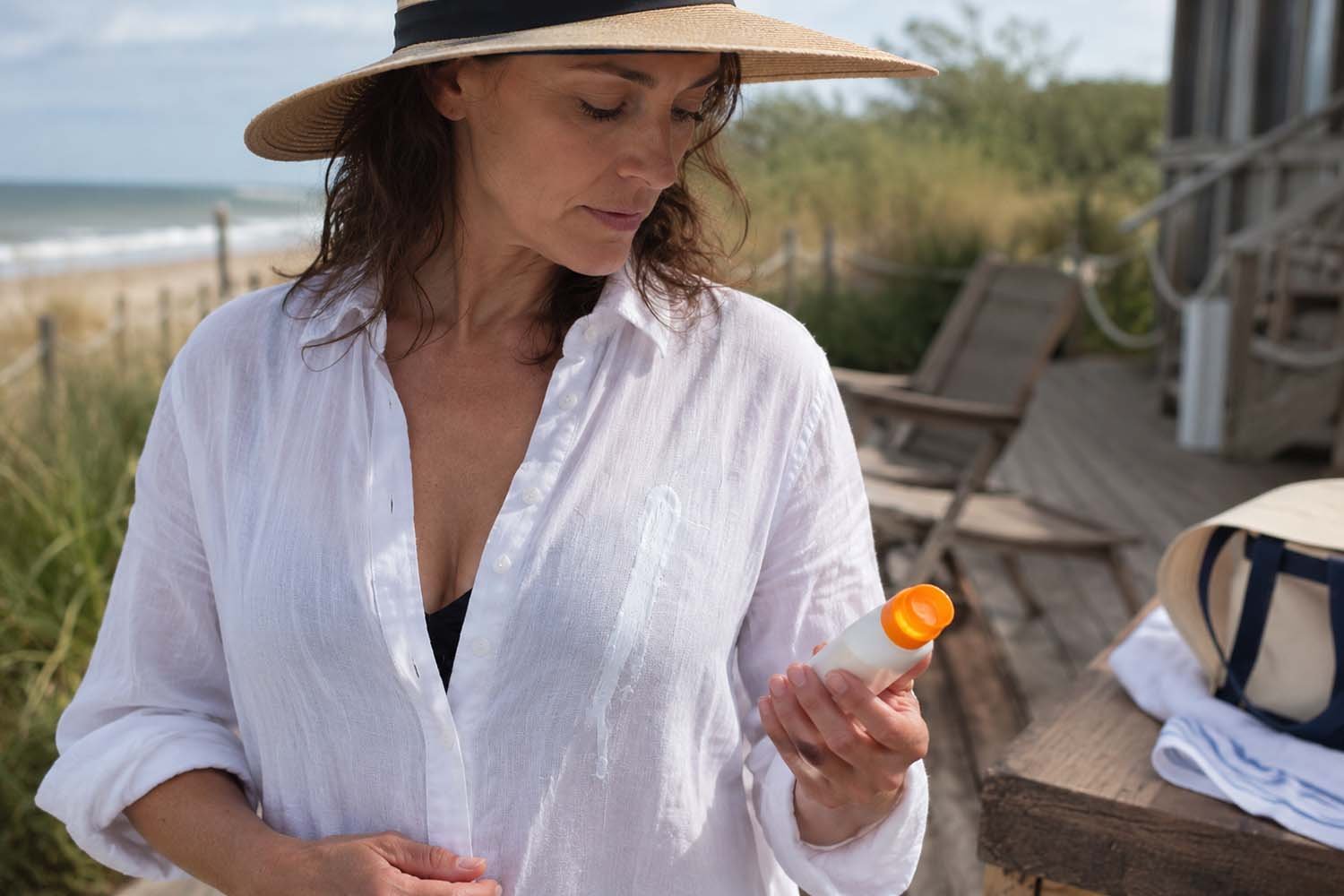
It was Memorial Day weekend, and I was doing everything right.
Sunscreen applied before getting dressed. Hat on. The whole responsible adult routine. I was wearing a white linen shirt over my swimsuit, grabbed the bottle to reapply on my arms, and a long white streak of mineral sunscreen transferred directly onto the front of the shirt before I even realized what had happened.
My instinct was the same one I always have: wet cloth, cold water, blot it out. The white streak lightened. I thought I’d handled it. I threw the shirt in the wash that evening with everything else.
The next morning I pulled it out of the machine and found an orange stain I had never put there.
I stood in the laundry room genuinely confused for about thirty seconds before I started researching. What I found explained both the white streak and the orange stain, and it also explained why treating them the same way is exactly the wrong approach. The type of sunscreen you’re wearing determines what kind of stain you’re dealing with. And the orange stain that appears after washing is one of the more chemically interesting laundry problems most people will ever encounter.
Here’s everything I learned.
The Short Answer: How to Get Sunscreen Out of Clothes
The treatment depends on the type of sunscreen. For chemical sunscreen (avobenzone-based): treat the oily stain before washing. Use dish soap or absorbent powder dry first, then rinse cold. Pre-treating is critical because avobenzone reacts with iron in water during the wash cycle to create orange rust stains that weren’t there before. For mineral sunscreen (zinc oxide or titanium dioxide): brush off dry residue first, then dish soap, warm wash. Never use chlorine bleach on any sunscreen stain. It permanently sets both the oil and the orange rust discoloration. Check before the dryer. Heat sets sunscreen stains permanently.
Why Sunscreen Stains Are Different From Other Stains
Most food and fabric stains are passive. They sit on the fabric and wait for you to deal with them. Sunscreen stains are more complicated for two reasons.
First, sunscreen is engineered to resist water. That’s the point of it. Water-resistant, sweat-proof formulas are designed to stay on your skin through swimming and activity. Those same properties make sunscreen cling to fabric fibers in a way that most food stains don’t. The oils in sunscreen are not going to rinse out the way tomato sauce or coffee might. They need a surfactant to break the bond.
Second, chemical sunscreens containing avobenzone create a stain that doesn’t fully appear until after you wash the garment. Avobenzone is a UV filter that reacts with iron particles in tap water, particularly in areas with hard water, to produce rust-colored orange compounds during the wash cycle. According to CBS News, which reported on this widely in 2024, Tide confirmed that avobenzone “can react with iron in hard water, leaving behind rust-colored stains” on clothing. The orange stain you find after laundering wasn’t there when you took the shirt off. It formed in the machine. Understanding this is the key to treating it correctly.
The Golden Rule: Know Which Sunscreen You’re Wearing
Before you treat a sunscreen stain, identify the formula. This determines how many stain types you’re dealing with and what products to use.
Prevention tip worth knowing: Let sunscreen absorb fully into your skin for at least 15 minutes before getting dressed. Most sunscreen transfer onto fabric happens when the formula is still wet on the skin. Those 15 minutes significantly reduce the amount of sunscreen that reaches your clothes. This is especially relevant for mineral sunscreen, which sits on the skin surface rather than absorbing into it.
Chemical sunscreen (avobenzone, oxybenzone, octinoxate): These absorb UV rays by penetrating into the skin. They’re oil-based and leave a greasy residue on fabric. If your sunscreen contains avobenzone specifically, you also face the potential orange rust stain after laundering. Two problems: oil stain and rust stain. Two stages of treatment.
Mineral sunscreen (zinc oxide, titanium dioxide): These sit on top of the skin and physically block UV rays. They leave a white or yellowish chalky residue on fabric from the mineral particles, plus an oil layer from the formula’s base. They do not contain avobenzone and do not cause the orange rust reaction. One problem: oil and mineral residue. Easier to resolve than chemical sunscreen with an avobenzone component.
Tinted sunscreen: An additional pigment layer on top of the oil base. Treat the pigment the same way as foundation stains after the oil layer is addressed.
Spray sunscreen: Same chemistry as the base formula (chemical or mineral) but tends to deposit more product on fabric because it’s harder to control application. Same treatment protocol, often requiring more powder absorption time due to heavier oil deposit.
The Orange Stain Problem: What’s Actually Happening
This deserves its own section because it’s the most misunderstood element of sunscreen stain removal and the one that causes the most frustration.
When you wear a chemical sunscreen containing avobenzone and then launder the garment, the avobenzone residue in the fabric comes into contact with iron minerals in the tap water. A chemical reaction occurs during the wash cycle that converts the avobenzone into an orange or rust-colored compound that binds to the fabric fiber. As one textile chemistry source explains, “that orange mark is actually rust,” formed by avobenzone “reacting with the iron in your water.” The stain appears after the wash, not before, which is why so many people are confused about where it came from.
This reaction is made worse by heat, hard water, and allowing sunscreen residue to sit in fabric before pre-treating. The key prevention step is to remove as much avobenzone from the fabric as possible before the garment is exposed to water. Pre-treating with dish soap or an enzyme remover before laundering reduces the amount of avobenzone available to react with iron and significantly reduces the likelihood of the orange stain forming.
If the orange stain has already appeared after washing, it requires a completely different treatment from the original oil stain. It is now a rust stain and must be treated with a rust remover containing oxalic acid, such as Bar Keepers Friend or Whink Rust Stain Remover. Dish soap and detergent will not remove it. OxiClean will not remove it. Chlorine bleach will make it permanent.
4 Methods That Actually Work (Tested Results)
Fabric Matters: What Works on What
The pre-treat-before-washing rule applies across all fabrics. What changes is laundering temperature and which follow-up treatments are safe.
White cotton and linen: Full protocol available. Powder if heavy, dish soap dry, rinse cold, enzyme remover if needed, warm wash. Eucerin’s sunscreen stain guide specifically warns that temperatures above 40°C (104°F) can intensify UV filter stains even after pre-treatment by accelerating the reaction between filter compounds and metal ions in the water. Keep the machine wash at warm, not hot. Oxygen bleach soak for any yellow residue. For orange rust stains, oxalic acid rust remover before laundering.
Colored cotton and linen: Same pre-treatment. Warm wash. Skip oxygen bleach on deeply colored fabrics unless tested first. Oxalic acid rust remover is generally safe on colors but test on a hidden seam. No chlorine bleach.
Swimsuits and athletic wear: Elastane and spandex fibers degrade with hot water and harsh chemicals. Dish soap in cold water, gentle treatment only, always air dry. Never put swimwear in a hot dryer. Enzyme remover is acceptable on most swimwear but check the care label. Oxygen bleach in cold water for 30 minutes is generally safe on most swimsuit fabrics but always test first.
Polyester and synthetics: Sunscreen oils don’t penetrate as deeply as on natural fibers. Dish soap and cold water pre-treatment, enzyme remover, warm wash. Oxygen bleach generally safe.
Silk and wool: Dish soap extremely gently, cold water only, no soaking, no enzyme remover for extended contact (proteases degrade protein fibers), no oxygen bleach on wool, no hot water, no dryer. Professional cleaning is the safest option for significant sunscreen stains on either fabric.
Dark fabrics: White mineral sunscreen residue is especially visible on dark colors. Brush off as much dry mineral residue as possible before any liquid treatment. Dish soap gently, cold rinse. Avoid oxygen bleach on dark fabrics. The orange avobenzone stain is also highly visible on dark fabrics and requires the oxalic acid treatment.
Step-by-Step Emergency Protocol
Step 1: Identify the sunscreen type. Chemical (avobenzone in the ingredient list) or mineral (zinc oxide or titanium dioxide). This determines whether you’re at risk for the orange rust stain and how urgently you need to pre-treat before laundering.
Step 2: Remove solid residue. For mineral sunscreen with visible white residue, brush or shake off dry mineral particles gently. Do not rub them into the fabric.
Step 3: Apply dish soap dry. No water yet. Dish soap directly onto the stain, worked in gently with a fingertip from outside in. Let it sit 10-15 minutes. For heavy deposits, apply absorbent powder first, leave 30-60 minutes, brush off, then apply dish soap.
Step 4: Rinse cold from the back. Cold water through the back of the stain. This removes the loosened oil and dish soap without driving anything deeper.
Step 5: Apply enzyme remover if needed. For stubborn or dried stains, apply an enzyme stain remover after the dish soap rinse and let it sit 15 minutes before laundering.
Step 6: Launder at the correct temperature. All fabrics: warm at most. Swimwear and synthetics: cold. Hot water can intensify UV filter staining even after pre-treatment. Always check care label.
Step 7: Check before the dryer. If any oil residue or discoloration remains, repeat pre-treatment before drying. The dryer permanently sets sunscreen stains.
Step 8: Address orange stains separately. If an orange stain appears after washing, treat it as a rust stain with an oxalic acid rust remover before the next wash cycle. Do not put back in the machine without treating first.
Never Do These Things With a Sunscreen Stain
- Never use chlorine bleach. Bleach permanently sets both the oil stain and the orange avobenzone rust stain. It reacts with iron compounds to make the discoloration irreversible. Bleach is off the table for all sunscreen stains on all fabrics.
- Never put it in the dryer before the stain is completely gone. Heat permanently bonds sunscreen oil to fabric. Always check while still damp and air dry when in doubt.
- Never launder without pre-treating first. For chemical sunscreen especially, putting an untreated garment in the machine exposes avobenzone residue to iron in the wash water and creates the orange rust stain. Pre-treat with dish soap before the machine, every time.
- Avoid hot water at all stages. Hot water on an untreated sunscreen stain sets the oil. But even after pre-treatment, hot machine wash temperatures can intensify UV filter staining by accelerating the reaction between filter compounds and metal ions in the water. Warm is the maximum for all sunscreen-stained garments.
- Never treat the orange rust stain with regular detergent or OxiClean. Neither will remove an avobenzone rust stain. It requires an oxalic acid rust remover. Using the wrong product wastes time while the stain becomes harder to remove.
- Avoid fabric softener on sunscreen-stained loads. Fabric softeners coat fabric fibers and can trap sunscreen residue, making the stain harder to lift in the wash. Skip fabric softener until the stain is fully gone.
What Definitely Does Not Work
Cold water rinse as a first response. Rinsing a fresh sunscreen stain with water before dish soap treatment dilutes the surfactant you apply next and can spread the oil. Dish soap dry first, water after.
Regular laundry detergent on an orange stain. Detergent is formulated for food, dirt, and biological stains. It does not dissolve iron-based rust compounds. If orange appears after washing, you need an oxalic acid product, not another detergent cycle.
OxiClean on the orange stain. Oxygen bleach addresses organic pigment stains but does not work on rust. The iron-avobenzone compound is a metal-based stain requiring reduction chemistry, not oxidation. Using OxiClean on an orange avobenzone stain will produce little to no result.
Chlorine bleach on any sunscreen stain. Confirmed across multiple professional sources including Tide and CNN Underscored: bleach sets avobenzone rust stains permanently. Never use it.
Ignoring sunscreen contact areas at laundry time. Collars, shoulders, and sleeve edges absorb avobenzone regularly during summer even without visible staining. Pre-treating these areas before laundering, even when you can’t see a stain, prevents the orange rust reaction from building up over multiple wash cycles.
The One Thing I Wish I’d Known Sooner
Pre-treat before laundering. Not after. Before.
I had always treated stain removal as a response to something I could see. The sunscreen stain looked faint or invisible on the collar, so I threw the shirt in the wash. The orange appeared after. I treated the orange. Sometimes it came out, sometimes it didn’t. I was always one step behind the chemistry.
Once I understood that avobenzone reacts with iron during the wash cycle, not before it, the whole process inverted. The moment to intervene is before the garment touches water. A few minutes of dish soap on the collar before every summer laundry load eliminates the orange stain problem almost entirely because there’s no avobenzone left to react. It’s not a treatment. It’s a prevention that takes thirty seconds.
Final Thoughts
The orange stain on the white linen shirt came out. It took Bar Keepers Friend, a soft brush, and more patience than I expected, but it came out. I now check the ingredient list on every sunscreen I buy, I pre-treat before every summer laundry load, and I keep a stain remover pen in the beach bag.
Sunscreen stains are genuinely more chemically interesting than most people realize. The oil layer, the mineral residue, the avobenzone rust reaction: each one requires a different tool and a different approach. Treating them all as a single stain type is why so many summer whites and dark fabrics end up looking worse after washing than they did before. Knowing which sunscreen you’re wearing and which stain you’re actually dealing with is the whole game.
And wear the sunscreen anyway. The stains are solvable. The sunburn is not.
If you’re managing stains beyond clothing this summer, the same pre-treat principles apply to upholstery and outdoor fabrics. For broader natural cleaning approaches around the home, the natural cleaning guide covers surfaces beyond the laundry room.
Frequently Asked Questions
Why does sunscreen leave orange stains on clothes?
The orange stain comes from avobenzone, a UV filter found in most chemical sunscreens. Avobenzone reacts with iron minerals in tap water during the wash cycle to form rust-colored compounds that bind to fabric. The stain appears after laundering, not before, which is why it’s so confusing. It’s effectively a rust stain caused by a chemical reaction in the washing machine. Pre-treating with dish soap before laundering removes enough avobenzone to significantly reduce the reaction. If the orange stain has already appeared, treat it with an oxalic acid rust remover, not detergent.
Does sunscreen permanently stain clothes?
Not if treated correctly before heat-setting. Sunscreen oil stains become very difficult to remove after going through a hot dryer. Orange avobenzone rust stains become significantly harder to remove after additional wash cycles and heat exposure. Both types are treatable if caught before the dryer and addressed with the correct product. The orange rust stain specifically requires an oxalic acid rust remover, not standard stain treatments.
How do you get mineral sunscreen out of clothes?
Mineral sunscreen leaves white or yellowish mineral particle residue plus an oil layer. Brush off as much dry mineral residue as possible before any liquid treatment. Apply dish soap directly to the dry stain, work in gently, let sit 10-15 minutes, rinse cold from the back. Launder in warm water. For any remaining yellow residue on whites, an oxygen bleach powder soak for 1-4 hours addresses it. Mineral sunscreen does not contain avobenzone and will not cause the orange rust stain.
How do you get sunscreen out of a black shirt?
White mineral sunscreen residue is especially visible on black and dark fabrics. Brush off visible white residue dry first, then apply dish soap gently without rubbing. Rinse cold from the back. Avoid oxygen bleach on dark colors. For chemical sunscreen on dark fabrics, pre-treat with dish soap before laundering to prevent the orange rust stain from forming. If orange appears after washing, apply an oxalic acid rust remover to the affected area before the next wash cycle.
How do you get sunscreen out of a swimsuit?
Swimsuits contain elastane and spandex that degrade with heat and harsh chemicals. Apply dish soap to the stain in cold water, work in gently, rinse cold. Never use hot water on swimwear. Never put a swimsuit in a hot dryer. Air dry always. For stubborn stains, a brief cold water soak with a small amount of enzyme stain remover is generally safe on most swimsuit fabrics, but check the care label and test first. Avoid oxygen bleach on brightly colored swimwear.
What removes the orange stain left by sunscreen?
An oxalic acid rust remover is the correct product. Bar Keepers Friend (powder or liquid), Whink Rust Stain Remover, and similar products dissolve the iron-avobenzone compound. Apply directly to the orange stain, let it work, rinse thoroughly, then address any remaining oil layer with dish soap before laundering. Lemon juice and salt is a gentler natural option for mild orange staining: apply lemon juice, sprinkle with salt, let sit in sunlight for several hours, rinse, and launder. Never use chlorine bleach on orange sunscreen stains.
How do you prevent sunscreen from staining clothes?
Three things help significantly. First, let sunscreen absorb fully into your skin before getting dressed. Second, pre-treat collar and shoulder areas with dish soap or a stain remover pen before laundering, even when you can’t see a visible stain. Third, if you’re in a hard water area and using chemical sunscreen, consider switching to a mineral formula (zinc oxide or titanium dioxide) which does not contain avobenzone and will not cause the orange rust reaction.
More Stain Removal Guides:
Better Living may earn commissions through affiliate links and may occasionally feature sponsored or partner content. If you make a purchase through our links, we may receive a small commission at no cost to you.
