
I have a confession to make.
For most of my career in creative leadership roles, I have contributed to collaboration overload. I believed that bringing everyone together to swap ideas was the surest path to stronger work. If the room was full and the conversation was flowing, I assumed we were headed in the right direction.
And I know I’m not alone. Collaboration overload has crept into creative teams everywhere—shaped by hybrid schedules, the pressure to stay visible when we’re apart, and a steady flow of digital tools like Slack and Teams that keep us connected but can slowly chip away at focus.
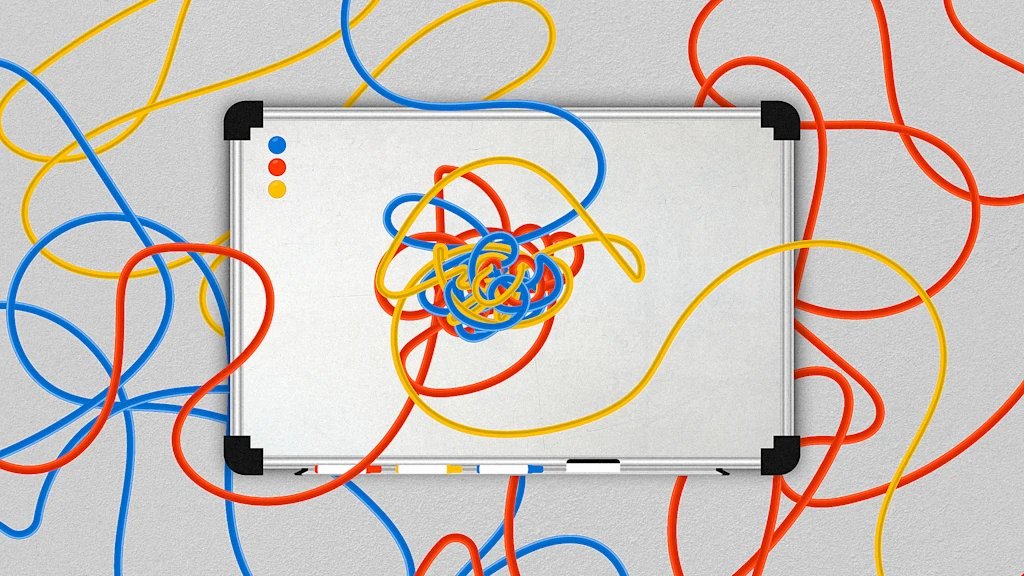
Creative teams have reached a point where we are spending so much time meeting, messaging, and circling each other’s work that nobody has the space or clarity to actually create.
Collaboration overload is not tenable. One reason is that the expectations of the next generation call for an urgent shift in how collaboration happens. Many emerging creatives want room to explore ideas independently, develop a point of view, and contribute something meaningful—not spend their days in back-to-back meetings and endless threads. When collaboration becomes constant, it leaves no space for the kind of personal exploration that builds creative confidence.
And as AI takes on more of the administrative and production parts of creative work, the value of human creativity shifts toward originality, taste, and discernment. Those qualities need room. Creatives need autonomy to imagine what AI cannot.
Collaboration is nonnegotiable. But so is autonomy. Creative teams thrive when those two forces support each other rather than compete. We need to protect deep, independent thinking while using collaboration to enhance our work. What we’re really trying to restore is a sense of rhythm that alternates between solo thinking, ensemble critique, and restorative rest.
How We Reached Collaboration Overload
Collaboration overload didn’t happen overnight. It gradually built up as our work patterns evolved and expectations around them shifted.
Hybrid work marked a major turning point. Many teams have done an impressive job recreating the natural touchpoints of in-person creative life—quick gut checks, spontaneous critiques, and the energy that comes from simply being around each other’s work. However, hybrid also makes it easy for the pendulum to swing too far.
Overcompensating with meetings existed long before virtual work, but now the ability to schedule, ping, or gather a group is almost effortless. In an active studio, “always on” is balanced by the ebb and flow of real human presence; there’s a built-in rhythm that allows people to step away and actually make the work. In hybrid environments, that rhythm can be harder to sense and even more difficult to maintain.
Meanwhile, our collaboration tools multiplied. Slack, Teams, Figma, Notion, Miro, Monday—each with real utility, but each adding another stream of communication. When organizations lack clear ways of working with these tools or fail to update those norms as teams evolve, the tools can lead to fragmentation and additional layers of coordination. It’s common for a creative professional to switch between three or four platforms before noon, each buzzing with activity. The tools keep us connected, but without shared habits for using them, they often create more work than clarity.
This pressure is even more pronounced in service-driven work, where being responsive is part of the relationship. When clients depend on you, and you depend on each other, it’s easy for the expectation of availability to grow. While quick back-and-forth exchanges can spark a moment of insight, most ideas need a quieter runway to take shape.
Cross-disciplinary work added another layer of complexity. Modern creative teams bring together designers, strategists, writers, technologists, and producers—often across time zones. While diversity is a strength, without a clear structure, it can blur boundaries. When everyone can contribute to everything, eventually, everyone does. What begins as good-faith instinct can quickly lead to fatigue. Clear ownership becomes harder to define.
And underneath it all lies a cultural belief: Collaboration is inherently good. It’s central to how we see ourselves as a creative organization. It’s part of our culture, our language, our identity. But when something becomes a given, we rarely pause to intentionally shape it. Instead, the instinct becomes “more”—more conversations, more people, more touches. And when collaboration becomes the default mode, the work can lose the focus it needs to move forward.
Restoring Creative Rhythm
The answer is not less collaboration, but better rhythm. Creative rhythm is the intentional pattern that helps teams move fluidly between independence and interdependence. It’s the cadence that supports both solo brilliance and ensemble performance. And it works because it’s shaped with care, not left to chance.
Creative rhythm has three core elements.
1. Protecting Deep, Independent Thinking
Every strong project begins with someone going deep. It might be a strategist absorbing context, a designer exploring visual possibilities, or a writer shaping the early throughline of a story. Depth takes time. It takes quiet. And it takes the freedom to try and fail without an audience.
Leaders can support this by giving teams dedicated focus time—and making it visibly protected. No meetings. No pings. No expectation of instant replies. Just as important is helping people understand how a project will operate before it begins. Newer hires, freelancers, and younger creatives often benefit from clarity around collaboration style, decision owners, and when to bring ideas into the room.
Not all questions need to happen in front of the entire group. Sometimes a quick one-on-one discussion moves the work forward more cleanly and avoids the swirl that happens when something still in progress is put in front of the whole team. Clear ownership models, such as Responsible, Accountable, Consulted, Informed (RACI) or simple “lead/support” distinctions, also reduce the urge for everyone to hover. Ownership creates space.
2. Designing Purposeful Ensemble Moments
Not all collaboration is equal. The most meaningful collaboration occurs when the team comes together with purpose. These ensemble moments give the work dimension by exposing it to different perspectives and the healthy tension that fuels creativity.
Effective ensemble collaboration is focused, time-bound, and grounded in psychological safety. Teams should feel at ease challenging ideas without risking personal conflict. This kind of task-oriented disagreement increases creativity and results in better outcomes. The point is not harmony. The point is healthy friction that moves the work forward.
Leaders can also improve ensemble moments by reducing their frequency but increasing their quality: short, well-run critiques; workshops with a clear objective; sharing sessions that come after deep independent thinking, not before it. Creativity needs both divergence and convergence. Rhythm is what allows them to coexist.
3. Building Periods of Rest and Reset
Rest is often an overlooked part of creative rhythm. Creative teams need periods where nothing urgent is expected—moments when minds can wander, connect dots, or simply breathe. Constant coordination drains curiosity. Rest restores it.
This is where leaders can model healthier norms: blocking focus days, encouraging asynchronous progress over real-time responses, limiting the number of platforms teams are expected to monitor. Rest isn’t a luxury. It’s a requirement for sustained creative performance.
What Creative Rhythm Looks Like in Practice
Creative rhythm represents a shared understanding of how a team works together. In practice, it looks like:
- Project phases that intentionally make room for independent development before bringing the group together to synthesize and refine
- Designated owners who drive work forward without constant supervision
- Clear checkpoints that prevent unnecessary consensus
- Critiques that foster momentum rather than hinder it
- Fewer meetings, conducted with greater purpose and clearer outcomes
- A culture that values autonomy as much as alignment
When teams work in sync, they don’t constantly switch mental modes. They have time to reflect and room to breathe. Ensemble moments feel invigorating because they’re not constant.
Guarding the Conditions for Creativity
Over the past few years, I’ve learned that part of my role is to protect people’s creative focus with as much care as I guide the work itself.
I still believe in collaboration. I always will. However, I’ve come to recognize the need for curated collaboration, the kind that brings the right people together at the right moment, not everyone at every moment. I believe in stepping back as much as stepping in. And I believe that helping people protect their alone time is one of the most important things a creative leader can do.
The extended deadline for Fast Company’s World Changing Ideas Awards is Friday, December 19, at 11:59 p.m. PT. Apply today.
