
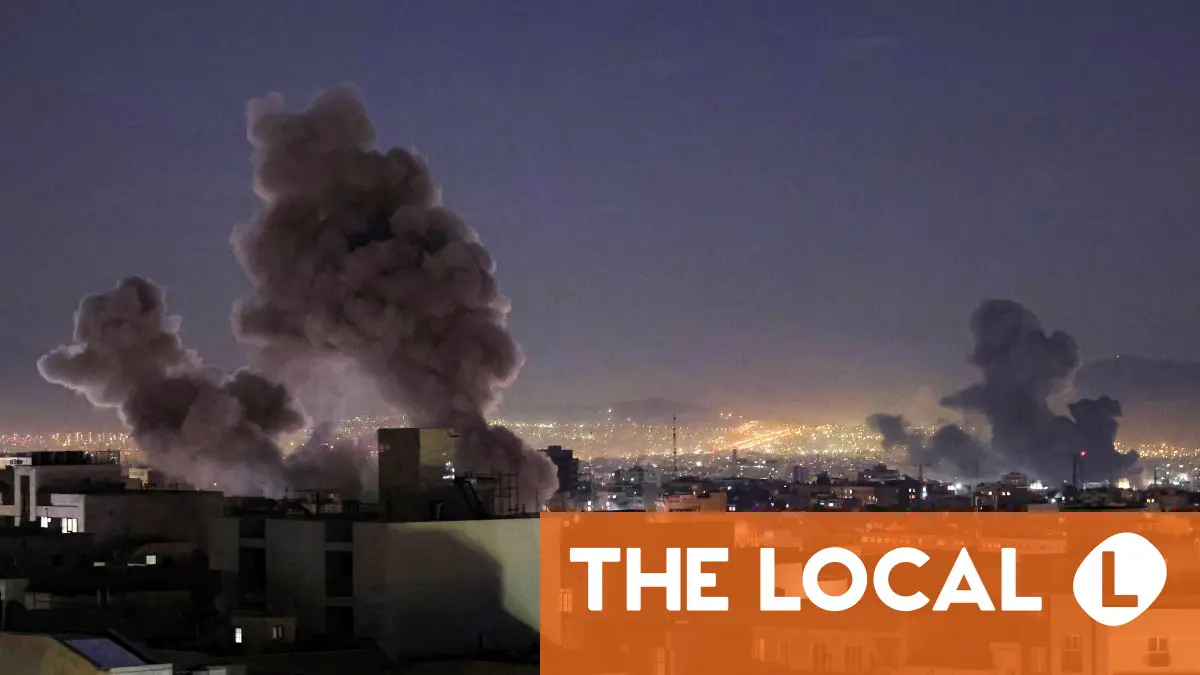
Despite distancing itself from the conflict and refusing military cooperation, Spain may still be impacted by the economic ripple effects of war in Iran.
The ongoing conflict between Iran and the US and Israel is dominating the news agenda but could also have significant economic impacts around the world.
On a political level, Spain has, as it often has in international affairs during the Sánchez government, taken a different path to European countries such as Germany and the UK.
Prime Minister Pedro Sánchez has called the attack on Iran “a breach of international law” that “contributes to a more uncertain and hostile international order,” while also rejecting “the actions of the Iranian regime and the Revolutionary Guard.”
READ ALSO: Iran Ambassador to Spain says they can attack any US base in Europe ‘if necessary’
Crucially, the Spanish government has refused to allow the US to launch attacks from its bases in Spain in Rota and Morón.
Defence Minister Margarita Robles has insisted that the use of Spanish facilities outside the framework of international law will not be authorised. Foreign Minister José Manuel Albares has stressed that Spain ‘has the final say’ on the use of bases under national sovereignty.
READ ALSO: ‘Not about democracy’ – Spain’s FM condemns US-Israel attacks on Iran
The political consequences of this outlier position remain to be seen. The possible economic knock-on effects, however, are something Spain is unlikely to avoid.
The Minister of Economy, Carlos Cuerpo, has stated that the government is carrying out “continuous monitoring and follow-up” in order to react to possible negative effects. “We already did this with the anti-inflation shield due to the invasion of Ukraine, but we are still in the early stages. We will see how widespread this shock is”.
Advertisement
Fuel prices
The most immediate impact is on the price of fuel. Iran accounts for around 10 percent of global reserves and is the third largest producer in OPEC.
Crude oil shot up by more than 8 percent in the aftermath of the first wave of attacks on Tehran, and the price of a barrel of Brent crude oil, considered the benchmark in Europe, has fluctuated and reached nearly $80 compared to $72.48 at the end of trading before the strikes began.
This is already having a direct impact on petrol pumps in Spain. According to the Mediterranean Federation of Service Stations (FedMes), suppliers have announced “drastic” increases for scheduled future deliveries meaning that diesel could rise by around 12 cents per litre and petrol by around six cents.
European natural gas prices have also seen a sharp rise after attacks on energy infrastructure in the Persian Gulf. And if gas prices rise in Europe, so do electricity prices.
“Unless the United States stops bombing Iran today and this has been merely a weekend conflict, the longer it lasts, the greater the impact will be,” said Manuel Hidalgo, Professor of Applied Economics at Pablo de Olavide University. “We’d better get our wallets ready because it’s going to cost us more to fill up our cars.”
Advertisement
Interest rates
Inflationary energy pressures caused by conflict in Iran could also have an impact on interest rates and mortgages in Spain.
“It would be very hasty on the part of the ECB to consider a rate hike, because we still do not know what the impact of the conflict will be,’ says Hidalgo.
However, potential sustained price rises will put upward pressure on an interest rate that directly affects millions of Spaniards: the Euribor, the benchmark for thousands of mortgages that could see a significant increase at the next ECB review.
Food prices
Beyond energy costs, the price impact could also be felt in supermarkets. Spanish media reports that around a third of the world’s fertiliser supply of fertilisers passes through the Strait of Hormuz, a key passage for global trade and supply chains.
The region also produces 15 percent of the world’s polyethylene, a plastic essential for packaging. Spanish agriculture depends on these materials, whose cost is linked to the price of gas and oil.
If oil prices per barrel exceed $85 and trade disruption continues, the increases in cost could be passed on to fruit, vegetables and basic products in the coming months, fuelling a new cycle of inflation in Spanish supermarkets.
Advertisement
Travel and logistics
Shipping giants such as Maersk, MSC and Cosco have suspended or modified operations in the area, meaning logistics and deliveries will likely be delayed for some time.
Avoiding Hormuz forces ships to circumnavigate Africa to reach Europe, adding thousands of kilometres, days of transit and a sharp increase in operating costs. Insurers have begun to apply war risk premiums, an additional cost that ultimately affects the final price of technological, textile and industrial products in Spain.
In terms of travel, the conflict is already affecting air traffic. Iberia Express has suspended its Madrid-Tel Aviv route until 10 March, while Air Europa is maintaining temporary cancellations.
Lufthansa also suspended flights to several destinations in the Middle East.
The rise in the price of kerosene and the diversion of routes to avoid risk areas are increasing operating costs and could lead to more expensive tickets if the situation continues.
READ ALSO: Where are the US military bases in Spain and why are they there?
