
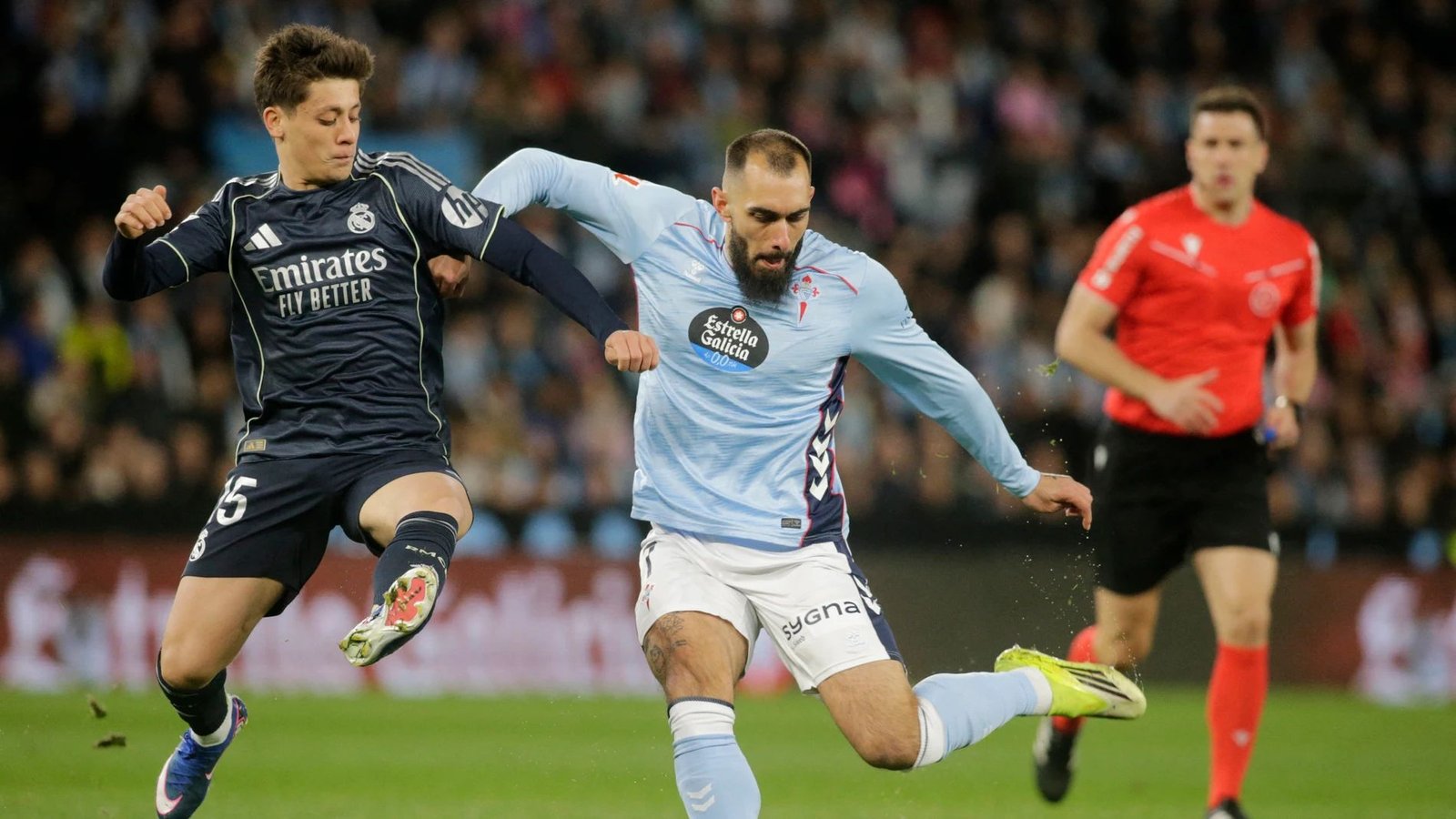
Celta Vigo forward Borja Iglesias has given his thoughts on the battle against homophobia within football. After painting his nails to support the Black Lives Matter campaign, Iglesias then did so to support LGBTQIA+ people, and since has become a lightning rod for homophobic abuse and icon in the fight against it.
It is rare that a weekend goes by without Iglesias receiving homophobic abuse, with a particularly bad example occurring against Sevilla this season. Online too, Iglesias is frequently targeted opposition fans simply for supporting the queer community. Iglesias has also been an advocate for women’s football, famously following the Spanish women’s team into strike action, renouncing Spain duty for a time.
‘What bothers me is that a gay person is afraid to come out’
Speaking to L’Equipe in France, Iglesias was asked about dealing with the insults. Diario AS quoted his answers, as he explained that his fear was not for himself.
“The first few times it affected me; I took it personally. After reflecting on it, I see things differently. Calling me a f****t, I don’t consider that an insult. When a guy says that, I think I’d be happier being gay than being like him, with nothing better to do than insult people at the end of a match. What bothers me is that a gay person is afraid to come out because of these kinds of reactions. Not being able to be yourself and love who you want is unacceptable, which is why the fight against homophobia is essential and why I’m involved in it.”
Why is football so homophobic?
The abuse for Iglesias is not new, and the queer community has for much of football’s history made queer people feel unwelcome. It has always been a taboo subject within the game.
“I’ve thought about this a lot, and I don’t think I’ve quite found all the explanations. Traditionally, football is a men’s sport, although that’s changing, a world that glorifies strength and virility. As if footballers weren’t human beings, but superior beings who embody the essence of the patriarchal system.”
“Players like David Beckham and Guti have offered different looks and a different model of masculinity. They’ve changed the image of football and helped us to be freer. But there’s still a lot of work to be done.”
‘In 20 years as a footballer, not a single player has come out to me’
In 2024, Adelaide United player Josh Cavallo came out as gay publicly, a move that was applauded across the globe. Yet it has not been followed by a significant trend of it happening. Former Getafe player Jakub Jankto also came out, but retired not long before retiring.
“It saddens me that it still seems impossible for gay footballers to come out. They must feel, which I understand very well, that if they spoke about it, they would lose everything they’ve gained. I think we’re closer than ever to that moment, but unfortunately, we’re still far from it. In twenty years in the world of football, not a single colleague has ever told me this, and that makes me reflect on things.”
