
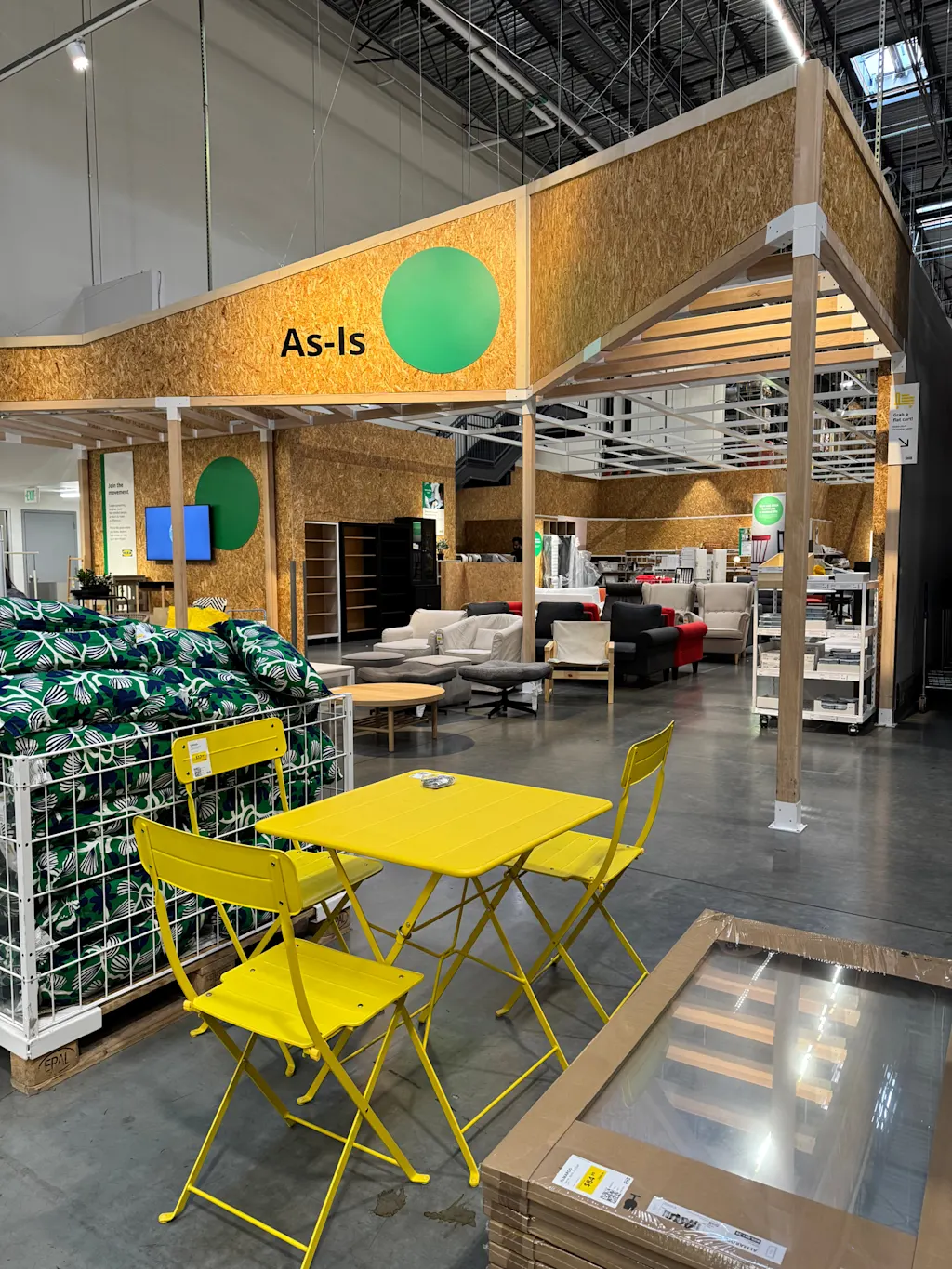
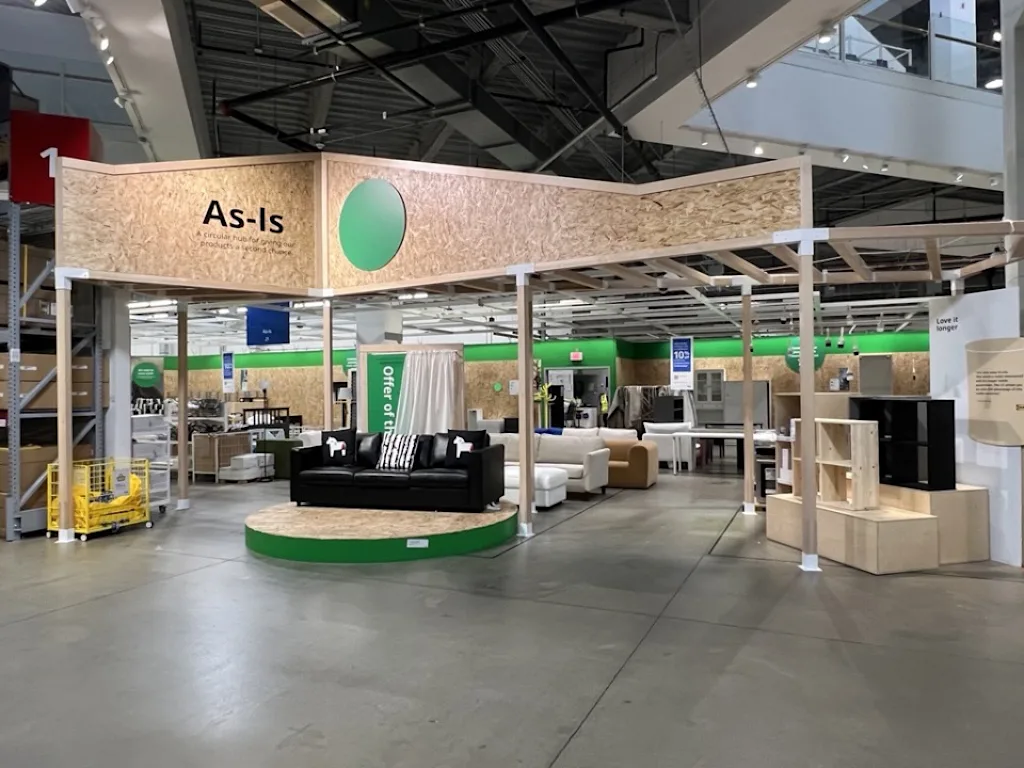
If you stop by the “as-is” section at one of Ikea’s U.S. stores, you might now find a vintage table from the 1980s.
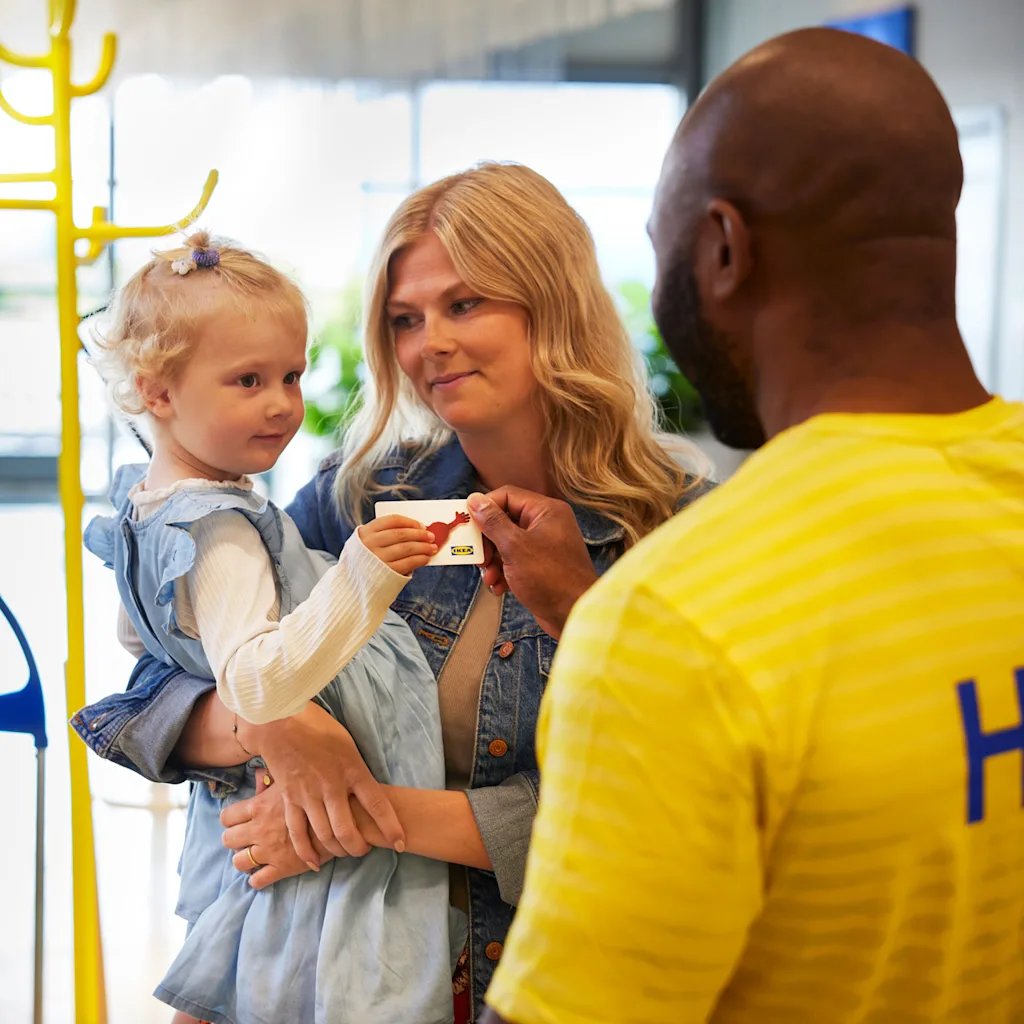
The company recently started accepting older products in its Buy Back & Resell program, which gives customers store credit for bringing back used items, and then offers them for sale to other customers. Since launching as a pilot in the U.S. five years ago, the program—still the only one of its kind at a major furniture retailer—has steadily expanded, underscoring the demand for circular options.
The program “is our opportunity to bring our products back into the store from our customers to keep them out of landfill,” says Mardi Ditze, sustainability manager for Ikea U.S.
U.S. stores recently started taking back 700 additional SKUs through the program, from vintage furniture to glassware. Last year, customers brought back 14,700 products, growing from 8,000 in 2023. Most resold within 48 to 72 hours.
The brand’s resale program is also growing globally. Ingka Group, the largest Ikea franchise that operates stores in 31 countries, sourced nearly 690,000 used Ikea products for resale last year. Part of the appeal, especially in the current economy, is the fact that the secondhand products have a built-in discount.
“We’ve always had a focus on creating value for money for customers, and this strengthens our low-price offer,” says Karen Pflug, chief sustainability officer for Ingka Group. “Our research shows that even though we feel we’re affordable, it can still be a barrier for some people. So the secondhand offers a whole new level of affordability.”
Selling secondhand products doesn’t cannibalize the company’s sales of new products. Instead, it’s helping bring in some new customers who are looking for lower-priced options. Customers who bring in their own used products to resell typically spend more than the value of the voucher that they get for the return.
“Our experience has been that when a customer comes and successfully has a buyback resale transaction, has a store credit in their hand, they are likely thinking about what their next purchase is going to be,” says Ditze. “That transaction could happen as soon as that day, and that gift card gets applied to the purchase that they were thinking about doing.”
Ikea also offers a peer-to-peer resale option in a handful of countries, with plans to expand this year. Customers who want to resell something scan their product with Ikea’s app, and then automatically get price recommendations, measurements, descriptions, assembly instructions, and professional product photos for their listing, helping remove some of the friction of posting an ad yourself on another platform like eBay or Facebook Marketplace. Sellers also get either cash or a 15% digital refund card that they can use at Ikea.
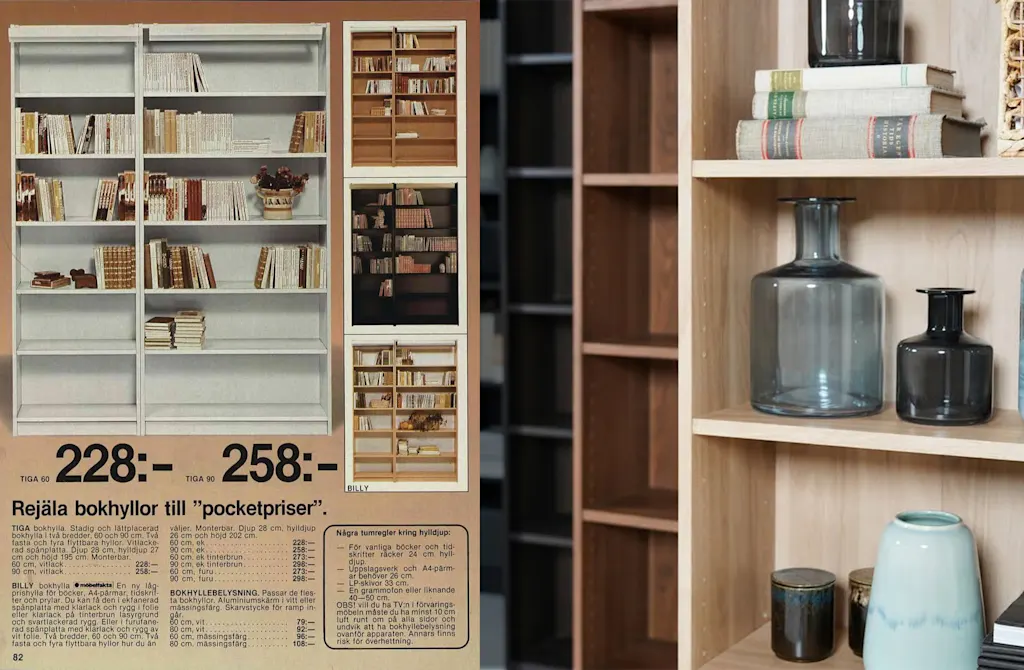
The work is part of Ikea’s larger effort to become a circular company, meaning that it keeps products and materials in use as long as possible, shifts to recycled and renewable materials, and eliminates waste throughout the supply chain. Inter Ikea, the part of the brand that handles design, is also beginning to redesign products for longevity. The classic Billy bookcase, for example, now has more resilient materials and snap-in attachments instead of nails in the back, so it can be disassembled and reassembled more quickly—and more easily be resold and moved.
Ikea has also long offered free parts to repair products if a screw is lost, and sofa covers to help furniture stay in use longer if it gets a stain. Some stores in Europe have tested repair programs for resold items. Ikea is actively finding new recycling options for when products do wear out completely—or if they can’t easily be resold because of hygiene reasons. The company invested in a mattress recycling startup, for example, which can harvest parts from springs to foam for use in new mattresses. And by 2030, Ikea is aiming for a third of the wood in its products to be recycled.
“One part of it is creating a closed-loop circular stream for ourselves because of resource materials coming in,” says Pflug. “But the other is just doing the right thing from a circular economy point of view.”
On the resale front, Ikea is tapping into momentum that already existed. In Europe, Pflug says that Ikea products make up around 9% of the secondhand furniture market. But the company’s efforts could help nudge more people to take the time to give items a second life rather than throwing them out. Other brands could follow the same approach.
“Customers already see the value of our products but also the value of secondhand furniture in general, and are doing it themselves,” says Pflug. “So if you want to have a part of that conversation and a part of that market, you have to make sure you’re being accessible and affordable and removing the barriers and pain points for people to do it. I think that’s when you’ll then get the demand.”
