
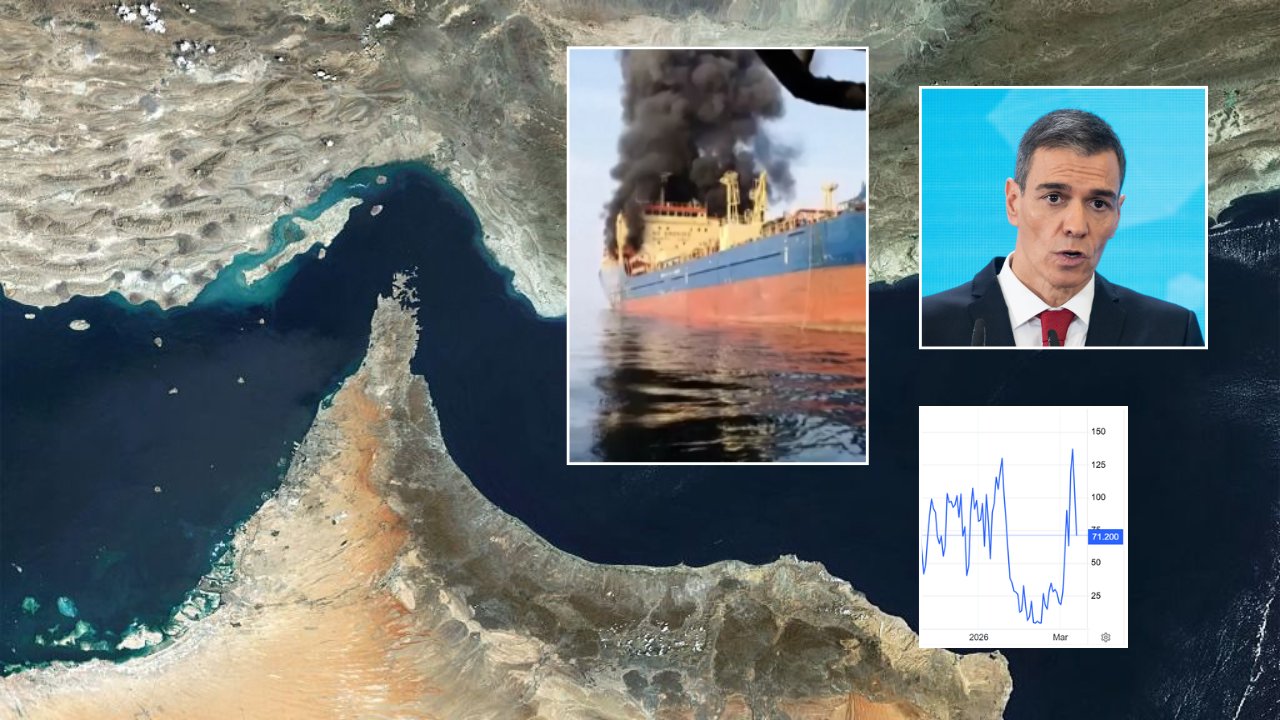
WHOLESALE energy prices in Spain have skyrocketed by almost 700 per cent in just a week in response to the ongoing war in Iran, triggering fears of a sharp rise in household bills.
Between March 2 and March 10, the average wholesale energy price jumped from around €18/MWh (megawatt-hour) to €137/MWh, according to data from Trading Economics.
That represents a surge of more than 640 per cent in little over a week.
“We saw a similar situation in 2022 when the war in Ukraine sent electricity prices across Europe to record highs almost overnight,” said Roman Mitchell, a leading energy market expert and co-owner of Marblanc Solar.
“Events like that showed how quickly geopolitical tensions can affect household energy costs.
“Solar offers homeowners a way to lock in long-term energy security. By generating their own power, households become far less exposed to sudden spikes in wholesale energy prices driven by global events.
“If tensions continue, we would expect volatility in electricity prices over the coming months, which typically increases interest from homeowners looking to secure stable energy costs.”
The spike has been driven by turmoil in global gas and oil markets after the outbreak of war in the Middle East earlier this month.
Brent crude, the international benchmark for oil prices, spiked by nearly 29 per cent to nearly $120 (€103) during early market trading on Monday – a peak not seen since 2022 when Russia’s invasion of Ukraine rattled global markets.
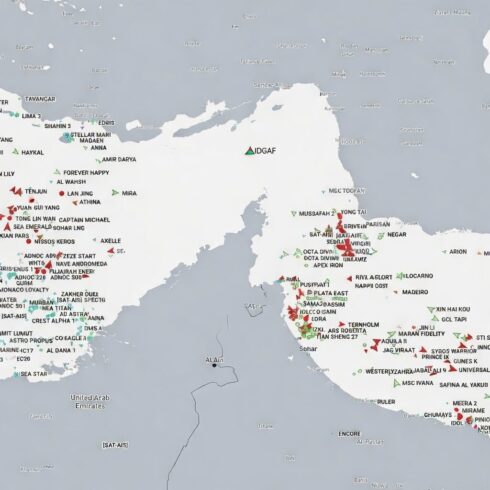
The surge came after Iran effectively shut down the Strait of Hormuz, a vital maritime shipping route through which around 20 per cent of the world’s oil and liquified natural gas passes.
Key oil producers in the Gulf, including Kuwait, Bahrain and the UAE, have also announced that they will cut production after Iranian drone strikes damaged several oil refineries across the Middle East.
Wholesale energy prices have dipped in recent days to a current level of €72/MWh.
That comes after French president Emmanuel Macron said France and allies were preparing a ‘purely defensive’ mission to reopen the Strait and facilitate the passage of tens of million of vital barrels of oil.
“We are in the process of setting up a purely defensive, purely escort mission, which must be prepared together with both European and non-European states,” Macron said following a meeting with the Cypriot president Nikos Christodoulides and Greek prime minister Kyriakos Mitsotakis in Cyprus on Monday.
Under the plan, France will deploy eight frigates plus the country’s flagship aircraft carrier to the region in order to escort ships through.
Hopes are also growing that oil prices will stabilise after 32 countries agreed to release oil reserves, a move US president Donald Trump said would ‘substantially reduce oil prices’.
But the current price still remains more than four times the level seen at the start of the month.
Consequently, the current market volatility is still expected to have an impact on household bills in the coming months – even if Spain entered the crisis in better shape than most of Europe.
Renewables accounted for 55.5 per cent of Spanish electricity generation in 2025, according to grid operator Red Electrica, and the country imports most of its oil from the Americas and Africa rather than the Gulf.
However, although Spain has significantly expanded renewable generation, the country still uses a marginal pricing system in which the most expensive energy source needed to meet demand determines the final electricity price for the entire market – bringing traditional energy sources such as gas and oil back into play.
That has a significant impact on the almost eight million households in Spain on the regulated PVPC tariff, whose electricity prices fluctuate directly with wholesale market movements.
Another factor likely to push up bills for many households is the timing of electricity contract renewals.
According to analysis by the consumer platform Zonox, around 28.5 per cent of Spanish electricity contracts are renewed in the first quarter of the year.
“Households receiving a renewal notification may face price increases of between 30 per cent and 50 per cent compared with their current contract, especially for tariffs signed when the energy market was at lower levels,” said Manuel Palacin, founder of Zonox.
“Those with a competitive fixed-price contract should carefully assess any tariff change,” he added.
“For households facing an imminent renewal, it is advisable to compare offers before accepting the new conditions, using independent comparison sites or specialised tools that analyse the whole energy market.”
However, the impact is still expected to be less severe than the turmoil caused by Russia’s invasion of Ukraine four years ago.
That is down to a recent redesign of the regulated tariff, which incorporates more stable ‘futures’ market data alongside volatile daily prices, designed to act as a buffer against sudden geopolitical shocks.
