
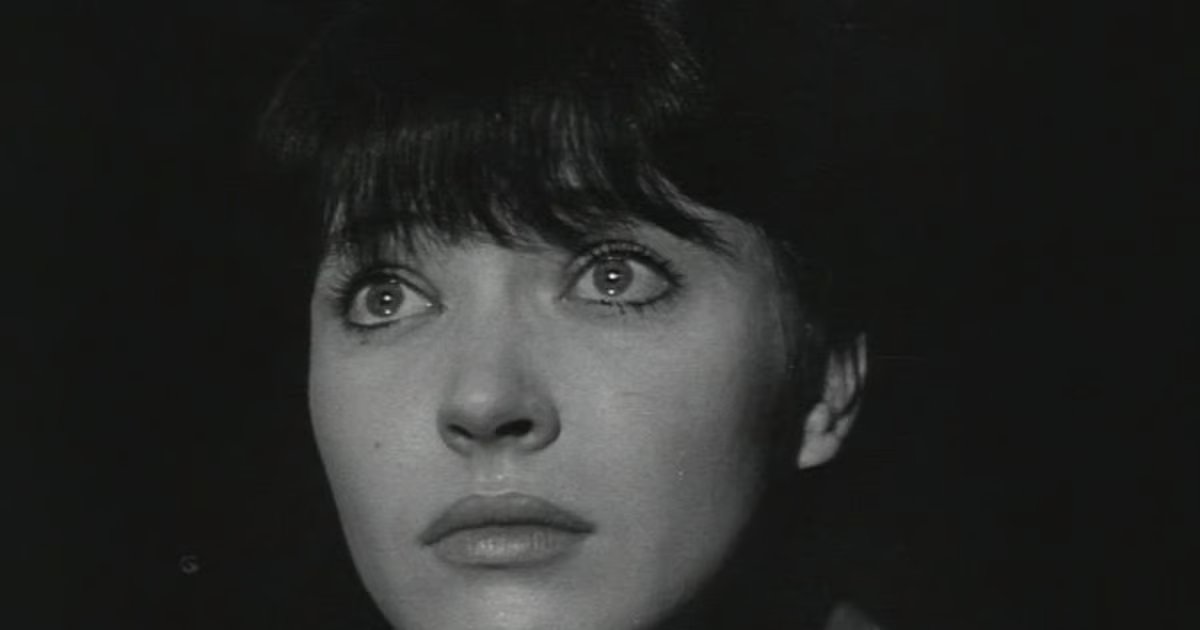
Crying is a form of positive emotional processing, particularly when it occurs with others and in a safe environment (which for some can be the cinema). Even films themselves frame characters’ emotional release through spectatorship to drive a narrative. In Godard’s Vivre Sa Vie, there is a scene in which Nana (played by Anna Karina) sits in a dark theatre, watching Carl Theodor Dreyer’s The Passion of Joan of Arc, tears running down her face as she recognises her own experience of mistreatment by men and questions her mortality.
In a culture increasingly desensitised by constant exposure to, well, everything, perhaps crying at the cinema is not emotional excess, but proof that the numbness has been punctured. The very experience of going to the cinema asks us to stop scrolling, stop moving on, and to feel something fully and be affected, even if only for two hours.
In recent years, there’s been a plethora of independent successes that have hinged on emotional intensity, including Call Me By Your Name, All of Us Strangers, Past Lives, Close and The Voice of Hind Rajab. Distributors are clearly picking up on this. To promote Sentimental Value, MUBI included a box of tissues in its press materials, as if daring viewers not to feel something.
Arguably, this past year’s most divisively emotive film is Chloé Zhao’s Hamnet, adapted from Maggie O’Farrell’s novel, which reimagines William Shakespeare’s inner life through the early death of his only son. Anchored by Jessie Buckley’s devastating performance as Shakespeare’s wife Agnes, the film lingers on the profundity of grief in all its complexity. Hamnet is undeniably positioned as a film designed for immersive, communal viewing, and it shows in the statistics, making a healthy box-office return on its production budget in addition to many film accolades.
Zhao has been candid about why grief sits at the centre of her work and how vulnerability through art has allowed her to process her own emotions. “All my characters grieve who they thought they were in order to become who they truly are,” she explains to the Los Angeles Times. “That’s grief on an individual and collective level. I wasn’t raised to understand grief. So, I made films to give characters catharsis and through that, myself.”
Of course, not everyone is convinced. Films like Hamnet have been accused of manufacturing emotional heft, veering into grief porn rather than grief art. During the 2023 awards season, one critic argued that sustained emotional sequences ask audiences to project their own experiences without offering much narrative substance or nuanced character development in return, while another points to the overuse of Max Richter’s score On the Nature of Daylight, as a musical trope to manipulate a viewer into a state of sadness in the climactic ending scene. These are valid critiques – a tactical attempt to provoke such an emotional reaction, particularly when so obvious and hollow, can be distasteful. Yet this dismisses the subjective nature of an emotional response – what feels manipulative to one viewer might feel like recognition to another.
