
Subscribe to High Margin by Robert Williams: perspectives on creativity and business in the world of luxury — from fashion and watches to art, wellness, travel and more.
Hello from Milan, where I’m presently in transit to Prada’s womenswear show. Can you believe it’s already been 6 years since Raf Simons joined as co-creative director?
After that we’ll check in on Emporio Armani before heading to Meryll Rogge’s first Marni show. Tomorrow it’s the moment of truth at Italy’s biggest brand as Demna puts on his first big Gucci show.
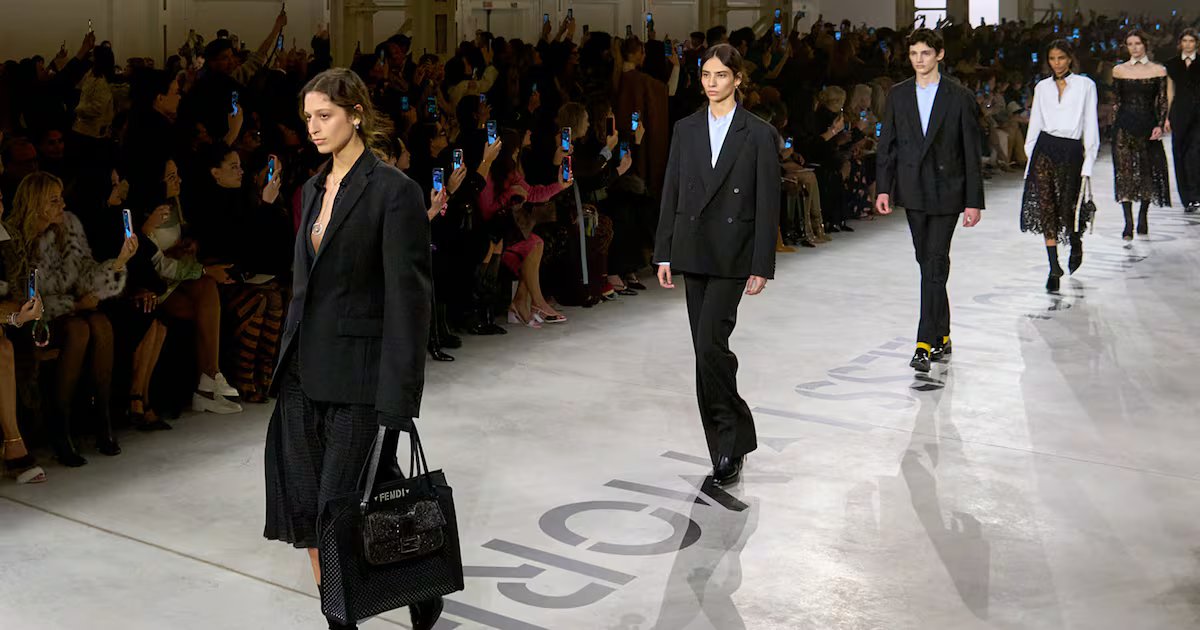
Count on fashion week to make yesterday feel like a distant era. But I keep thinking about Maria Grazia Chiuri’s debut for Fendi, as it left plenty of questions unresolved.
Fendi has felt like it’s treading water in recent years: Silvia Venturini Fendi and Kim Jones’ collections for the brand were consistently good — sometimes great. But owner LVMH no longer seemed like it was really putting its muscle behind the brand, and was slow to make changes when revenues and brand heat slipped.
With estimated sales around $2 billion, Fendi occupies a unique position in the portfolio. It’s ten times smaller than Vuitton, 4 or 5 times smaller than Dior. And yet it was already too big and too profitable — EBIT margins have at times surpassed 20 percent — to require the kind of transformational investments the group allocated to projects like Celine under Hedi Slimane, previously considered “sub-scale” and now a notch bigger than Fendi following a well-funded expansion plan.
Maria Grazia Chiuri’s arrival may change that: her budgets at LVMH stablemate Dior were staggering, and she wouldn’t have accepted the Fendi gig without major commitments from the group. (The brand missed a chance to signal this “new era” by staging her debut in its usual show space with the usual degree of fanfare. But she may want to ease in, laying some groundwork before putting on flashier initiatives).
Success isn’t guaranteed. Transferring MGC’s ultra-recognisable aesthetic from one brand to another will need to be carefully managed. Without sufficient evolution, the project risks coming off as inauthentic and déja vu.
There’s also been a strategic vacuum at Fendi. MGC’s highly successful tenure at Dior was fuelled by synergy between herself, CEO Pietro Beccarri, communications and image boss Olivier Bialobos and controlling shareholder Bernard Arnault. At Fendi, the brand is now on its fourth CEO in 10 years. Early echoes about the new guy — Ramon Ros — are positive. Let’s hope he can put the right structure and support in place to accompany MGC’s tenure as chief creative officer.
Now for the positive signals: Fendi’s brand message has long been splintered, with separate visions for men and women diluting its impact. MGC wants to propose a unified wardrobe which could help refocus (and amplify) the brand’s message.
In terms of merchandising, Fendi’s boutiques have always been like candy stores for bag lovers. But the ready-to-wear offer is usually limited. Silvia Fendi’s menswear shows in particular were full of interesting ideas that rarely translated to stores (or even ad campaigns for that matter). I have nothing against “show clothes” that take advantage of the runway as a space for experimentation. But there needs to be some degree of translation in today’s market, the sense that collections are coming to life in stores and the real world. MGC is sure to rebalance the recipe, favouring ideas that can be brought to fruition commercially.
I’m also interested to see what she will do with Fendi’s bag program. MGC is as obsessed with industrial craft — all the ways Italian workshops can produce novelty at scale, at various price points — as she is with artisanal craft. Already in her debut collection, I saw a new material that added three-dimensional heft to the iconic double F monogram, with raised velvety letters. It felt more substantial, more precious than before. At the top end, an instarsia fur oversized “Mamma Baguette” was assembled on ultra-light mesh: a loveable monster.
Read my full interview with Maria Grazia Chiuri here.
Disclosure: LVMH is part of a group of investors who, together, hold a minority interest in The Business of Fashion. All investors have signed shareholders’ documentation guaranteeing BoF’s complete editorial independence.
