
Luis Buñuel used to say that, when it comes to adapting a book for the screen, it’s better to choose a bad novel, given the creative burden that comes with respecting great literature. He applied this principle himself with Belle de Jour, Joseph Kessel’s bestseller about a bourgeois woman who turns to prostitution to fulfill her sexual fantasies. Buñuel considered it little more than a spicy melodrama, but he transformed into a cinematic masterpiece. More debatable was what he later did with Tristana, where he pushed into the background the psychological depth and yearning for freedom of Galdós’s heroine: the film was superb, but the book offered possibilities that remained unexplored.
The fact that even Luis Buñuel drew on literary sources for his screenplays underlines how closely film and literature are intertwined. That relationship is also worth questioning: in a recent interview with EL PAÍS, another Spanish director, Óliver Laxe, argued for the need to move beyond narrative frameworks inherited from literature — structures he sees especially in the audiovisual output of Netflix‑style platforms — and which, he says, he intends to challenge in his next project.
However, more traditional narrative cinema still depends on literary scaffolding. Adaptations have existed since the birth of film: Méliès adapted Faust and Cinderella before the 20th century began, and the first Frankenstein on the big screen dates back to 1910. Yet the relationship between the two disciplines has always been somewhat tense.
Guillermo del Toro’s recent Frankenstein demonstrated this again by reducing the philosophical and moral themes of Mary Shelley’s novel while inflating the visual apparatus used to express them.
A similar issue can be seen with The Bride!, a film by Maggie Gyllenhaal starring Jessie Buckley, Christian Bale and Penélope Cruz, which sets the action in 1930s Chicago. Although Mary Shelley appears in the plot as part of a metanarrative device, the movie is not an adaption of her work but rather the 1935 film James Whale’s Bride of Frankenstein, starring the iconic Elsa Lanchester as the Bride of Frankenstein. Gyllenhaal blends that reference with the cinematic tradition of outlaw lovers on the run, in the vein of Bonnie & Clyde, Badlands or True Romance.
The film has sparked mixed reactions, but the negative reviews have been especially harsh. French critic Renaud Baronian, writing in Le Parisien, described it as a “second‑rate thriller and cheap romance” that, in his view, “butchers the Frankenstein myth.” He went further, calling the film a kind of superficial, tourist‑friendly punk pastiche lacking authenticity. Baronian then posed a pointed question: after what he sees as the studio’s disastrous handling of Wuthering Heights and now Frankenstein, how long will Warner Bros. continue “destroying on screen the masterpieces of British literature?”
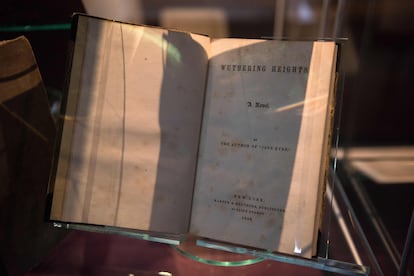
Indeed, Emerald Fennell’s adaptation of Emily Brontë’s novel Wuthering Heights, despite becoming a box‑office success, was almost universally condemned by critics and fans of the book. Viewers were frustrated to see the violence and passion of Heathcliff and Cathy diluted into an audiovisual product stripped of its subversive force. Some of the harshest reactions described the film as “as dull as dishwate.”
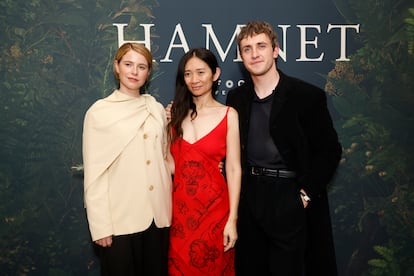
Chloé Zhao’s film Hamnet has also faced criticism for the way it heightens the melodramatic elements of Maggie O’Farrell’s novel. Reviewer Christy Lemire, writing for RogerEbert.com, argued that Zhao “depicts this tragedy with histronics that are so overly demonstrative, they actually take you out of the moment.” Several outlets have gone further, describing the film as “grief porn.”
Shakespeare is one of the most frequently adapted authors in history — whether through highly academic versions like Franco Zeffirelli’s Romeo and Juliet, The Taming of the Shrew, or Hamlet, or through inventive cinematic reinterpretations such as Orson Welles’s remarkable Shakespeare films, especially Chimes at Midnight.
Most of these adaptations have preserved the poetry and enigmatic quality of Shakespeare’s dialogue, which has survived even the boldest stylistic experiments, including Baz Luhrmann’s Romeo + Juliet, set in a violent, neon‑soaked 1990s Verona Beach. Less defensible was Luhrmann’s later treatment of The Great Gatsby. In his review for The New Yorker, Richard Brody lamented that Luhrmann squandered Fitzgerald’s novel, concluding that the film “offers no ideas.”
Brian De Palma’s The Bonfire of the Vanities — based on Tom Wolfe’s satire of the Wall Street sharks of the 1980s — was met with an even more disastrous reception. Critics were scathing: Rita Kempley of The Washington Post wrote: “The director has become one with the buffoons Wolfe scored in his bestseller. He has not only filed Wolfe’s teeth but stuck his tail between his legs.”
Reviews frequently compared the book and the film, often to the movie’s detriment. “It started with a story with potential, the work of the well-known Tom Wolfe, but it turned out to be one of Brian De Palma’s most impersonal and unsuccessful films,” concluded Fernando Morales in EL PAÍS.
Meanwhile, Variety was equally dismissive, suggesting that the film’s attempt at social satire was no sharper than a sketch from Police Academy.
Brian Joffé’s 1995 version of The Scarlet Letter, based on Nathaniel Hawthorne’s 19th‑century classic, is widely remembered as one of the most disastrous literary adaptations in modern Hollywood. Critics argued that casting Demi Moore — then associated with Indecent Proposal and Disclosure — to play the outlawed adulteress Hester Prynne was a fundamental misstep.
Another of Joffé’s mistakes was transforming an austere story about guilt, sin, and religious repression into a misguided romantic period melodrama. It was described by some critics as “unintentionally funny” and “Hollywood arrogance in its purest form.” Critic and writer Libby Fischer Hellmann concluded that it was “a movie that more or less made the critics weep, it was so bad” and is “widely cited as the worst film adaptation ever made.”
At the opposite end of the spectrum, Luchino Visconti’s The Leopard is often cited as a model of faithful, canonical adaptation of Giuseppe Tomasi di Lampedusa’s novel. And rightly so, since both works are considered masterpieces in their respective fields. Visconti and Lampedusa — two Italian aristocrats deeply familiar with the world they were depicting — created richly coherent universes that feel almost like historical documents of Sicily in 1860, while also generating a rare and fruitful dialogue between literature and cinema.
Visconti’s skill as an adapter also extended beyond The Leopard. He successfully brought to the screen works by Fyodor Dostoevsky, Thomas Mann, and Gabriele D’Annunzio in White Nights, Death in Venice, and The Innocent. His version of Albert Camus’s The Stranger was less accomplished, though François Ozon also struggled with his recent adaptation of the same novel.
Spanish film director Isabel Coixet told the TV program Página 2 that it is the film industry that seeks out literary adaptations. “For a producer or a platform, adapting a book offers a certain guarantee of an interesting plot,” she explained. “It’s easier to get a book adaptation produced than an original screenplay.”
And it’s true that adapting a novel for the screen may look like a safe bet, since it provides filmmakers with ready‑made narrative elements that can make the screenwriting process easier. But it also presents a twofold challenge: in addition to meeting the standards expected of any film, an adaptation must satisfy readers of the original work — people who have already formed their own mental version of the story. The impossibility of fulfilling this expectation inevitably affects even the most accomplished adaptations. This raises the question of what “fidelity” in adaptation actually means: should a film remain loyal to the plot, to the psychology of the characters, to the style or language of the book, to its historical and spatial setting, to its ideological stance, or to the elusive “spirit” of the original?
That’s why some of the most exciting film adaptations arise from deliberate infidelity to the source material. Patrice Chéreau’s La Reine Margot, based on the Alexandre Dumas novel, and Chantal Akerman’s The Captive, inspired by Proust’s work, are cited as examples of how radical reinterpretation can produce remarkable cinema. The same applies to Francis Ford Coppola’s Apocalypse Now, drawn from Joseph Conrad’s Heart of Darkness, and Tarkovsky’s Stalker, which is loosely based on the Strugatsky brothers’ novel.
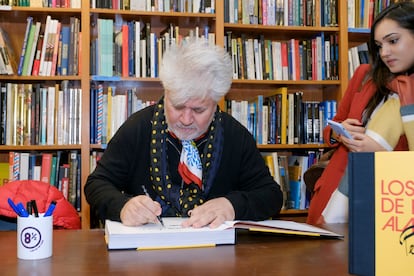
Spanish director Pedro Almodóvar is highlighted as a filmmaker with a particularly distinctive relationship to literature. Rather than choosing monumental or widely revered novels, he often adapts modest thrillers — such as Ruth Rendell’s Live Flesh or Thierry Jonquet’s Tarantula — or texts that seem inherently unfilmable, like Alice Munro’s short stories in Julieta or Sigrid Nunez’s autofiction What Are You Going Through. In each case, he reshapes the material to fit his own creative world, producing highly personal films.
His latest work, Bitter Christmas, which premieres on March 20, draws on several situations from one of his own short stories, published in El último sueño (The Last Dream). The film develops these fragments into a complex interplay between reality and two layers of fiction.
Almodóvar’s approach stands in contrast to a Spanish tradition rooted in the era of the Miró Law, a 1980s cultural policy that encouraged prestige literary adaptations. These films often equated fidelity with academic rigidity and became emblematic of a certain respectable but conservative cinematic style. Mario Camus was one of the leading figures of this trend, with adaptations such as The Hive, The Holy Innocents, and The House of Bernarda Alba, based respectively on works by José Cela, Miguel Delibes, and Federico Garcia Lorca.
Spain has also seen notable clashes between writers and filmmakers over adaptations. One of the most famous involved Javier Marías and director Gracia Querejeta after she turned his novel Todas las almas (All Souls) into the film El último viaje de Robert Rylands (Robert Rylands’ Last Journey). Marías dismissed the adaptation as a “soap‑opera melodrama” and wrote that he felt impatient and even embarrassed watching scenes that viewers might mistakenly assume came from his book. He eventually won a court ruling that granted him compensation and ordered his name removed from the credits.
An even sharper conflict arose with writer Cristina Morales, who was dismayed to see her acclaimed novel Lectura fácil (East Reading) turned into a sitcom‑style television series by Anna R. Costa. Morales accused the show of being “Nazi” in its portrayal of women with intellectual disabilities. Costa responded that Morales should focus on “the extraordinary amount of money she was paid for the rights,” a remark that underscored the reduction of artistic creation to a mere commercial transaction. What Morales did not receive in exchange for those rights was the one thing that truly honors a good novel: a good adaptation.
Sign up for our weekly newsletter to get more English-language news coverage from EL PAÍS USA Edition
