
There are films you watch, and then there are films that quietly stay with you long after the screen fades to black. That was my experience with The Things You Kill. It is not just a story; it is a deeply personal, unsettling, and thought-provoking exploration of identity, memory, and the narratives we tell ourselves to survive.
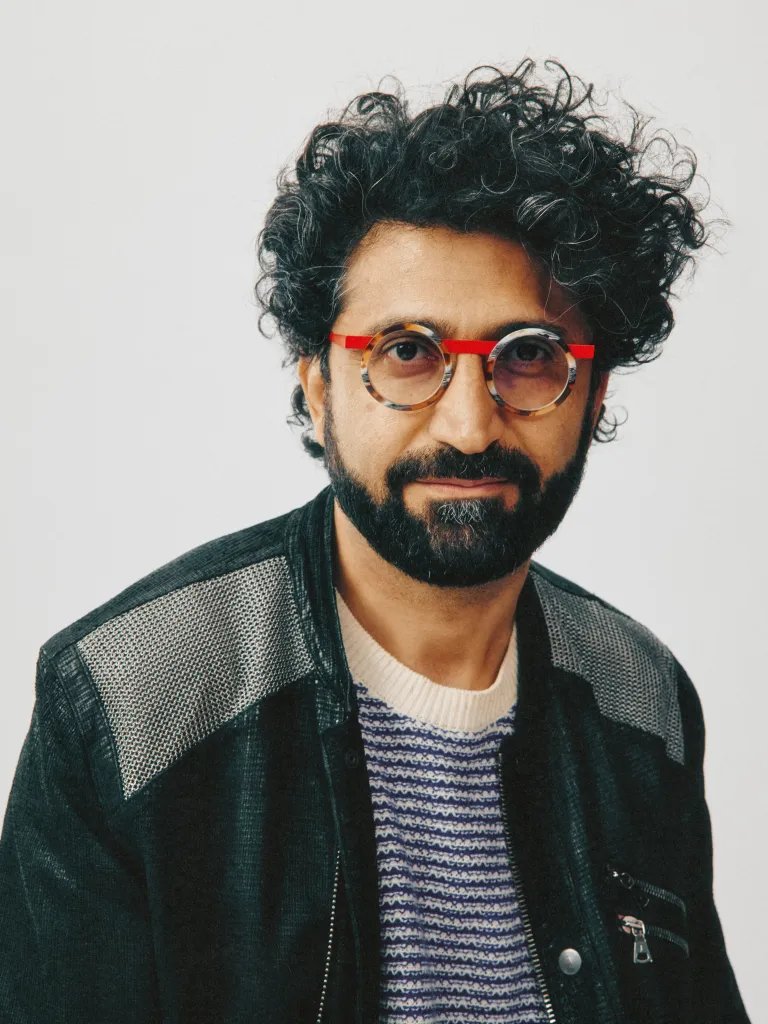
I had the opportunity to sit down with filmmaker Alireza Khatami, whose journey with this film spans nearly a decade. What began as something intimate and almost too personal to share slowly evolved into a universal story – one that resonates far beyond its setting. In our conversation, Khatami opens up about the emotional weight behind the film, the challenges of creating independent cinema, and the uncomfortable truths that shaped both the story and its protagonist.
What follows is a candid and honest discussion with a filmmaker who is not afraid to confront contradictions – more importantly – both on screen and within himself.
MOVIEMOVESME: Good afternoon, Mr. Khatami. I actually got a chance to watch the movie today, and I would like you to talk about your journey, coming up with this idea, writing it, and then directing it. It’s quite a masterful piece, to be honest.
Alireza Khatami: Oh, thank you so much. You’re very kind. This started quite a long time ago, almost nine years ago. I was supposed to adapt a book into a script, but I found myself writing about two friends in a garden, and I had no idea what this was about. Soon I realized that this was a way of me talking to myself, as these two people were talking. Slowly I realized my sisters were coming into the story, my mom was coming, my dad was coming. At some point I had to ask myself: can I show this to anybody? This is becoming too personal. I’m saying things I have said to nobody, and everybody will know it’s me. That was a hard decision to make – should I make this movie or not? But then a friend of mine read the script and called me at 1 a.m. crying. When that happened, I thought, okay, maybe it’s no longer my story alone. Maybe other people connect with it, and I should find a way to put it out there. Then it started – bringing a team together. Soon I realized that a lot of people connect with the pain in the story and find a little bit of themselves in it. That’s how we brought a team together, and nine years later, I’m talking to you.
MOVIEMOVESME: Thank you. I think one of the most interesting parts of the film is its protagonist, Ali, a university professor who coerces his gardener into a cold-blooded act of vengeance. What were you exploring regarding class and intellectualism by having a man of thought use a man of labor to execute his darkest impulses?
Alireza Khatami: We have this assumption that if somebody studied well and is well educated… this is the belief of Ali as well. This is the story he tells himself: I studied, I washed dishes, therefore I’m a feminist. Therefore I have nothing more to do. I have done my job regarding patriarchy. That’s the story. Then the moment this story is challenged, the world starts falling apart. Women start coming with stories that do not agree with his story. The sister tells a story. The older sister tells a story. The aunt tells a story. The father’s lover tells a story. And he realizes that his narrative is very limited. It’s very exclusive. So the story becomes about a man who has to look at himself in the mirror and say: Your story is incomplete. You have to let that go and build a new story that is more inclusive. Often in literature and cinema, when we write about these characters, they are ignorant characters who didn’t study well. Someone can study a lot of books and still live on the dark side. I wanted to challenge that because, to me, that was my story – reconciling my story with my sisters’ narratives.
MOVIEMOVESME: The setting of the film is in Turkey – at least they speak Turkish, but it could have been in Iran as well. I understand there might be many reasons why it had to shift. Without going into specifics, how difficult is it as a writer and filmmaker to change the setting in order to ensure the film still gets made instead of being censored or silenced?
Alireza Khatami: I have lived more than two decades of my life in exile, and I lived in nine countries. The first film I made was a short film in Malaysia in English and Malay. Later I made films in Spanish, in Mandarin, and now in Turkish. So I think it was part of my exile training to tell my stories in different contexts, geographies, and languages. The exile condition taught me the sensitivities required when you are a guest in a society and you’re telling a story. How do I make this film not only my film? How do I open it up for the host society to come in and use this opportunity with me to tell a story? So it’s an exercise in working on your ego more than anything else.
MOVIEMOVESME: You mentioned that you spent years writing this film and overcoming the fear of how it might be perceived. How do you avoid those barriers you sometimes create for yourself as an independent filmmaker?
Alireza Khatami: Again, that’s an exercise in working on your ego. For me, it’s about finding the right engine of motivation – why you are telling this story. If you’re telling it to get into a festival, or to sell tickets, those motivations will definitely lead to disappointment. It doesn’t matter where the film plays – there is always disappointment. You win the Cannes Camera d’Or but not the Oscar. You win the Oscar but not the Golden Globe. It never ends. That can destroy you if that’s the reason you made the film. But if your reason is a strong engine inside you. Your goal is simply to make the film, then once it’s made, the achievement is already there. So for me, it’s always about returning to the reason why you make the film.
MOVIEMOVESME: Independent films like this often have a European style – psychological and deeply engaging—but they come with financial challenges. Can you talk about the struggle of funding, finding actors, and preserving creative independence?
Alireza Khatami: This film took eight years. I put eight years of my youth – the best years of my life, into this film. I didn’t get paid for it. Nobody can pay you enough for eight years, especially when you’re making an independent film on a shoestring budget. It requires a sense of mission that goes beyond the market economy. If you’re trying to sell tickets, this is the wrong business. But if you see filmmaking as a gift: this is a gift I crafted for the audience. I don’t expect to get richer from it, and I won’t. So it requires a sense of madness in a way. From a capitalist perspective, it’s insanity. We made the movie through co-production treaties between Canada, France, Poland, and Turkey. Is it a European style? I think that gives Europe too much credit. This is a Canadian film.
MOVIEMOVESME: Ali is such a complex character. Even after the credits roll, you still wonder what happens to him. Where did that inspiration come from?
Alireza Khatami: Before this movie, the way I looked at characters was different. Characters had functions in the narrative. With this film, I tried to make an incomplete character. Because when you try to complete a character, it becomes too clean. Complete characters should disappoint you. They should betray you. That’s human. Sometimes humanity is too much for us to bear. So I was inspired by the contradictions in all of us. We are a compilation of contradictions. I looked at myself and thought: Oh my God, I’m this too. And I tried to bring that into the script. You cannot say Ali is good or bad. He’s just human.
MOVIEMOVESME: What advice would you give aspiring filmmakers who have ideas but lack funding or resources?
Alireza Khatami: What I say may not be what people want to hear. It’s not about funding or equipment. If you have the right motivation. And I choose that word carefully, then you will make the film. The right motivation is something sustained over time. Not an impulse. If your heart is filled with that desire, eventually that desire spills into reality. Then reality has to bend to your will. My first film was under one million dollars. My second film was $40,000. My first short film was $26. It was never about the tools. We think it’s about the tools when the inside is empty. If someone says, “I have a great story but no funding,” I doubt the story.
MOVIEMOVESME: The quality of a film shouldn’t be judged by its budget. A $100 million movie can be terrible, while a $40,000 film can be remarkable. What was the budget for this film?
Alireza Khatami: In my experience, I’ve never made multi-million-dollar projects. Whether it was a $26 film or a $1 million film, I wanted to tell the story so badly that I gave it eight years. If it took twenty years, I would have given it. So it’s never about the price tag. Look at Hollywood – every year there are $140 million films that flop and are unwatchable. I don’t think about tickets. I think about telling a story that someone else reads and finds a piece of themselves in. Then they say, “I know this is madness, but I want to help you build it.” If I have that, I can make the film.
MOVIEMOVESME: Do you worry that AI technology could replace creativity – writing scripts or even generating actors?
Alireza Khatami: AI is here to stay. It will completely change how we look at storytelling. And I welcome it. I hope filmmaking becomes cheaper, faster, and easier so that everyone can try it. Then we won’t hear the excuse that filmmaking is about tools or money. I have no problem with technology. Whether we like it or not, it’s here to stay. We should find ways to use it. When calculators came, accountants protested. People said children would forget how to do math. Now everyone uses calculators.
