
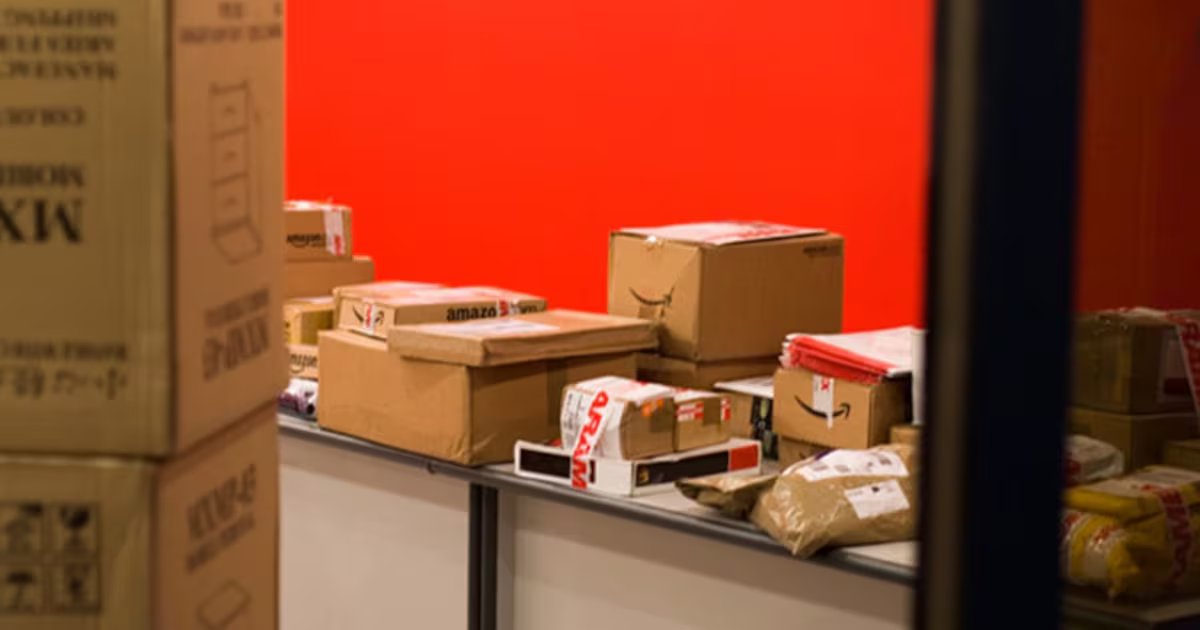
Major e-commerce platforms are warning of longer delivery times to the Middle East after the US-led bombing campaign against Iran disrupted key air and sea routes, threatening supplies to one of the industry’s fastest-growing markets.
Delivery estimates for goods being shipped to consumers across the region by China’s major online retailers have surged by several days. Temu currently estimates delivery times of up to 20 days, compared with about 15 previously, according to 17Track. Shein has widened its shipping window to eight to 10 days, up from five to eight, the data platform said.
Meanwhile, some items on Amazon.com Inc. are showing delivery windows of 45 days on Monday, roughly 10 days longer than before the conflict.
The ongoing strikes risk even longer wait times for customers. Two Chinese online merchants who sell primarily through Amazon, Shein and Temu said they have paused plans to ship new inventory from China to the Middle East until conditions stabilise. Freight forwarders have warned them that both shipping costs and delivery times could double if disruptions persist, the merchants told Bloomberg News.
Representatives for Amazon, Shein and Temu didn’t immediately reply to requests for comment on Monday.
Growth Engine
The delays underscore how quickly the escalating conflict is rippling through global supply chains, raising the risk of higher prices and product shortages just as the region celebrates Ramadan, its peak shopping season. The Gulf has become a crucial growth engine for global and Chinese online sellers, buoyed by a young, affluent population that relies heavily on imported goods.
“The Middle East market is a write-off this year,” said Huang Lun, a Chinese apparel merchant who sells on Amazon, Shein and Temu and expanded his business to the region last year. “There’s so many layers of risks added to us, with shifting US tariffs, tightening regulation in Europe and now wars in the Middle East.”
The Middle East’s rise has coincided with growing uncertainty in the US, historically the most lucrative cross-border e-commerce market.
The Trump administration’s shifting stance on rules for lower-value imports has complicated the business model of Chinese platforms that rely on the exemption, prompting some merchants to turn to other markets. Online retail sales in the Middle East and North Africa have expanded at an annual rate of about 11 percent since 2022, China’s state-run Xinhua said, citing a Dubai e-commerce report. The market is projected to reach $57 billion by 2026, it said.
Amazon has described the Middle East as the fastest-growing “golden track” for global sellers and said Chinese vendors increased their regional sales by more than 50 percent in 2024. Shein has stepped up recruitment of Chinese apparel suppliers, pitching the Middle East as a market where consumer spending in a single country during one week of Ramadan can reach billions of dollars.
Cargo Delays
The conflict has already slowed both air freight and container shipping as airlines suspend or reroute flights and trade through the Strait of Hormuz effectively stops. Top container line MSC Mediterranean Shipping Co. halted cargo bookings for the Middle East while No. 2 A.P. Moller-Maersk A/S and Hapag-Lloyd AG suspended all crossings in the Strait.
That means it’s not just consumer goods like clothes and electronics that will be impacted.
Indian traders shipping to and from the Middle East are likely to face disruptions across a broad range of goods — petrochemicals and agricultural products to cars and auto parts, capital goods, pharmaceuticals and textiles — after some carriers suspended cargo bookings and began rerouting vessels amid tensions in the Persian Gulf, according to a person familiar with the matter. The curbs threaten delays, higher freight and insurance costs and longer transit times for exporters reliant on Gulf markets and transshipment hubs, they said.
Gulf Businesses Reel as Iran Strikes Trigger Aviation Chaos
Regional business activity has been disrupted after Iran launched strikes across Gulf nations in response to the US-Israeli assault on Tehran, triggering airport closures or restrictions in Dubai, Abu Dhabi and Doha.
