
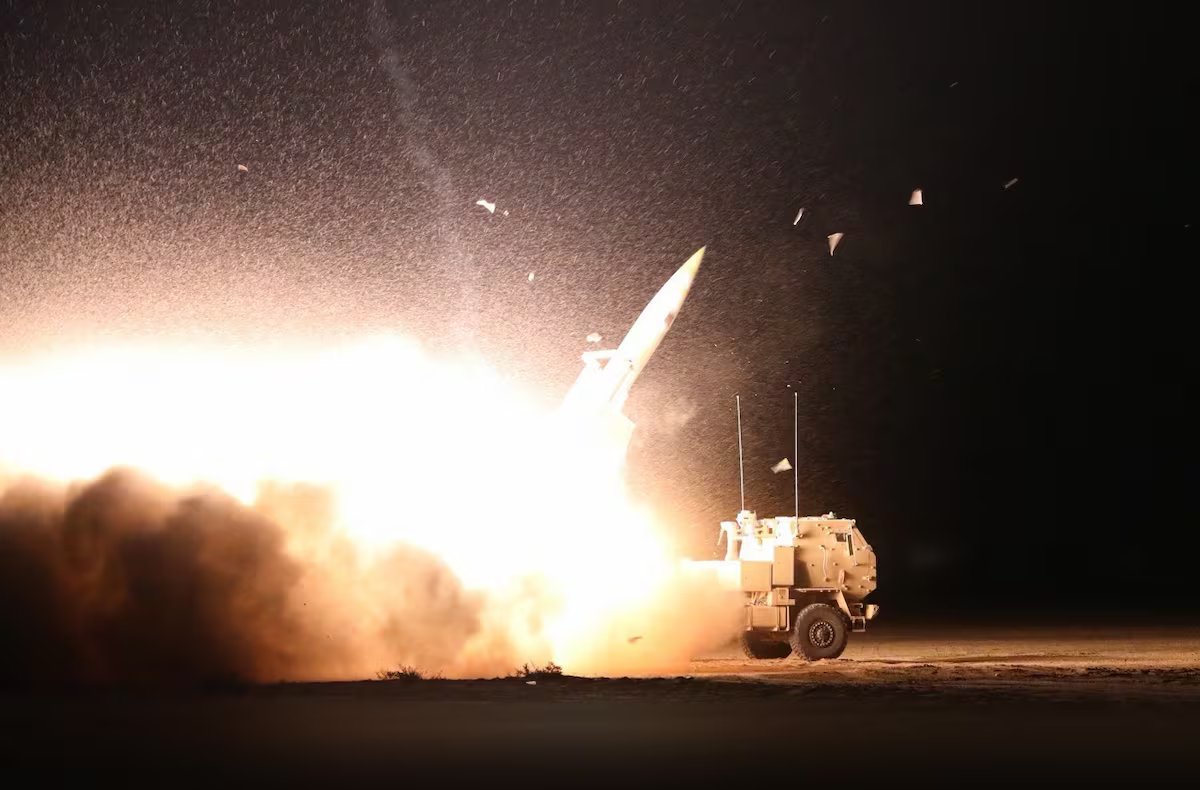
Israel has intensified its appeals to Iranians to overthrow the Iranian regime — implicitly acknowledging its limited ability to topple it without an internal uprising.
The calls were made after U.S. President Donald Trump said the war in the Middle East is “very complete, preet much.” On Tuesday, the U.S. and Israeli military fact carried out their heaviest bombardments yet, after indications that Trump might be preparing to declare the conflict over. That, at least, is what global markets appeared to be betting on throughout the day, with Brent crude stabilizing around $92 after nearing $120 the day before.
“We are not looking for an endless war,” said Israeli Foreign Minister Gideon Saar.
Iranian authorities, meanwhile, are maintaining an increasingly defiant tone. The secretary of Iran’s Supreme National Security Council, Ali Larijani, has gone the furthest, urging Trump to “watch out”, warning that he could “be eliminated.”
After blocking shipments through the Strait of Hormuz — a route that once carried a fifth of the world’s oil and liquefied natural gas — the Iranian Revolutionary Guard has also declared that it will block oil exports to the Gulf unless the attacks stop. It has added that Iran, not the United States or Israel, will decide when the war ends. Trump said if this happens, Iran “will be hit by the United States of America 20 times harder than they have been hit thus far.”
The speaker of Iran’s Parliament, Mohammad Baqer Qalibaf, also used language that reflects a certain shift in tone. This change follows the after the initial triumphalism in Washington and Jerusalem after the strike that killed Iran’s supreme leader, Ali Khamenei.
Tens of thousands of people took to the streets on Monday to support the appointment of his son, Mojtaba, as the new supreme leader, in a show of strength by the regime. Qalibaf contradicted the U.S. president by stressing that Tehran is not seeking a ceasefire, but rather intends to “strike the aggressor in the mouth” so that it “will never think of attacking our beloved Iran again.”
Failed plans
Iranian Foreign Minister Abbas Araghchi said in an interview that the United States and Israel believed they would achieve “a quick and decisive victory” and bring about regime change “in a matter of two or three days,” but that “the option plan A was a failure, and now they are trying other plans, but all of them have failed as well.”
At least one of those approaches does not appear to be working: the “unconditional surrender” demanded by Trump, who will ultimately decide when the war ends, despite public statements from both Trump and Israeli Prime Minister Benjamin Netanyahu claiming they are acting in coordination
Another strategy — the popular uprising called for by Netanyahu — has also not yet materialized. Israel has been increasingly explicit that its objective is not only military (destroying Iran’s missiles and nuclear program) but also political: to bury the Islamic Republic nearly half a century after its founding. Netanyahu has described this as a long‑held dream that he can now pursue, with Trump in the White House and after weakening the militias supported by Iran.
On Tuesday, following Trump’s remarks about the imminent end of the war, Netanyahu placed responsibility for the regime’s downfall on the Iranian people. “Ultimately, it depends on them,” he said, urging Iranians to seize power and take to the streets despite the bombings and the bloody repression of protests earlier this year. “Our aspiration is to bring the Iranian people to throw off the yoke of tyranny
Our aspiration is for the Iranian people to free themselves from the yoke of tyranny […] There is no doubt that through the actions taken so far we are breaking their bones,” he said during a visit to the National Center for Emergency Health Operations.
Meanwhile, Mossad — Israel’s well‑known foreign intelligence service — posted a message on its Persian‑language Telegram channel urging the population to provide information and join its campaign. “Only one more step remains. Join people like you who have made the right decision. With us, a safe and better future in the new Iran awaits you and your family. Contact us through the secure channel,” the message reads.
Israel has also received its first diplomatic visit since the start of the war on February 28. The visitor was German Foreign Minister Johann Wadephul, representing one of the European countries that has most closely aligned itself with Israel and the United States. Germany’s chancellor, Friedrich Merz, had previously sided with Trump when the U.S. president called Spain a “terrible” ally within NATO and threatened to cut all trade relations.
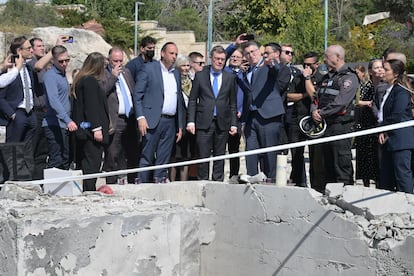
Wadephul said at a press conference in Jerusalem that Germany’s priorities regarding Iran are the “verifiable” end not only of its “military nuclear program,” but also of its “ballistic missile program,” and that it must “stop posing a threat to its neighbors.”
Sign up for our weekly newsletter to get more English-language news coverage from EL PAÍS USA Edition
