
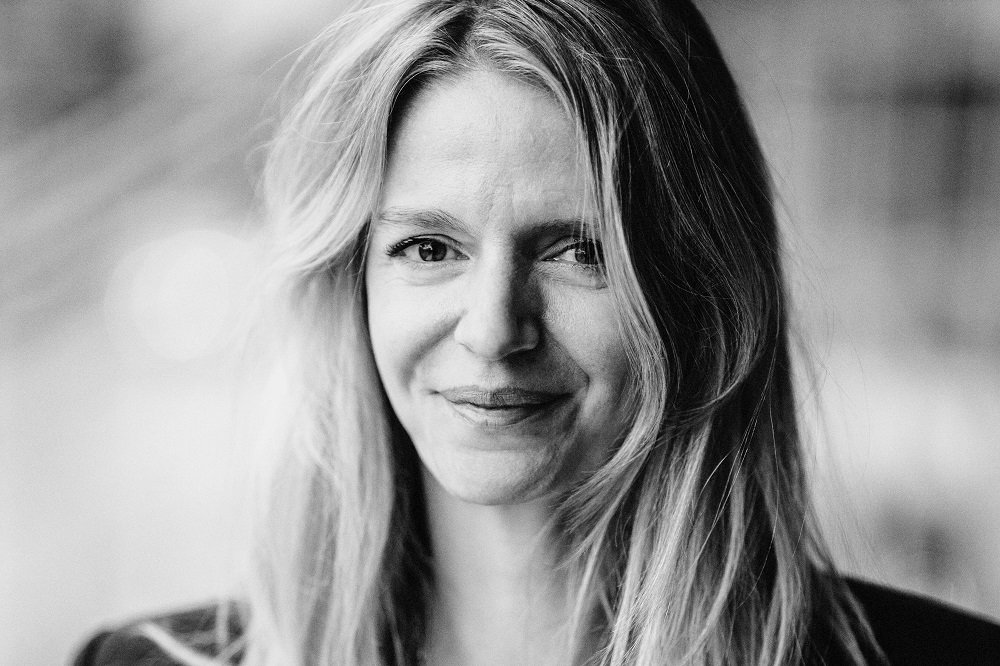
“Our editorial line is political intimacy, a slightly broader range of arthouse cinema and a different outlook on the world”
– The French producer looks back on her career path, her editorial line and the projects her firm represents
(© K Grabowska)
The co-founder of French outfit June Films with Naomi Denamur in 2020, Julie Billy’s back catalogue notably includes The Little Sister by Hafsia Herzi, Animale by Emma Benestan, the mini-series The Confidante, directed by Just Philippot (unveiled on HBO Max last year) and, on the co-production side, My Summer With Irène by Italy’s Carlo Sironi. We met with the French producer who’s now been selected for the European Film Promotion’s Producers on the Move initiative in Cannes.

Cineuropa: How did you become a producer and what have the milestones been in your career?
Julie Billy: I come from a working-class background where there wasn’t any kind of film-loving tradition. I wanted to move into the world of culture and, while I was studying literature, I worked for a literary adaptation festival and for Cannes’ Marché du Film a few times too. It helped me to realise that I wanted to work upstream rather than downstream of the creative process. So first I worked as a production assistant for Celluloïd Dreams where the first script I got to read was A Prophet by Jacques Audiard. I thought it was brilliant studying, developing and lending structure to screenplays and I realised I wanted to support directors.
After that, I signed up to the French-German Atelier Ludwigsburg course via La Fémis before spending ten years working alongside Carole Scotta at Haut et Court, with whom I produced ten or so films, including Fanny Liatard and Jérémy Trouilh’s first feature film, Gagarin. But after all those years, I wanted more independence and freedom, to work with different distributors and produce different kinds of films while maintaining my really close relationship with Haut et Court, because we’re still co-producing projects together. That’s why I founded June Films with Naomi Denamur.
What is June Films’ editorial line?
It’s pretty eclectic and very open in terms of genres, because we produce just as many genre films as dramas. We’re open when it comes to formats too, which range from feature films to series. It’s mostly characterised by a desire to support new, emerging outlooks, to produce films combining the private and the political, and which see the world through a different lens, or which have a unique tone or genre, to some extent. We’re carried by the vision of the directors we work with. We’re a small, human-sized production company and we work very closely with our directors, with a real sense of loyalty. We also want to reach different audiences, like with The Little Sister, which spoke to young audiences as well as the usual arthouse viewers. This film is a good example of our editorial line: political intimacy, a slightly broader range of arthouse cinema and a different outlook on the world.
What about your European co-productions?
Europe is in my DNA as a producer. In a market which is really contracting and becoming a lot more concentrated, where it’s becoming harder and harder to solely fund our films in France, European collaboration is vital. I also think our generation has developed a level of agility in how it produces works, in order to adapt to a highly fluctuating market. We have unshakeable faith in the fact that cinema will always exist and that we need to protect it because that’s what creates culture, and culture is what creates democracy. These days, making and producing films is a political act. We make films for an audience – an audience which changes but which always needs new stories and needs to dream. That’s why European co-productions are essential: for funding but also to create a collective and to work together. I co-produce almost all my films internationally and I got Germany (which ended up delivering almost 50% of the budget) involved very early on when developing The Little Sister, because I sensed that, with this kind of subject, I was going to come up against obstacles trying to find finance in France. I also love making minority co-productions because I get to work with different shooting, production and film cultures. That’s the case for The Favour by Grímur Hákonarson (Rams), which will start filming soon and which I’m co-producing with Sarimar Films in Iceland, Profile Pictures in Denmark and Iris Productions in Luxembourg, with support primarily coming from the CNC’s Aide aux Cinémas du Monde fund and ARP who are distributing the film in France.
What other projects are you currently working on?
Les Yeux Verts (read our article) by Fanny Liatard and Jérémy Trouilh is in post-production and I’m going to produce their next feature film (with Haut et Court once again) and their next series, which will be an adaptation of Jérémie Moreau’s graphic novel, Les Pizzlys: an ecological tale set in the Far North which will be co-produced by Norway. And I’m taking the project Vanda to international sales agents in Cannes, which will be Clémence Poésy’s first experience of directing a feature film. It’s an adaptation of Marion Brunet’s novel of the same name which won last year’s Astrid Lindgren Award, which is the Nobel Prize for Children’s Literature. Vimalas Pons will play the lead role and Belgian firm Frakas are already committed to co-produce the film. Shooting is planned for the first semester of 2027.
(Translated from French)
