
On September 20, 2025, at around 7 a.m., dozens of children ran through the Simon Pelé neighborhood in northern Port-au-Prince. They played among the colorful alleyways — controlled for years by the gang of the same name — waiting for Albert Steevenson, alias Djouma, to hand out toys as part of his birthday celebration. But quadcopter drones from an official operation, armed with explosives, were also flying through the alleyways with a clear objective: to kill the elusive Haitian gang leader.
The operation resulted in the deaths of at least 10 people, eight of them minors. A young juice vendor, a three-year-old girl, and an artisan working outdoors, among others, became the “collateral damage” of these operations, which were as unpopular as they were ineffective. Neither Djouma nor any other gang leader was killed or arrested during the operation. Most of the wounded patients treated by Doctors Without Borders at the time had lost at least one limb.
This failed operation was one of 141 suicide drone strikes ordered by Prime Minister Alix Didier Fils-Aimé between March 1, 2025, and January 21, 2026. A Human Rights Watch (HRW) report, published Tuesday, tallied these attacks, stating that at least 1,243 people were killed, including 43 adults who were not members of criminal groups, as well as 17 children. These attacks injured 738 people, 49 of whom were not members of criminal groups. During the 10 months of operations, Human Rights Watch received no information indicating that any gang leaders were killed as a result of the drone strikes.
Juanita Goebertus, a lawyer and director of the Americas division of Human Rights Watch, emphasizes the illegality of these drones. “When lethal force is used outside the context of armed conflict, as is the case in Haiti, and as a first option, these deaths could constitute deliberate extrajudicial executions,” she tells EL PAÍS by phone. “We have spoken with people who are suffering from great anxiety after witnessing events like those of September 20. Before, they feared being victims of gangs, and now they fear being victims of the state as well.”
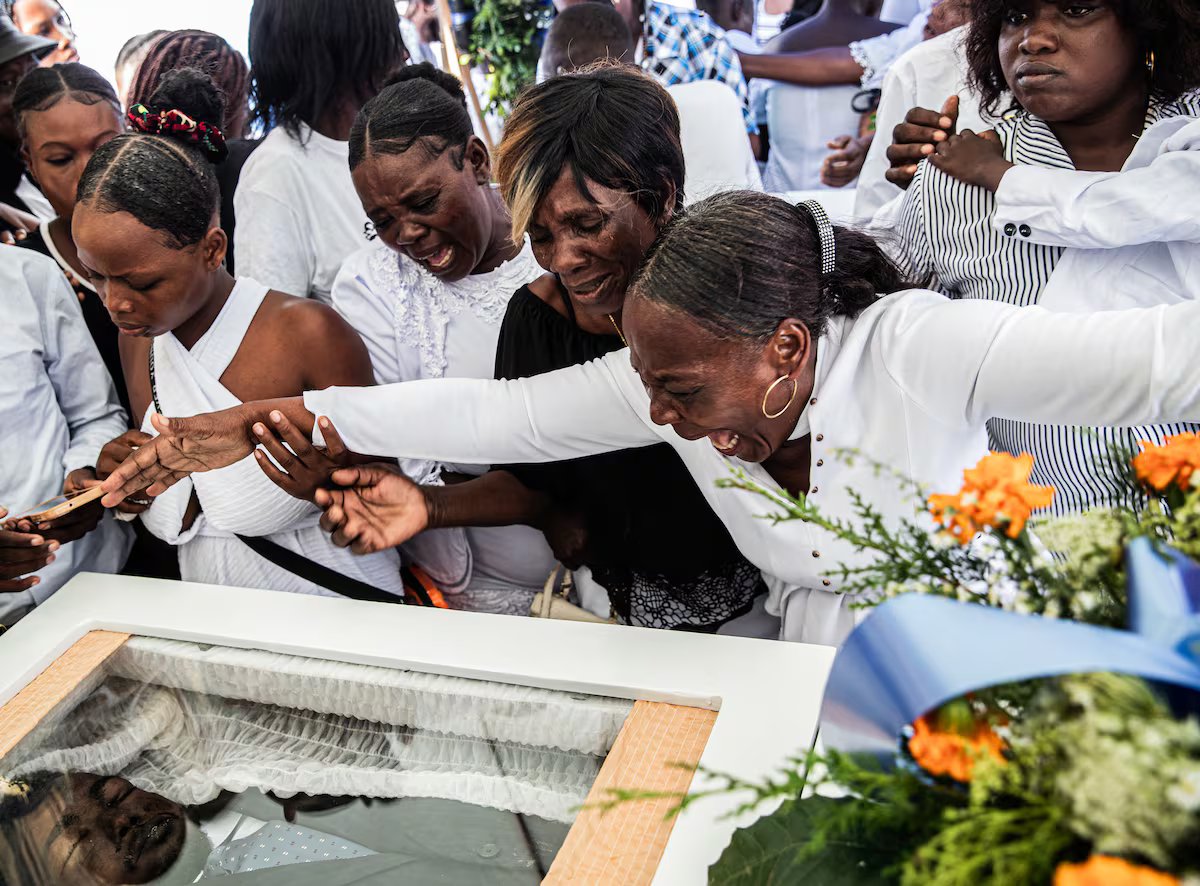
For them, the memory is still a horror film. The mother of one of the deceased girls, just six years old, had to bury her little girl shortly after finding the body, fearing that help wouldn’t arrive. Another woman remembers how a piece of metal pierced her daughter’s body, striking her hip and exiting through her back. The father of a murdered man said that the criminal group organized and controlled access to the funeral and that the family members “could only watch from outside.” “As if we were nobody,” he lamented. The violence in Haiti transcends death itself.
The United Nations Integrated Office in Haiti has attributed the drone attacks in the country to the Specialized Task Force created by Prime Minister Fils-Aimé. This force operates with the support of the private military company Vectus Global, whose owner has admitted to signing a one-year contract with the transitional government and hiring Salvadoran operators to support the Haitian police in the use of armed drones. “Haitian authorities should urgently bring the security forces under control before more children are killed in these attacks. And this also includes private contractors,” Goebertus emphasized.
Haiti is currently one of the four most dangerous countries in the world. Port-au-Prince is the only Latin American capital city where gangs control 90% of the population, wielding immense power over the lives of Haitians. In a large part of the country, these gangs operate as a de facto state, primarily addressing food shortages, regularly monitoring cell phones, and extorting money from those with resources. While the Colombian expert is well aware of the history of sexual and physical violence perpetrated by these urban gangs, she insists that measures to suppress them must comply with international law. “If the deployment results in attacks on the civilian population, the armed forces will never regain the public’s trust,” she explains.
The disrepute Goebertus refers to dates back two decades. In 2004, the United Nations Stabilization Mission in Haiti (MINUSTAH), a UN peacekeeping operation established to stabilize the political crisis in the Caribbean country, arrived. However, the operation faced criticism due to widespread allegations of sexual abuse and exploitation by peacekeepers, as well as for having reintroduced cholera to the country.
Twenty years after the scandal and with its reputation in tatters, the first contingent of Kenyan police arrived in Haiti. Initially known as the Multinational Security Support Mission (MSS) [later transformed into the Gang Suppression Force (GSF)], this UN-approved mission, funded primarily by the United States and Canada, aims to pacify a country mired in a complex political and social crisis. A second international military group, composed mainly of soldiers from Chad, Guatemala, and Bangladesh, is expected to arrive in early April.
For human rights organizations, the kamikaze drone operations — which, at least until now, are being encouraged only by the prime minister, not by the GSF — are another obstacle to the armed forces’ attempt to improve their image. Some United Nations experts warned a decade ago that the use of drones can depersonalize police actions, making it difficult to ensure that force is applied in a “minimal and appropriate” manner, especially in complex and densely populated urban environments.
“Haitians have been forced to choose between security and human rights, but the priority must be effective police operations that adhere to the highest human rights standards,” Goebertus concludes. “The goal must be to prosecute and bring gang members to justice.” To achieve this, Haiti must address a long-standing historical obligation: rebuilding its judicial system.
57 people killed in deadliest operation
The number of armed drone strikes in Port-au-Prince [which HRW has only documented as being used in the context of armed conflicts in Ukraine and Sudan] has increased significantly in recent months. Between November 2025 and January 21, 2026, 57 cases were reported. In fact, more than 40% of the reported killings occurred between December 1 and January 21. The average number of people killed per operation is 8.8, while the deadliest operation resulted in 57 deaths.
Fils-Aimé has not commented on these figures to either EL PAÍS or HRW. The few statements he has made are from an interview he gave to The Wall Street Journal in August 2025, in which he argued that drone operations had “stopped the bloodshed” and forced members of criminal groups into hiding.
He also stated that “keeping innocent citizens safe is a government priority” and that “the death of even one civilian is one too many.” However, at the time of writing, the families of the victims interviewed by HRW stated that they had had no contact with government officials regarding the killings, nor access to justice or reparations.
Sign up for our weekly newsletter to get more English-language news coverage from EL PAÍS USA Edition
