
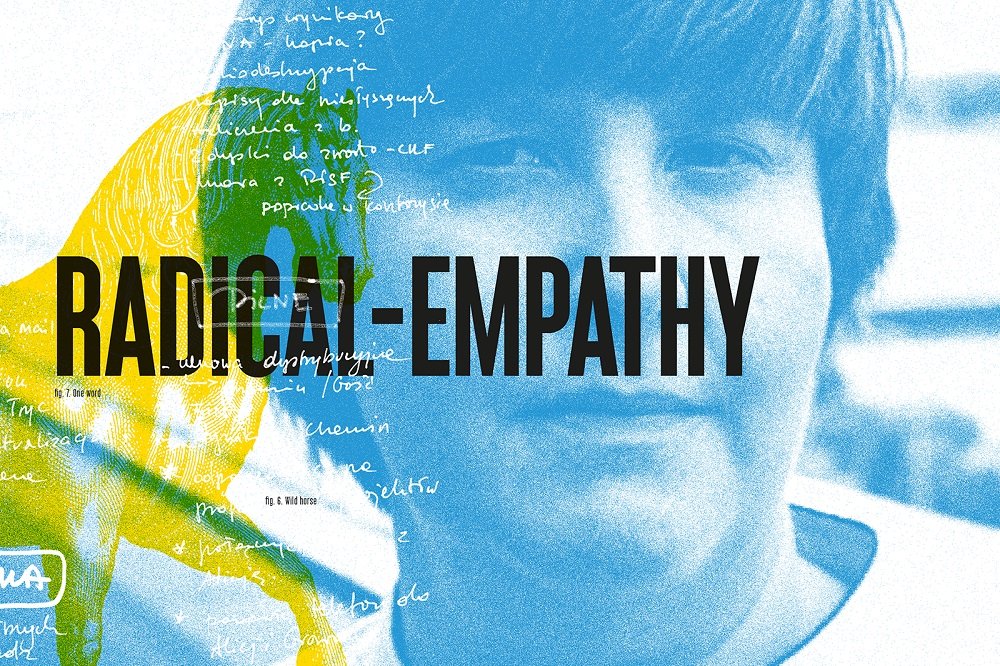
– The Polish producer discusses her approach to documentary filmmaking and the role she thinks it has in society
Maria Krauss is a documentary film producer, social activist and cultural project manager based in Warsaw. She co-founded the boutique production company Plesnar & Krauss Films. She has produced and co-produced character-driven documentaries that have received awards at both national and international festivals. Maria is a member of the Polish Producers Alliance (KIPA), the European Film Academy and the Polish Film Academy. An interview with him, now selected for the 2026 Emerging Producers programme (read her EP profile here).
Why do you produce documentaries? Do you see documentary cinema as an instrument of social and political change?
Maria Krauss: I produce documentary films because they allow me to enter worlds I would otherwise never have access to and to meet people whose lives and determination I deeply admire. I am drawn to protagonists who make extraordinary efforts to achieve their goals – people driven by vision, persistence, and courage. In many ways, I see them as everyday superheroes. I am particularly interested in stories rooted in contemporary socio-political realities, as I believe documentary cinema should offer both emotional and intellectual commentary on the world around us.
Not every documentary can or should aim to directly change political or social systems. However, many documentaries influence reality by exposing hidden mechanisms, challenging dominant narratives or raising awareness. Films such as Black Box Diaries [+see also:
film review
film profile] or Icarus demonstrate how documentary storytelling can resonate far beyond cinema, shaping public debate and sometimes even institutional decisions. I am also strongly interested in films about artists, such as projects exploring figures like Agata di Masternak, Marek Hłasko or Bożenna Biskupska, because artistic creation often reflects broader cultural and social tensions.
In today’s world of rapid information flow and misinformation, documentary cinema can function as an antidote. It offers viewers time, depth, and a focused gaze on reality and truth. This is one of the reasons audiences increasingly seek documentaries not only at festivals and on television but also in theatrical distribution.
How do you achieve and maintain work-life balance and foster overall well-being?
I do not separate work from life, as filmmaking is deeply connected to my personal interests and social engagement. My creative perspective is shaped by my participation in cultural life, reading, visiting exhibitions and theatre, and following contemporary social debates. Friends and family relations are important. I also rely on simple routines such as walking my dog, mountain trips or playing ping-pong. All those elements become a source of creative energy.
Where do you find audiences for your films?
Each film requires an individual audience-building strategy, shaped by its narrative form and subject matter – whether it is a character-driven documentary, an archival essay or a film rooted in current affairs. I see audience development as a process that begins at the development stage, where we consider the thematic relevance and international potential of each project.
I am particularly interested in films that combine intimate personal storytelling with broader social context, as these stories tend to resonate across cultural and geographical boundaries. International co-production, festival circulation and educational outreach often play a key role in reaching audiences. The growing diversity of distribution platforms also creates new opportunities to connect documentaries with viewers.
What projects do you have underway (including fiction films and other projects)?
I am currently working on two feature documentaries and continuing collaboration with authors with whom I have previously created successful projects.
Model Ways, directed by Zuzanna Solakiewicz (a previous joint film The Guest [+see also:
film review
film profile]), has recently entered production with the support of the Polish Film Institute. The film is a social documentary essay exploring two generations of Eastern European women. Its starting point is a collection of letters written in 1990s Poland by teenage girls to modelling agencies, expressing dreams shaped by the post-socialist transition. Through archival materials, we reconstruct their youth and attempt to find these women decades later using only their original postal addresses. The search itself becomes a portrait of a society undergoing profound transformation. Through intimate observation of mother-daughter relationships, the film explores how unrealized dreams, social limitations and resilience echo across generations in a region balancing modern aspirations with persistent anxieties. We are currently seeking international co-producers and sales partners.
The second project, The Artist and Possible Construction, directed by Małgorzata Kozera (a previous joint film Faces of Agata) and supported by the Polish Film Institute and Wrocław Feature Film Studio, is in advanced development. Its protagonist, Bożenna Biskupska, is a renowned Polish artist, whose work obsessively explores the relationship between space and time. 20 years ago she has bought a ruined 19th century post-German castle, originally built as a tuberculosis sanatorium, to transform it into a centre for art and creative activities. Although the ongoing reconstruction has been consuming the artist’s energy and time for almost two decades, Biskupska persistently follows her vision. In this cinematic study of creation and the constant transformation of identity, the encounter between the artist and the construction leads us to explore the peripheries and read European history from a new perspective.
———-
EMERGING PRODUCERS is a leading promotional and educational project, which brings together talented European documentary film producers. The programme is organised and curated by the Ji.hlava International Documentary Film Festival.
Deadline for applications to the EMERGING PRODUCERS 2027 edition is 31st March 2026.
