
“Children today need stories that encourage togetherness and teamwork, not just going through life alone in front of screens”
– The directors of this detective adventure touching on the themes of neurodiversity and inclusion tell us more about their process
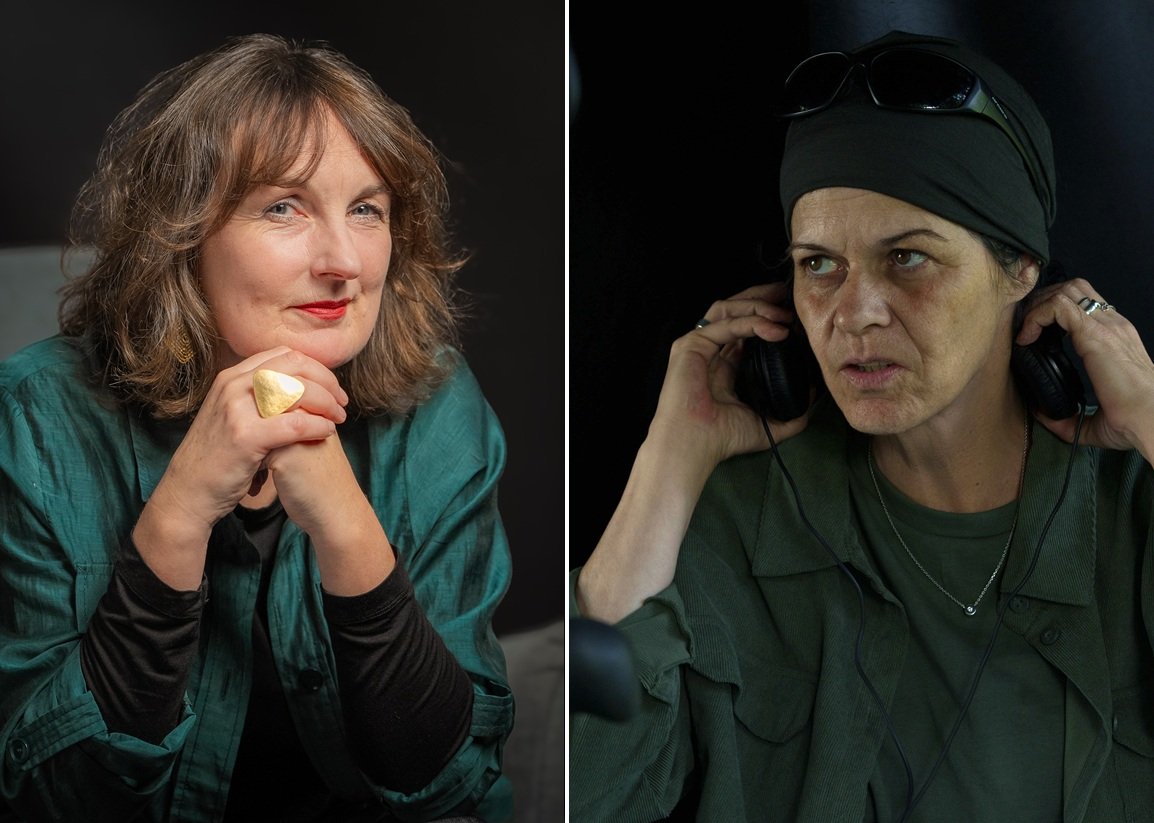
Marina Andree Škop (left) and Vanda Raýmanová (© Samo Rayman)
Extraordinary [+see also:
film review
trailer
interview: Marina Andree Škop, Vanda R…
film profile] has already enjoyed a gala premiere and a wide theatrical release in Croatia, and at BUFF Malmö, it is celebrating its first international screening. Its directors, Marina Andree Škop and Vanda Raýmanová, tell us more about their process.
Cineuropa: Extraordinary combines a detective adventure with the themes of neurodiversity and inclusion. What inspired you to tell this story through the perspective of children, and what kind of emotional journey did you hope young audiences would embark on?
Marina Andree Škop: We’ve both been making films for children for years, so telling this story from a kid’s perspective was simply our natural starting point. Children don’t come to see a movie with pre-established ideas; they react to what they see and feel, and a detective adventure is the perfect instrument for that. It keeps them curious and excited while letting the emotional layer slip in naturally through the relationships they see. It was also important for us to tell a story about a group of kids because we genuinely feel that children today need stories that encourage togetherness and teamwork, not just going through life alone in front of screens.
For me, the heart of the film is the girl, Alice. She is brave and funny, but she is also the glass child, the one who often feels unseen next to a sibling who needs more attention. The journey we hoped for was simple: first, you’re having a great time laughing, then worrying, and then you start caring deeply about these children and the way they learn to become a team. And honestly, it’s been moving to see the audience respond: after three weekends in Croatian and Bosnian cinemas, we’re already at 38,000 admissions, which makes me very happy.
Vanda Raýmanová: I work exclusively with audiovisual content for children, and I consider the themes of neurodiversity and acceptance of divergence as very important, partly also because of my own personal familial experience. This is why it was important to me to craft a strong story that would captivate children with its adventurous nature, while remaining close to their perception of the world. At the same time, it had to smooth out the edges of prejudice and deepen their sense of empathy by demonstrating how our uniqueness enriches us as a whole. I wanted this story to be a voice for all the children with disabilities and their often-invisible siblings, and to show to a young audience the miracles that unconditional acceptance is capable of bringing about. And so, we made a suspenseful story with a detective plot, a comedic disposition, distinctive artistic stylisation and strong emotions, so that they would come to understand that there is power in diversity, and that those who feel accepted for who they are in turn become stronger and capable of more.
The film mixes live action and animation, bringing together your different creative backgrounds. How did this collaboration shape the film’s visual language and storytelling?
VR: From the beginning, our aim was to create a stylised feature, which would seamlessly blend animation with live action, and allow us to capture the attention of children and guide it towards the fragile and difficult topic of accepting otherness. The animation allowed us to get closer to a child’s perception of the world and build situations that wouldn’t be possible in the real world, and mainly, it offered us the ideal platform for a visually appealing depiction of the internal world of one specific autistic boy. I believe that the opportunity to glimpse into the inner experience of such a child will deepen the empathy and understanding of our young viewers, and get them to realise that making the effort to understand a person whose world is different from the one they know is correct and meaningful.
MAŠ: We both worked hard to keep everything emotionally grounded, and I focused especially on the work with the child actors. We treated the film like one coherent universe: the live-action world is already stylised with strong colours, precise framing and playful details, so when the animation appears, it feels like the same world, just speaking in another language or dialect. In practice, that meant a lot of coordination between performances, camera, production design and post-production, so the blend would stay smooth and the film would keep its rhythm. The big goal was to enable children who mostly grew up on cartoons to feel instantly at home in the film, while still believing in the characters and treating them as real people.
Milan’s unique way of perceiving the world ultimately becomes the key to solving the mystery. Why was it important for you to portray neurodivergence as a strength within the narrative?
VR: Because the topic of inclusion is not just about integrating disadvantaged children, such as Milan, into the collective of the majority, but also about those around them trying to understand their experience of the world and their needs. When we begin understanding this, we will all be able to live more easily, and everyone will be stronger. We decided to demonstrate this to our audience through the example of one specific autistic boy and his sister. The viewer gradually gets to know his specific needs, along with seeing how, little by little, he is transformed by the acceptance of his peers. That’s precisely why his experience of the world is key to solving the great mystery of the film – to make it clear that despite his differences, he is an important part of the team, and that it is alright for him to be different.
MAŠ: Narratively, it fits the film’s core idea: you can’t solve the mystery alone. The case only starts to make sense when the kids become a real team, and when they listen better, adapt and make space for each other. We were also careful not to replace one cliché with another. Milan doesn’t need to be a superhero-like genius to be respected. His strength is much simpler: a different perspective can belong, it can help, and it can bring a surprisingly gentle rhythm into the whole story.
