
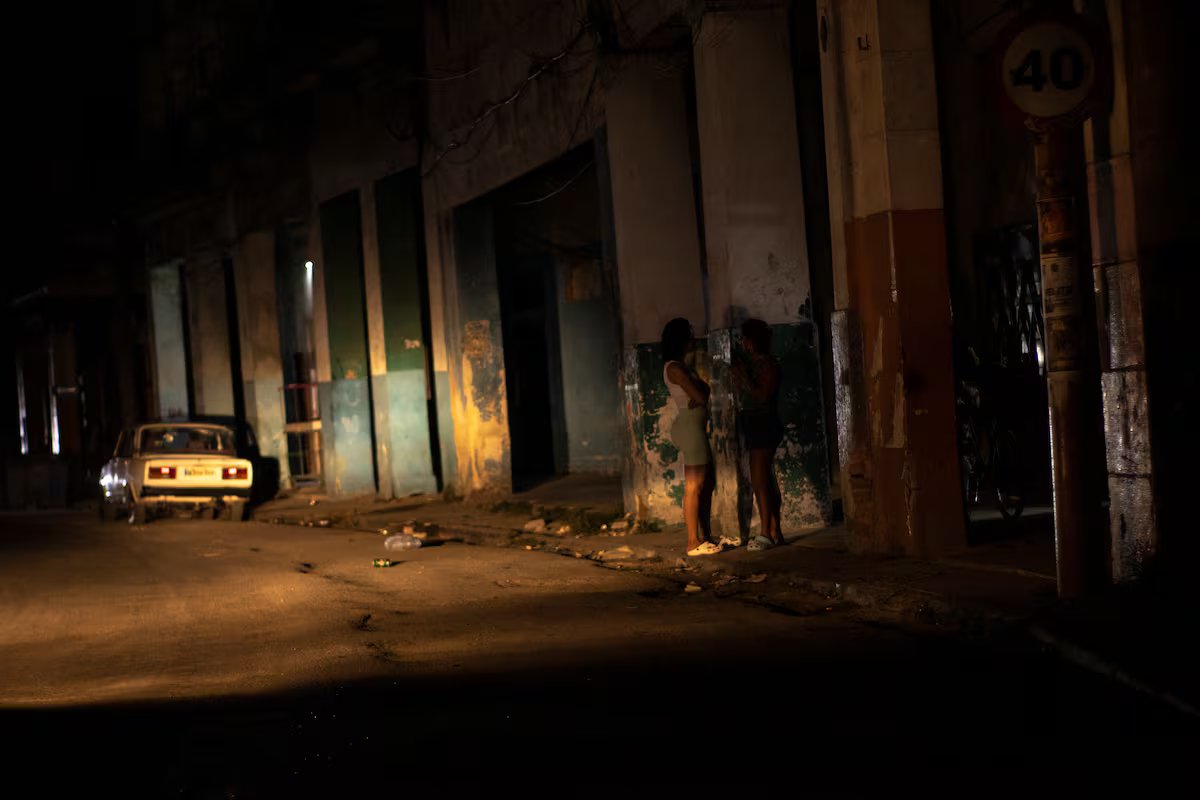
A failure at Cuba’s main thermoelectric plant has caused a massive blackout affecting two-thirds of the island, the Cuban government confirmed Wednesday. The partial collapse of the island’s National Electric System (SEN) — the second in a month — has left nearly 7 million of the island’s almost 10 million inhabitants without power. The outage is also affecting the capital, Havana.
The government has not yet specified the reasons for the blackout, which is affecting 10 of the country’s 15 provinces, from Camagüey in the east to Pinar del Río in the west. According to state television, an “unforeseen shutdown” of the Antonio Guiteras power plant, the island’s largest generator, caused yet another power outage.
This Wednesday’s outage is the fifth partial blackout — different from a nationwide collapse of the entire electrical system — in less than six months, and the largest so far this year. The incident also reflects the fragile state of the power grid amid U.S. pressure, which has abruptly cut off the supply of Venezuelan crude to Havana and threatened to impose tariffs on any country that provides Cuba with oil, a resource vital for keeping its electrical network running.
But the U.S. oil siege has only worsened a chronic problem on the island. Cuba is suffering a full‑blown energy crisis that has deteriorated significantly over the past year and a half, largely due to the progressive decline in Venezuela’s oil shipments. In fact, over the last 18 months the SEN has suffered five total collapses — meaning the entire country plunged into darkness at the same time because of the inability to generate electricity.
Blackouts are now part of daily life for Cubans, who in recent months have grown accustomed to outages that in some regions can exceed 20 hours a day. These outages, however, are different from SEN collapses. In the first case, they are daily service interruptions caused by the inability of the obsolete Soviet‑era thermoelectric plants to meet demand.
SEN shutdowns, on the other hand, force authorities to carry out a kind of system reboot that, in the worst cases, can take days to fully restore. Before Wednesday’s collapse was confirmed, the state‑owned Unión Eléctrica (UNE) had warned that up to 63% of the country would be left without power at peak demand — late in the afternoon.
That time of day is critical for Cuba’s fragile grid because it coincides with people returning home and turning on air conditioners and fans. Unlike much of the world, in Cuba the highest electricity demand comes from households rather than industry, which has been in terminal decline for decades.
Sign up for our weekly newsletter to get more English-language news coverage from EL PAÍS USA Edition
