
As local, state and federal authorities scramble to contain a mysterious oil spill along Mexico’s Gulf Coast, officials says the source of the spill has now been identified.
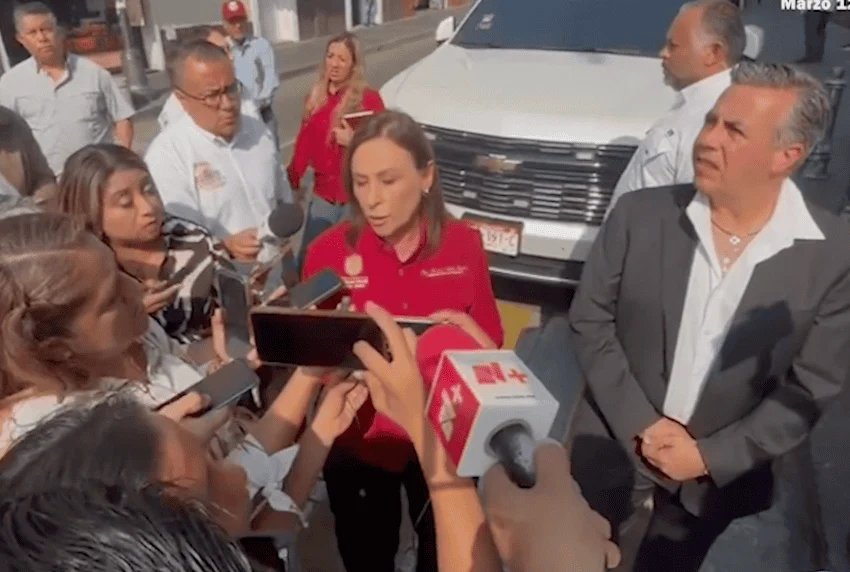
Veracruz Governor Rocío Nahle said the spill originated not from natural seepage as earlier hinted, but rather from a private oil tanker off the coast of Tabasco.
Nadie hace caso del daño
Derrame petrolero cubre costas de Veracruz y Tabasco mientras Pemex (@Pemex ) niega responsabilidad
Se lavan las manos y el petróleo sigue manchando las costas…
Un derrame petrolero ha dejado las aguas de Veracruz y Tabasco completamente negras y con… pic.twitter.com/eu5YvWyq6z
— José Díaz (@JJDiazMachuca) March 12, 2026
Nahle said the ship, which she declined to name, was carrying out exploration tasks when the spill occurred, with the slick spreading west to beaches in southern Veracruz. The cause of the spill has not been determined.
The spill has contaminated a 230-kilometer stretch of beaches in the states of Veracruz and Tabasco.
Clean-up efforts have taken on some urgency as coastal communities prepare for an influx of tourists during the Holy Week holiday period beginning later this month. Environmentalists warn that the oil spill is likely to affect the beaches for up to two months.
Pemex denied responsibility for the spill but has joined the cleanup effort, saying it wished to demonstrate support for the environment and coastal communities in Veracruz.
The Navy also responded to the accident — after complaints from local communities that not enough was being done — by increasing air, sea and land patrols.
Coastal communities including Pajapan, Mecayapan, Tatahuicapan and Coatzacoalcos in the southern part of the state, first reported the presence of crude oil on beaches on March 2. Beaches near Catemaco (in the Tuxtlas region farther north) and in Alvarado (near the Papaloapan River delta) also were affected by toxic materials.
After identifying the source of the leak, Pemex was able to contain the spill, but an oil slick had also reached the beaches of Veracruz city and Boca del Río.
“Permanent surveillance will be maintained to preserve the 12 kilometers of coastline that is in suitable condition,” said Boca del Río Mayor Maryjose Gamboa, adding that the so-far unaffected beaches are frequented by both local residents and tourists.
The main tourist beaches in Veracruz city were also declared clean and ready for Easter Week tourists.
Residents and fishermen in the Coatzacoalcos area reported finding a dead dolphin, two dead sea turtles and several smaller species washed up on shore, though it is unclear if their deaths can be attributed to the oil spill.
Officials in the Catemaco region are hopeful that the clean-up efforts will be completed before the turtle nesting season begins at the end of May.
Nahle declined to speculate on the punishment that might be meted out to the owner of the offending vessel, saying the National Agency for Industrial Safety and Environmental Protection of the Hydrocarbons Sector (ASEA) and other federal agencies will determine the appropriate sanctions.
With reports from La Jornada, Proceso and Reporte Indigo
