
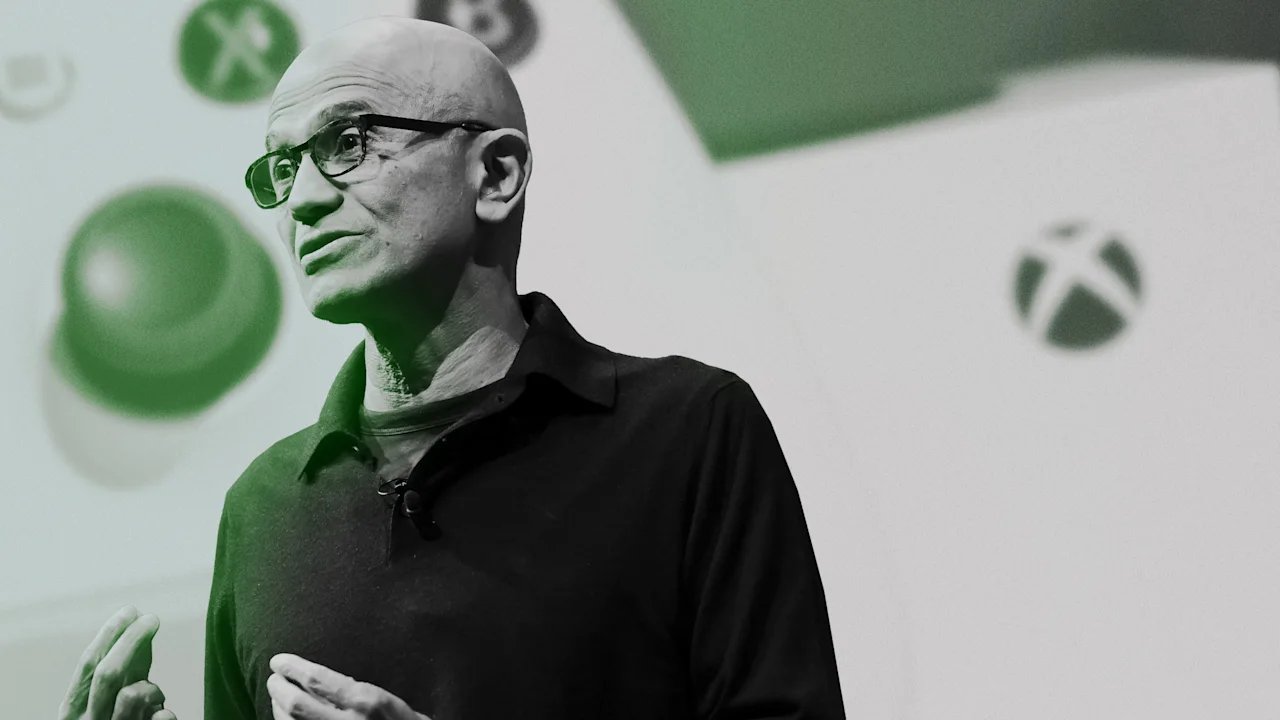
Xbox employees and players can rest assured that the console’s future is safe from the threat of artificial intelligence, Microsoft CEO Satya Nadella says. That’s per an internal Q&A with incoming Xbox CEO Asha Sharma, Windows Central reported Sunday.
Xbox—along with Nintendo’s consoles and Sony’s PlayStation line—has rounded out the big three video game consoles for decades. But last month, there were rumors of its demise: Xbox cofounder Seamus Blackley speculated that Microsoft is “sunsetting” the company’s main player in the video game industry because it wasn’t an AI focus for Microsoft. Longtime Xbox boss Phil Spencer retired last month, and Sharma, who was head of Microsoft’s CoreAI division, was announced as his replacement.
It’s the latest example of AI sending shockwaves across all types of sectors, threatening the future of industry-defining stalwart products and sending C-suite leaders scrambling with reassuring messaging.
In the recent internal Q&A at Microsoft, Nadella insisted the company will continue to invest in gaming: “Phil [Spencer], he’s always talked to me about how gaming is the largest entertainment category—what is gaming in its most expansive form going forward?” Nadella said.
He continued: “This doesn’t mean we walk away from what people are doing today when we think about a Triple A game on a console. The question is about where else can we go to extend that. For me, we’re long on gaming. We’ll continue to invest, and we’ll always do so. It’s up to this team to show excellence in execution and in creativity. Software always carries risk, but this is software with lots of creation risk. It’s way different. But yet, we have to be the best in class at it.”
That Nadella had to offer such reassurance is a sign of the times.
As more businesses and CEOs begin to embrace AI and incorporate it into how their organizations operate, job losses appear to be becoming the norm. Reassuring workers about the potential that AI has to threaten their jobs may become more of a norm for CEOs in the months and years to come.
But it’s “less about reassuring people out of fear, and more about leadership during a major technological shift,” AI adoption strategist and adviser Dalit Heldenberg tells Fast Company.
Heldenberg says that it’s “telling” that Nadella not only said the right things, but he also “demonstrated it structurally.” “Appointing an AI leader within Xbox sends a clear signal: AI isn’t the threat to these businesses; it’s the vehicle for their next chapter,” she notes.
Shira Weinberg Harel, the CEO and founder of Beyond AI, agrees that the “role of CEOs in the AI era has become more complex.” She tells Fast Company that’s partly because CEOs “still need to drive business success, but they are also leading a fundamental shift in how people work.”
AI can help workers become more efficient, but “at the same time, there is real hesitancy around AI, especially in large organizations,” Weinberg Harel adds. “Leadership is not only about reassuring people—it is about guiding the organization through the transition, and addressing both the technical and psychological barriers.”
Something similar recently played out at online freelancer marketplace Fiverr, Weinberg Harel notes. Its CEO, Micha Kaufman, “sent a very direct email to employees saying that AI will fundamentally change many roles and that people, including himself, need to adapt quickly,” she explains. “That was not reassuring at all. It was the opposite. It was a wake-up call to the organization that the way we work is changing, and everyone needs to evolve with it.
“Different leaders take different approaches, but in all cases, AI is forcing CEOs to actively lead the transition,” Weinberg Harel says.
