
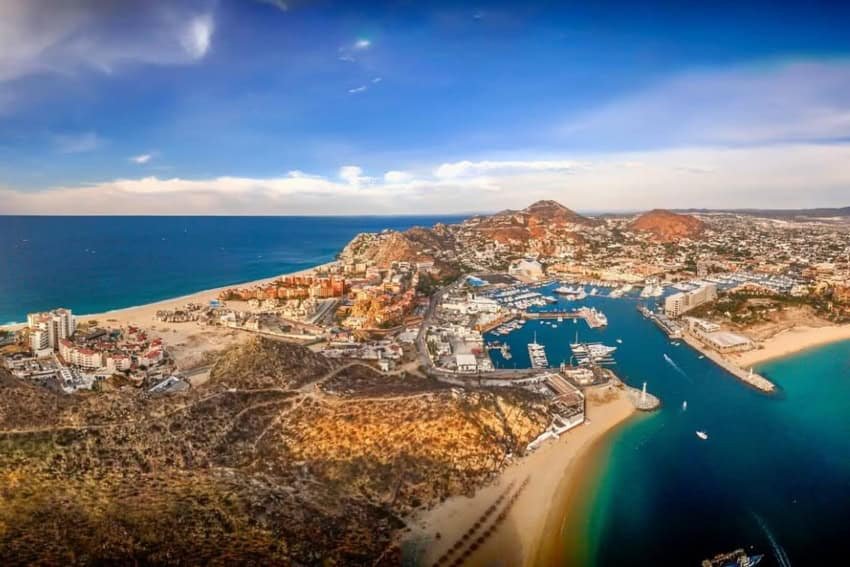
For several years now, nightlife in Cabo San Lucas has been struggling, with sales beginning to decline in 2023, then falling precipitously by 50% in 2024, and dropping again in 2025. The reasons for this have been attributed to many factors, from the changing drinking habits of Gen Z to the increasing popularity of all-inclusive resorts, and, consequently, fewer people visiting the downtown center of the Land’s End city.
But now the restaurants are hurting, too, and across Los Cabos. “Our sector has reported a 30%–35% drop in sales compared to last year,” Óscar Morando Villa, president of CANIRAC Los Cabos, the local restaurant association, recently told Tribuna de Mexico. “Many restaurants, as you can see, are offering two-for-one deals, changing their menus, offering brunch — things they didn’t do before — and some are even putting on special buffets,”
For many restaurants, even these measures haven’t been enough. At least 20 restaurants have closed since 2025. Cabo San Lucas, again, has been hardest hit, losing long-time dining spots like Pancho’s, Lorenzillo’s Lobster House and Ruth’s Chris Steak House.
But San José del Cabo has been affected by closures, too, and it’s now clear that in some fundamental way, the nature of tourism in Los Cabos is changing. The question is: Why?
The rise of the all-inclusives
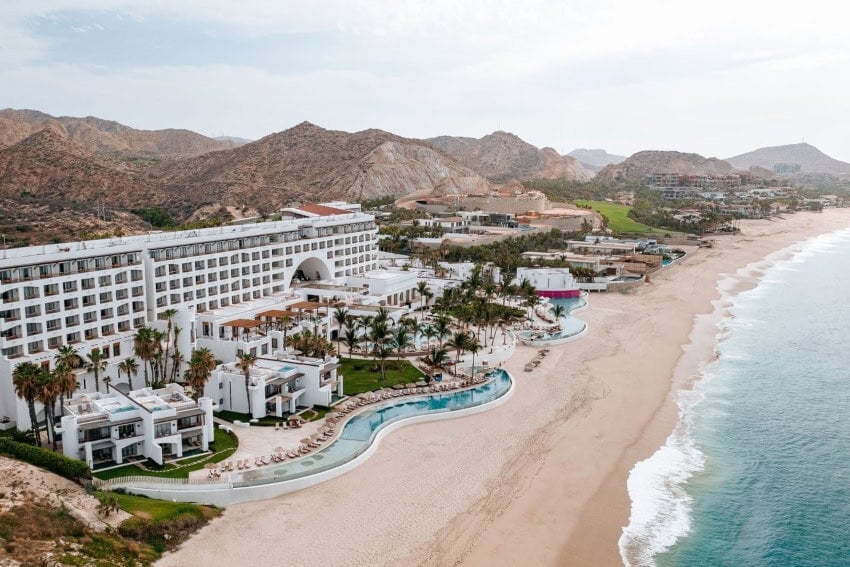
All-inclusive resorts are thriving in Los Cabos, and there’s no question that this mode of cashless experience — with all needs attended to — is a significant factor in declining bar and restaurant sales. Twenty years ago, there were perhaps a half a dozen or so all-inclusive resorts in the area. Today, there are at least five times that many, including the recently converted Hacienda del Mar in Cabo del Sol, which switched to all-inclusive from the European Plan last summer.
Not only that, but luxury all-inclusives — properties where the on-site restaurants are comparable in quality to some of the best eateries in the area — are also on the rise, from Marquis Los Cabos, Secrets, Breathless and Le Blanc to Pueblo Bonito Pacifica, Paradisus and Grand Velas. The latter, notably, is home to the only Michelin-starred restaurant in Los Cabos, the Sidney Schutte-helmed Cocina de Autor. All of these properties, save Grand Velas, it bears mentioning, are not only all-inclusive, but adults-only.
Who wants to go to Los Cabos for a vacation that lacks any real experience of the local people and culture? Apparently, a significant number of travelers, and this trend can be seen in other Mexican destinations as well. In Cancún, restaurant sales were down 17% in 2025 and at least 15 restaurants closed there last year.

This all-inclusive trend — and there’s little question at this point that it is an impactful one in the travel industry — has spread beyond Mexico and the Caribbean and is now increasingly prevalent in Europe and Asia, too. It’s global and not going away anytime soon, since young people, Millennials and Gen Z are the ones driving demand for this kind of travel.
More reasons bars and restaurants are struggling
The popularity of all-inclusives is real. But that’s hardly the only reason bars and restaurants in Los Cabos are struggling. There are also economic reasons, having to do with the real estate boom that has seen rents for both residents and business owners rise inexorably in recent years. That has shrunk the margins for bar and restaurant owners, and forced them to do things they perhaps didn’t want to do, like raise prices beyond what their local customers, as well as some tourists, were comfortable with paying.
Of course, there’s also increasing competition. Over the last few years, food delivery apps like Uber Eats and DiDi have appeared in Los Cabos. You might think these services help restaurants and they do — but not all restaurants equally. For example, those who live in the heart of Cabo San Lucas and San José del Cabo, who formerly frequented downtown restaurants regularly, can now order food from restaurants that are located in more outlying areas of these cities, and are typically cheaper to boot.
Yes, the more affordable restaurants on these apps are often those outside city centers, where owners aren’t saddled with exorbitant rents to pay.
Is Cabo San Lucas out of step with Los Cabos’ new luxury business model?
The truth is that bar and restaurant owners are being squeezed from many directions, and that includes from Uber Eats and DiDi, which take a cut for their services. It also must be noted that luxury all-inclusives did not arise in a vacuum. They are part of a larger effort to transform cape cities Cabo San Lucas, San José del Cabo and environs from fishing getaways — which they were in the beginning of their tourist history — into luxury destinations. It’s not a coincidence that Los Cabos now has the most expensive hotel room rates in Mexico. This transformation was very carefully planned.
Downtown Cabo San Lucas, in particular, seems badly out of step with the trend towards luxury. It’s awash in tacky souvenir shops and spurious pharmacies, “amigo massage” parlors and tequila tasting emporiums. The souvenir shops are reflective of the city’s status as a cruise port capital — one coming off a record year, by the way. Not all news is bad. But most of those other businesses are reflective of an older strategy to market to tourists’ basest desires, one that is outdated and no longer in keeping with the new upscale image Los Cabos wants to portray.
Have you ever noticed that all the strip clubs in Los Cabos are centered in Cabo San Lucas? That’s no accident, nor is the fact that the more sophisticated San José del Cabo is by and large free of the sell-anything vendors that proliferate in downtown Cabo San Lucas.
What can be done to save the downtown center of Cabo San Lucas?
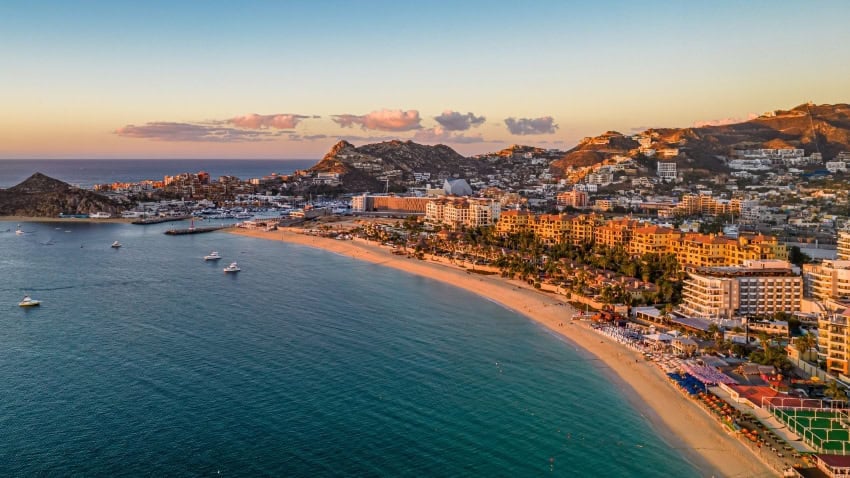
Cabo San Lucas, unlike San José del Cabo — a long-time farming and ranching community before the days of tourism — is a port city. It has always been that way, dating back to the pirates who infested its waters hundreds of years ago. In terms of cruise ships, its fishing charters and tournaments, and yes, its tackiness and licentiousness, Cabo San Lucas is still defined by that port heritage.
But if it wants its downtown center to survive, and in particular its bar and restaurant scene — beloved to us that live here — changes need to be made. The remodeling of downtown Cabo San Lucas, currently underway, is a good start. The city certainly needs an aesthetic makeover. Also beneficial is the Camina Cabo initiative, which will widen sidewalks and promote greater pedestrian mobility in important tourist areas of the city along Blvd. Lázaro Cárdenas and around Plaza Amelia Wilkes.
Revitalization efforts
As Tribuna de Mexico recently reported, “Mayor Christian Agúndez Gómez acknowledged that the decrease in visitors, especially foreigners, has impacted the local economy. In response, he assured that the Los Cabos City Council will implement infrastructure improvements and rehabilitate public spaces to revitalize tourism and reactivate commercial activity in downtown Cabo San Lucas.”
Instead of being out of step with what tourists actually want, the city needs to get in step. Today’s all-inclusive guests need good reasons to leave their resorts, and sex and booze, the old standbys in Cabo San Lucas, aren’t working anymore.
Except, of course, during Spring Break, which always seems to arrive just when it’s needed most.
Chris Sands is a writer and editor for Mexico News Daily, and the former Cabo San Lucas local expert for the USA Today travel website 10 Best and writer of Fodor’s Los Cabos travel guidebook. He’s a contributor to numerous websites and publications, including The San Diego Union-Tribune, Marriott Bonvoy Traveler, Forbes Travel Guide, Porthole Cruise and Travel, and Cabo Living.
