
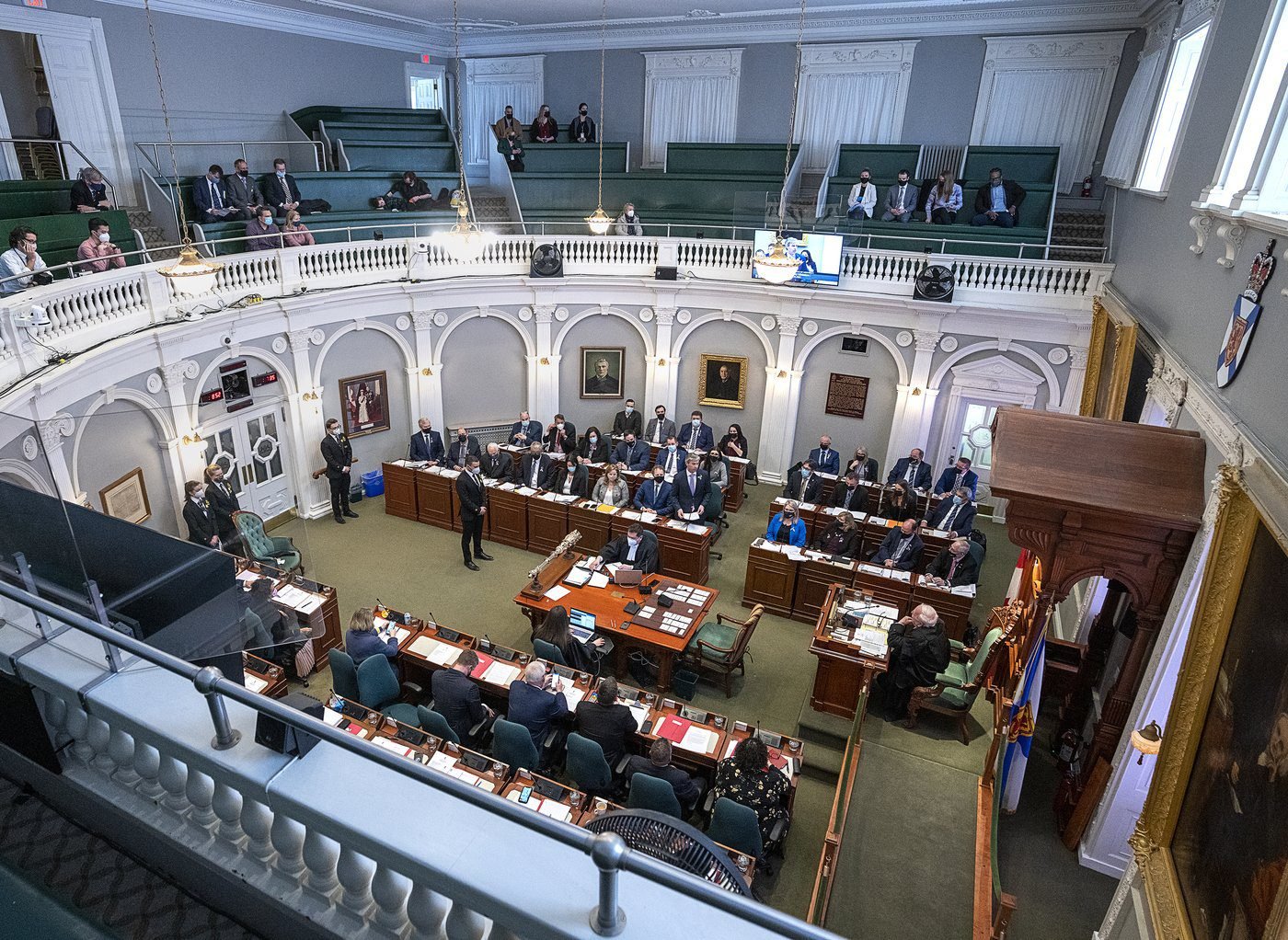
HALIFAX — Becky Druhan, Nova Scotia’s former justice minister who quit the governing Progressive Conservatives in the fall over differences with party leadership, hopes the session of the legislature that begins Monday is longer than the last one, which was only eight days.
Nova Scotia’s legislature doesn’t have a calendar, and its members sit at the whim of the party in power. Druhan, an Independent, said last year’s short session that wrapped in early October contributed to a “crisis of confidence” in the Tory government, which has a commanding majority.
“Eight days is not enough to do what we need to do, to voice our opinions, to voice our community’s experiences, to debate the legislation and the issues that are important to Nova Scotians,” she said.
As elected representatives return to the legislature from their constituencies, the government has major issues to address, including health care and affordability. And the official Opposition NDP says that can only happen if members are given enough time to ask questions and debate with the governing party.
“At the end of the day, this government has become expert at not engaging with Nova Scotians around hard questions, including in the legislative arena,” NDP Leader Claudia Chender said in an interview.
“It’s a travesty. It is an insult to Nova Scotians that this is how we move legislation through the House,” she said of the recent eight-day sitting.
It’s still unclear how many days politicians will sit in this new session. Premier Tim Houston’s office said in an emailed statement the House sits “as long as the opposition decides to debate the legislation.”
“Our government believes in a healthy democracy and when our MLAs are here in the city, they are ready to do the work,” spokesperson Catherine Klimek said in an email.
Chender also took aim at Houston’s government over its ballooning deficit and reliance on over-budget spending, which doesn’t involve a debate or vote in the legislature. Houston’s government has spent $6.7 billion outside the budget process since the 2020-21 fiscal year, including $1.6 billion in 2024-25.
“They’ve spent a billion dollars over budget every single year, it’s no surprise that we’re in a deficit now. And the fact that they have not been able to make good on any of those promises calls into question the choices they’ve been making,” she said, referring to the government’s commitments to improve access to health care and increase affordability.
The NDP and Liberals have both announced plans to introduce legislation to create a budget officer, a role that exists in some other provinces and at the federal level, in order to increase accountability around government spending.
The Progressive Conservatives are scheduled to deliver a budget Monday that’s expected to include a large deficit and spending cuts. Finance Minister John Lohr said in December he had asked all government departments what a 10 per cent rollback of programs and grants would look like, but said he would likely not accept every recommendation.
Governments across the country are struggling to balance the books and Nova Scotia’s original $700-million deficit for the current fiscal year had grown to almost $1.3 billion as of December. In January, Houston said the deficit had climbed to $1.4 billion.
The premier, who named himself as energy minister this past fall, has repeatedly said the path to economic prosperity is through encouraging energy development. His government has lifted a moratorium on fracking and a ban on uranium mining, and opened calls for offshore oil and gas exploration bids. It has also introduced measures to streamline both the environmental assessments for energy projects and the permitting processes for mining.
The premier has laid out plans for a massive offshore wind energy development called Wind West, the first phase of which is envisioned as a five-Gigawatt development, and officials have provided estimates ranging from 40-66 Gigawatts if future phases are completed.
A recent report commissioned by the federal government in partnership with the Atlantic provinces and local power companies found that Atlantic Canada is one of the best places in the world to construct offshore wind projects; however, the amount of energy the region could actually produce isn’t as much as Houston has been projecting.
The report says Nova Scotia could generate just nine Gigawatts of power in its existing wind energy areas by 2050.
Opposition members have said that while energy projects are years away from benefiting the province financially, Nova Scotians are continuing to struggle with the high costs of housing and energy.
A Canadian Centre for Policy Alternatives report released last week says more than 40,000 Nova Scotia children in 2023, or about 23 per cent, were living in households below the low-income threshold. That is a 4.6 per cent decrease in the rate of child poverty compared to 2022.
Druhan, for her part, says she will introduce conflict of interest legislation to increase oversight of public officials. However, it’s unlikely her bill will go far considering the Tories’ majority. “I truly believe we have a crisis of confidence, and I see this daily in the calls and conversations that I have with Nova Scotians,” she said.
“If we have weak safeguards … doubt arises and there’s room for abuse.”
This report by The Canadian Press was first published Feb. 23, 2026.
Lyndsay Armstrong, The Canadian Press
