

I’m always up for a challenge, especially when it combines my love of history with my love of learning something new. So when a reader (thanks, Robin Miller) recently noticed a photo in one of my articles and asked whether anyone would be up for a bit of a deep dive into history, my answer was immediate and enthusiastic.
Absolutely!
The challenge
@gajosluiyo #cantinflasbailandobambole#cantinflas #bamboleo ♬ Mar de Emociones – Afrosound & Jorge Juan Mejía
The challenge for me was to create an article about someone I thought I’d never heard of, Cantinflas. As it turns out, that wasn’t entirely true.
Last year, I was celebrating the New Year with my family in Guadalajara. From our balcony, you could see a nearby building with an enormous mural painted across its side, the unmistakable face of a rather handsome, cheeky-looking man with a slightly crooked expression, looking out over the city. My boyfriend, a fan of classic Mexican cinema, immediately recognized him and told us a bit about who he was and why he mattered.
At the time, I filed it away as an interesting detail. But when this opportunity came along, learning more about Cantinflas suddenly felt like a continuation of that moment. A sort of thread picked up again, rather than something entirely new.
The birth of Cantinflas
And what I learned is that Cantinflas isn’t just a character. He’s a lesson disguised as laughter, and a reminder that sometimes the smartest way forward is sideways, preferably with a joke.
Before the baggy trousers, the thin moustache, the crooked tie and the unstoppable stream of words, there was Mario Fortino Alfonso Moreno Reyes, born in 1911 in Mexico City. He grew up in a working-class neighborhood, shaped by noise, movement and the kind of daily improvisation that comes from having to figure things out as you go.
Mario’s early life wasn’t glamorous: He tried boxing and bullfighting. He took on odd jobs. He briefly joined the military. Like many people searching for direction, he didn’t lack ambition; he simply lacked a clear path.
What he did have was exceptional timing, sharp instinct and an uncanny ability to read a room. Most importantly, he understood how power sounded when it spoke down to you.
Mario’s real education didn’t happen in a classroom. It happened in the carpas — traveling tent theaters that brought comedy, music and satire to working-class audiences. These weren’t polite crowds. They were loud, impatient and honest. If you bored them, they let you know immediately.
This environment shaped everything.
When Mario forgot lines or faced a restless audience, he didn’t freeze. He filled the silence. He talked and joked. He argued with imaginary authority figures. He twisted language until it bent into something absurd and hilarious.
And slowly, something unexpected emerged: Cantinflas.
A genius for language
The character wasn’t refined, heroic or even particularly competent. But he was resilient, quick-witted and impossible to dismiss.
Cantinflas was born not from planning but from survival, and his defining trait was language. Specifically, his ability to use it as both a shield and a weapon.
He spoke rapidly, confidently and endlessly, often arriving nowhere at all. Yet somehow, by the end of his speeches, the people in power were exposed as empty, rigid and ridiculous.
So powerful was this style that the Spanish language eventually absorbed it. The verb cantinflear entered the dictionary, meaning to talk a lot without saying anything clearly.
But that definition misses the point.
Cantinflas didn’t speak nonsense; he spoke around nonsense. He mirrored bureaucracy, legal jargon and political doublespeak so perfectly that their absurdity became undeniable.
He made confusion visible, and people recognized themselves in that confusion.
The man behind Cantinflas
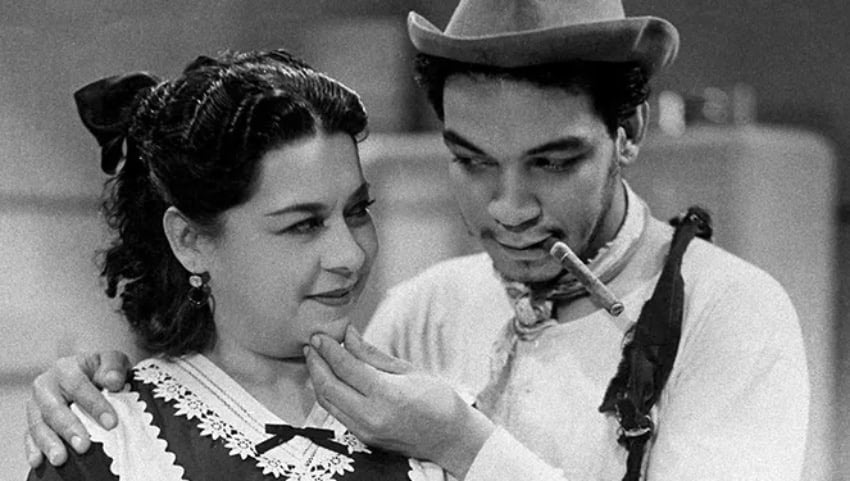
What makes Cantinflas truly fascinating is how closely the character and the man were intertwined, and how carefully Mario Moreno kept them balanced.
On screen, Cantinflas was manic, poor and underestimated. He played janitors, shoeshiners, soldiers, train workers and unemployed dreamers, men constantly navigating systems that weren’t designed for them.
Off-screen, Mario Moreno was methodical, intelligent and deeply aware of his influence. He built a production company, controlled his image, negotiated contracts and became one of the most powerful figures in Mexican cinema.
The contradiction wasn’t accidental. Cantinflas pretended not to understand the rules. Mario Moreno understood them completely. That understanding allowed him to critique society from within it, without ever losing the audience that mattered most to him.
Trains appear repeatedly in the world Cantinflas represents, both literally and symbolically. In mid-20th-century Mexico, trains meant movement, migration, labor and possibility. They connected cities, carried workers and offered opportunity, but only if you could afford a ticket.
And those who couldn’t? They rode on top.
Cantinflas and his meaning in Mexico
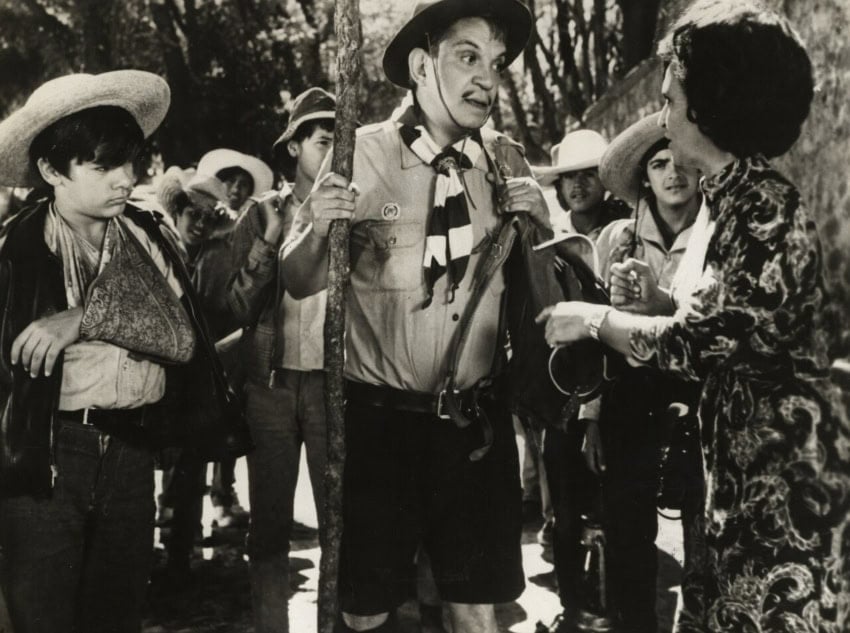
Whether this practice was allowed is, as you might expect, a bit complicated. Officially, passenger cars were for ticket-holders only. In practice, enforcement was inconsistent. Long rural stretches went unsupervised, and authorities often turned a blind eye. Riding on top of trains became an informal, dangerous but widely tolerated solution for people who needed to move and had no other option. Not legal in any technical sense, but it was understood.
This tradition didn’t disappear with Cantinflas’ era. Even today, migrants travelling north through Mexico, particularly on freight trains collectively known as La Bestia, continue this practice. The risks are enormous: injury, death, exploitation. But for many, the train remains a lifeline rather than a choice.
And Cantinflas captured this world perfectly.
I watched a few of his films this week, and in “Ahí está el detalle” (known in the U.S. as “You’re Missing the Point”), there’s a scene where his character rides atop a train, scrambling and arguing with other passengers in a blur of pandemonium and impeccable comedic timing. The scene isn’t just slapstick; it reflects lived reality. People had to improvise, adapt and quite literally hold on for dear life.
In “El barrendero” (The Street Sweeper), Cantinflas weaves through crowds, streets and even freight trains, turning everyday movement into a comedic ballet that exposes the absurdity of rigid systems imposed on flexible lives.
By highlighting the humor, ingenuity and resilience of these travelers, he helped audiences understand why breaking the rules was often simply common sense.
A culture of resilience
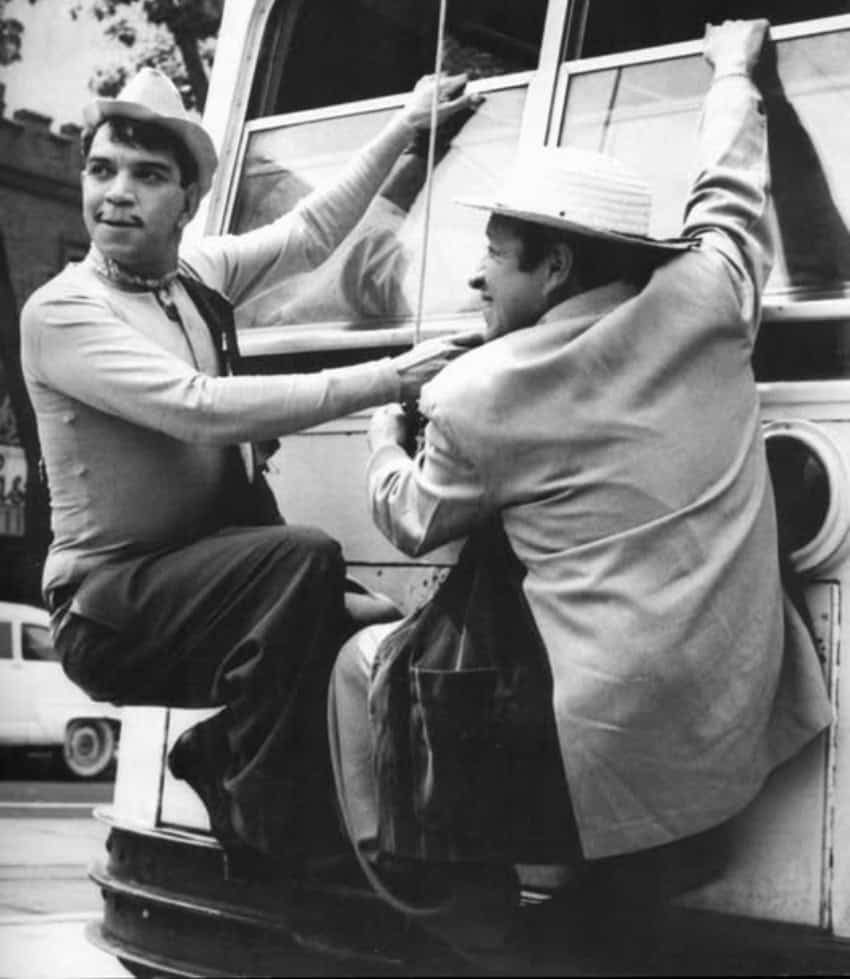
Watching Cantinflas navigate chaos is much like watching those rooftop travelers holding on tightly, adapting constantly and never losing dignity, even when the journey is anything but smooth.
In this way, Mario Moreno immortalized an entire culture of resilience — the people who ride on top, who improvise, who survive and who manage to laugh while doing so.
Cantinflas’s comedy wasn’t cruel, nor was it loud for the sake of volume. It was protective. He never punched down; he didn’t need to. His targets were authority figures who hid behind titles, uniforms and complicated language. In his films, police officers, politicians and bureaucrats often spoke clearly but said nothing meaningful.
Cantinflas spoke frantically and revealed the truth anyway.
Mario Moreno once suggested that laughter allowed people to hear things they might otherwise reject. Comedy made truth easier to swallow and harder to punish.
That’s why Cantinflas could exist at all.
‘Around the World in 80 Days’
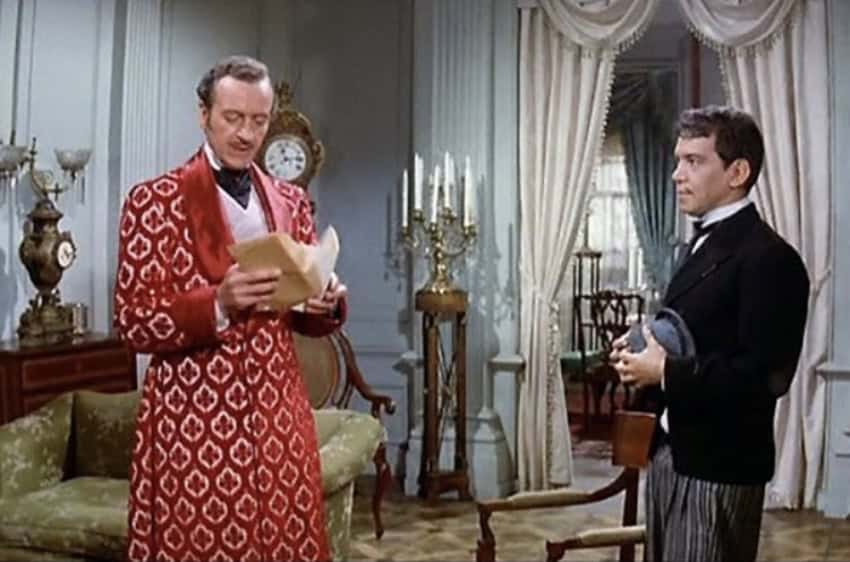
By the time Cantinflas appeared in “Around the World in 80 Days,” earning Moreno a Golden Globe, he had already made history. He was internationally recognized, financially successful and culturally untouchable.
Yet the character never became sleeker or safer. Cantinflas stayed loyal to the people he came from: the overlooked, the underestimated and those still trying to figure it all out.
And I think that part really matters.
Making it, in the Cantinflas sense, doesn’t mean abandoning who you were, or who you are, to become acceptable. It means translating your experiences into something meaningful and bringing others with you.
Mario Moreno didn’t escape his origins; he transformed them.
One of the reasons Cantinflas endures is that his comedy is inseparable from his humanity. He never mocked people for being poor or struggling. He mocked the structures that made survival unnecessarily hard.
That’s why audiences laughed and cried at the same time. Cantinflas’ world was absurd, but it was recognizably theirs. The struggles were real, and the laughter gave them breathing room.
He remains relevant because the world he critiqued hasn’t disappeared. Bureaucracy still overexplains. Authority still talks in circles. Ordinary people still improvise their way through unfair systems.
Cantinflas reminds us that intelligence doesn’t always sound polished, that dignity can stand in worn shoes and that resistance doesn’t have to shout; it can smile.
And maybe that’s why images of people riding atop trains still resonate. They aren’t symbols of recklessness. They’re symbols of resilience, adaptation and finding a way forward when the rules aren’t fair.
Charlotte Smith is a writer and journalist based in Mexico. Her work focuses on travel, politics and community.
