
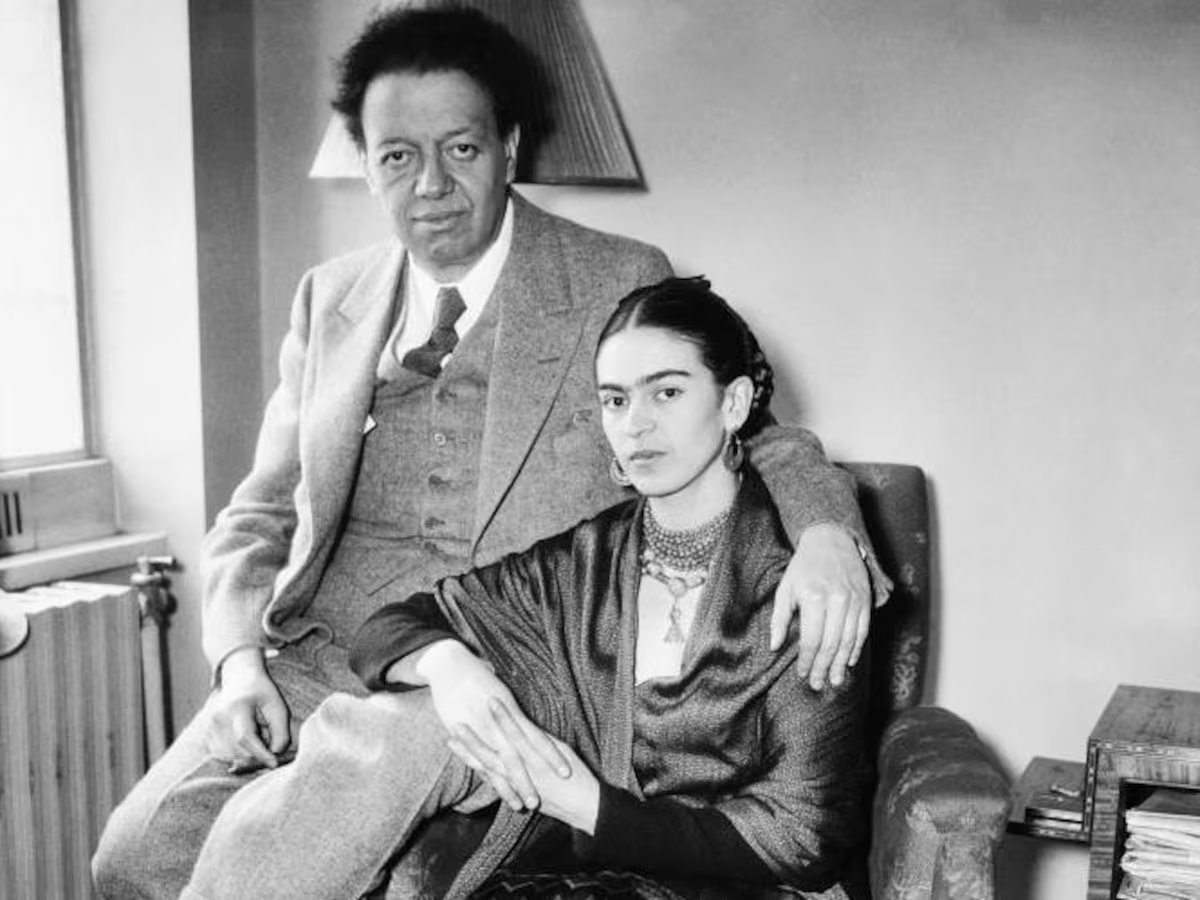
Everyone thinks they know all about the most famous Mexican couple in history, and perhaps that’s precisely why they are also two profoundly unknown figures. Long before they reached the podium of artists enshrined for posterity, Frida Kahlo and Diego Rivera were simply a woman and a man who loved, hated, supported, and used one another, with all their lights and shadows. Netflix has set out to peel back, one by one, all the layers that cover the artists, as if trying to reach the heart of an onion, and is preparing a series that delves into the tumultuous love story of the two painters. “We want it to be very mischievous, very transgressive, fun, and modern,” say the production’s directors, the Mexicans Patricia Riggen and Gabriel Ripstein, in an exclusive interview with EL PAÍS.
The series is still in the writing phase and has no filming date yet, but those responsible for making it happen have clear ideas about it: “We don’t want to fall into the trap of a period piece, a magical Mexico, the obvious things. That’s already been done,” notes Ripstein. “The world they inhabit, at the end of the day, is very carnal, very sensory. It’s overflowing with music, drinks, sex and passion,” he lists. Among other things, the directors seek to connect with a young audience that may only have seen Frida Kahlo on the T-shirts, mugs and tote bags that flood store shelves both in Mexico and abroad. Ultimately, they want to move away from the cliché. “The fact that it’s a series and not a movie gives us a very broad canvas to break away from what everyone already knows,” Riggen adds.
For the latter, it’s especially interesting to explore the story of Frida, “who wasn’t truly recognized during her lifetime.” “Her work was only exhibited once, at the end of her life,” she laments. “She was a very funny young woman. She had an incredible sense of humor and was always disruptive, but she grew up in a very particular era, in the shadow of a giant of a man. Diego was the most famous painter in Mexico,” she points out. That shadow won’t loom over this story, which seeks a balance between the two artists: the symbol of Mexican muralism and the pop icon, whose career is close to the surrealist tradition.
“It’s quite a complex, funny, and macabre duo. It’s pretty brilliant,” adds Ripstein, who is interested in portraying a “man in a midlife crisis, professionally at his peak, but whose personal life is falling apart,” and a “rebellious young woman who has to make a series of decisions after her plans are derailed by an accident.” The common thread will be the couple’s “emotional vibe”: “How they complement each other, how they need each other, how they hate each other, hurt each other, or love each other.” Their “toxicity,” in today’s terms.
The platform’s team is researching diaries, letters, and photographs—any material that might lead them into the private lives of these two figures, for whom actors have not yet been selected. “I think we won’t have any problem finding our Frida, because I believe there are many Mexican actresses with tremendous talent out there. Diego is a big challenge, because there are hardly any men who resemble him today. He was a huge man, with very specific physical characteristics,” reflects Riggen, who believes that in his case they will have to do “more in-depth characterization work” to achieve a realistic portrayal.
In the background rises post-revolutionary Mexico, a nation taking off and attracting the world’s attention. Something similar to what is happening today, say the directors. “I’ve been living in the United States for 20 years, and suddenly everyone wants to travel to Mexico,” says Riggen, a Los Angeles resident and director of the films Under the Same Moon (2007) and Lemonade Mouth (2011). Riggen also directed the 2015 film The 33, which tells the story of the Chilean miners trapped in a mine for 69 days, starring Antonio Banderas and Juliette Binoche. She has also worked on television series such as Tom Clancy’s Jack Ryan.
Gabriel Ripstein, made his directorial debut in 2015 with 600 Miles, which won an award at the Berlinale and was selected by Mexico as its submission for the Oscars. He is also a well-known producer whose work includes the feature films No One Writes to the Colonel (1999), directed by his father, Arturo Ripstein, and Chronic (2015). Both competed for the Palme d’Or at the Cannes Film Festival, where Chronic won the award for best screenplay.
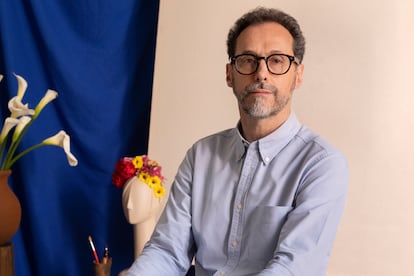
The project the directors are now embarking on is part of the streaming platform’s commitment to local stories. They have done so through adaptations of great classics of Latin American literature, such as Pedro Páramo by Mexican author Juan Rulfo, and One Hundred Years of Solitude by Colombian author Gabriel García Márquez, both with universal appeal. Netflix is also rescuing personalities, historical episodes, and personal stories unknown outside of Mexico, such as the documentary Un hijo propio (A Child of One’s Own) by Chilean director Maite Alberdi, and the fiction film Mexico 86, released this year and directed by Ripstein himself, which tells the behind-the-scenes story of how the country managed to become the host of the World Cup that year.
The story of Frida Kahlo and Diego Rivera promises to reach a global audience whose interest in the couple, and particularly in Frida, remains undiminished. Will it be a sad story or a happy one? “I think both,” says Riggen. The ultimate goal, Ripstein emphasizes, is to create an “explosive biography”: “A faithful, honest, and raw portrait of a celebrated couple.”
Sign up for our weekly newsletter to get more English-language news coverage from EL PAÍS USA Edition
