
LeAna López’s hips cue the musician, who, in a direct and improvised exchange, mirrors her movements on the primo, the lead drum of Puerto Rican bomba. The rhythm — born on Puerto Rico’s slave plantations in the 17th century — reverberates on this occasion inside a church in East Harlem, the Manhattan neighborhood known as El Barrio. The roar of the barrel drums builds, and, as the music reaches its peak, the scene seems to shift to the northeastern coast of the Caribbean island, to Loíza, the cradle of Afro–Puerto Rican culture. But in an instant, the traffic on Lexington Avenue breaks the spell, serving as a reminder: this is New York.
Another 15 participants dance alongside López in a workshop organized by Los Pleneros de la 21, a community organization and artistic collective whose mission is to promote awareness in New York of bomba and another genre native to Puerto Rico, plena. Those who play plena are known as pleneros — hence the group’s name. Since its founding in 1983, Los Pleneros de la 21 has cultivated Puerto Rican culture at the heart of the city’s diaspora community. More than 1,500 miles from the island, Puerto Ricans have left an indelible mark on New York’s history. So much so that Manhattan’s Fifth Avenue hosts the world’s largest Puerto Rican pride parade, drawing more than a million people every summer for nearly 70 years to celebrate the Caribbean island and its diaspora.
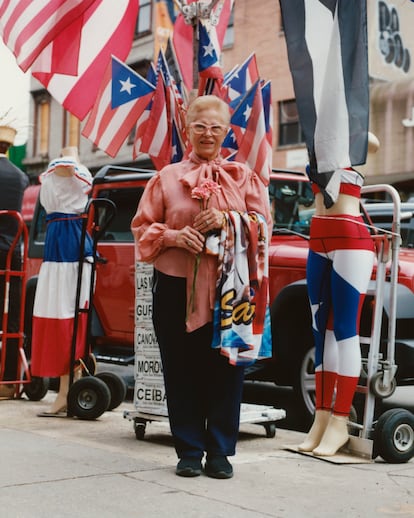
It is the same diaspora that Bad Bunny sings about in the opening track of his latest album, NUEVAYoL, and the same one he honored during his Super Bowl performance, when Toñita — the matriarch of Puerto Rican nightlife in New York — appeared on the nation’s biggest stage to serve him a drink as he sang: “A shot of cañita at Toñita’s house, ay / PR feels so close.”
A journey through the neighborhoods most emblematic of this community underscores the extent to which New York’s essence is Puerto Rican. The city sounds like Puerto Rico: from the traditional rhythms preserved by Los Pleneros to salsa and reggaeton, both of which took shape here with the help of the diaspora. And the city also tastes like the island — from the bakery in East Harlem selling traditional sweets where Mayor Zohran Mamdani has stopped for coffee, to the fried street foods sold along Brooklyn’s Puerto Rico Avenue.
Creating and claiming spaces
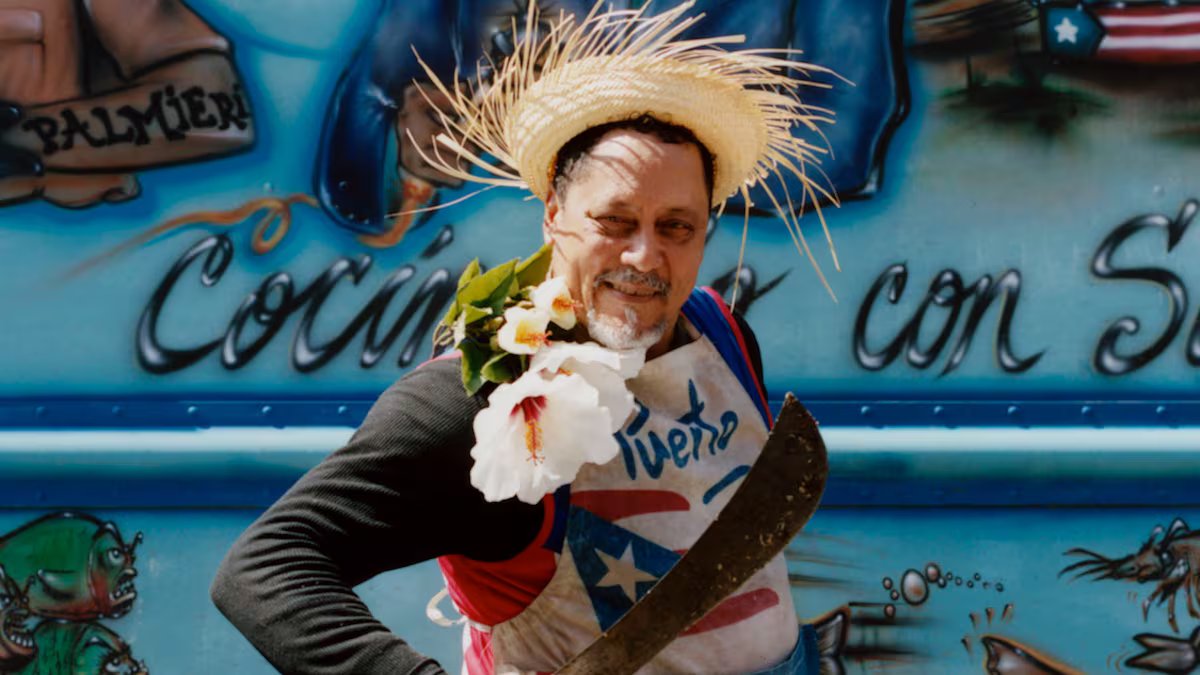
LeAna López was the first in her family to be born in the diaspora, in East Harlem. It is a place where Puerto Rican accents can be heard on every corner, blending with Nuyorican slang while retaining their distinct character: the drawn-out double r and the rolled single r softened into an l. Here, a street bears the name of Tito Puente, the king of the timbales and mambo, who was born and raised on these blocks lined with comida criolla restaurants and draped in Puerto Rican flags.
Growing up surrounded by all of this, López never questioned her connection to an island she had visited only sparingly as a child. Her parents, both born in Puerto Rico, always instilled in her the importance of keeping their culture alive from New York. That was how, at age seven, she arrived at her first bomba and plena class with Los Pleneros de la 21.
Sitting atop a drum stool at the group’s headquarters, as she speaks, López shifts between English and phrases that emerge naturally in Spanish, colored by a distinctly Puerto Rican accent. Nearly three decades after that first class, she says she remains grateful for finding in Los Pleneros a place where she could “connect with and continue the traditions” of her island — work that has shaped her entire artistic career.
“This organization always allowed me to feel that I was as Puerto Rican as someone who was born on the island,” she says. “I never felt like I didn’t belong. That came later, when I started hearing terms like Nuyorican.”
That word — “Nuyorican,” a play on the English pronunciation of “New York” and “Puerto Rican” — was for many years used by Puerto Ricans born on the island as a sort of insult against those who, like López, were born outside Puerto Rico, or against those who, after years away, tried to return and were seen as different, as outsiders because they came from the diaspora.
During the second half of the last century, New York became the mecca of Puerto Ricans in the diaspora. Between World War II and the 1970s, the city’s Puerto Rican population grew from tens of thousands to hundreds of thousands. It reached its peak in 1970, when Puerto Ricans accounted for more than 10% of the city’s total population. At the time, nearly 70% of all Puerto Ricans living on the U.S. mainland resided in New York.
When they arrived, they faced marginalization. They were U.S. citizens — Puerto Rico has been an unincorporated U.S. territory since 1898 — but many did not speak the language. They spoke Caribbean Spanish and little to no English; they were mixed-race and Afro-Caribbean people who had never experienced the harshness of winter. In the face of rejection, they planted their flag and built communities of their own so that those who came after them would know they were not alone. Out of that experience, a new identity began to take shape: New York Puerto Ricans.
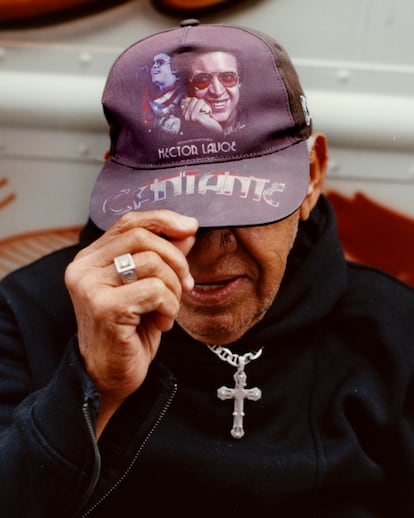
Juan Gutiérrez — known as Juango — founder of Los Pleneros de la 21, arrived at the height of that migration wave. Born in 1951 in the Santurce neighborhood of San Juan, Puerto Rico’s capital, he moved to New York in 1976 to further his musical training. “Ever since I can remember, I was interested in music, though not specifically in bomba and plena,” he says. “But once I got to New York, I got bitten by the Puerto Rican bug. I said to myself, I aspire to musical excellence, but I have to immerse myself in Puerto Rican music.”
From that point on, he trained in plena and bomba under diaspora masters such as Marcial Reyes Avelo, with whom he founded Los Pleneros de la 21 forty-three years ago. He soon recognized the need to share that knowledge with the broader community, and, in 1989, the organization began offering dance and music workshops that continue to this day. The classes have become so popular that this year they moved to the People’s Church, a community temple that served during the 1960s and 1970s as a gathering place for Puerto Rican activists in El Barrio — particularly the Young Lords, a social justice movement inspired by the revolutionary Black Panther Party but focused on the struggles Puerto Ricans faced in the city: marginalization, poverty, and hostility.
For Gutiérrez, preserving Puerto Rican culture in New York stems from a need for self-preservation in the face of adversity. Now 75 and semi-retired, the musician divides his time between Puerto Rico and New York, while his daughter, Julia, has taken up the mantle at Los Pleneros. Speaking by phone before heading back to the island for a time, he reflected: “When you leave Puerto Rico, you confront many realities of living in another culture — one that is often hostile to our identity, not only as Puerto Ricans but as Latinos. And how do you defend yourself? By looking more deeply into your identity and grounding yourself in the pride of who you are.”
The Nuyorican boom
Another guardian of that identity has been José Flores — or Pepe, as he is known in Lower Manhattan. A contemporary of Gutiérrez’s (the two first met in Puerto Rico and later crossed paths again in New York), Flores arrived — “fortunately,” as he puts it — in the Lower East Side, or Loisaida, a name that merges the word “Loíza,” Puerto Rico’s historical Afro-Puerto Rican municipality, with the English pronunciation of “Lower East Side.”
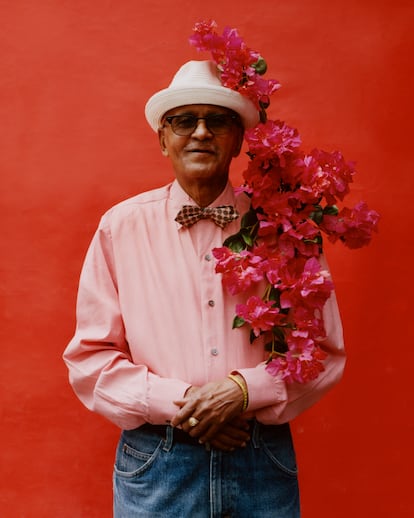
Back then, Loisaida was a rough neighborhood. Drugs ruled the streets — first heroin, then crack. It bore little resemblance to what it is today, with its vintage shops and high-end restaurants. When Flores arrived, he rented a two-bedroom apartment for $75 a month and, while cleaning it before moving in, found used syringes beneath the linoleum floor.
“But at the same time, this place was entirely Puerto Rican. I could walk out my front door and, before reaching the corner, greet 10 or 15 people in Spanish,” he recalls from the living room of his current apartment, still in Loisaida.
Flores arrived in the city as a devoted music lover — “I’m a born dancer. I dance even during commercials,” he says — and in the Puerto Rican Loisaida of the 1970s, he found a creative world in full bloom: art, poetry, theater, music. He witnessed the emergence of a cultural and artistic movement that embraced Nuyorican identity as its banner. He saw the birth of institutions such as the Nuyorican Poets Café, founded in 1973 by poets Miguel Algarín and Miguel Piñero, and, three years later, New Rican Village, a music and theater space led by Eddie Figueroa.
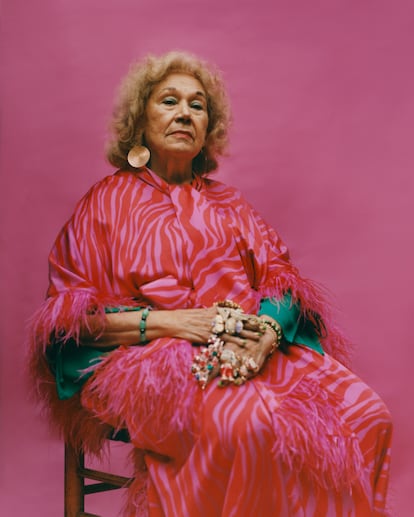
It was a moment born out of “a generation that didn’t feel fully from here or from there. And so they give birth to this new nation, and the term ‘Nuyorican’ goes from that pejorative to being worn as a badge of honor,” explains Aníbal Arocho, head librarian at the Center for Puerto Rican Studies, the first research institution dedicated to the Puerto Rican diaspora, which opened its doors in El Barrio during that same era.
Against the backdrop of that cultural renaissance, Flores began building a vinyl collection in his apartment. He collected anything he could find: Puerto Rican music, Cuban records, African sounds, jazz. Back then, records cost only a few cents, and Flores steadily amassed an enormous archive through flea markets and music shops. Today, his collection exceeds 5,000 records.
Among them are genuine treasures, which he has always made available as archival material for students and music enthusiasts. “I’m only the holder, I’m not the owner,” he says. “There are music collectors who won’t even let you through the door, much less touch a record. But as long as there’s respect, that door will always be open.”
The door he is referring to is the one to his apartment, which he says he often leaves unlocked in case he forgets his keys on the way out. Records cover the walls of his living room, stacked on wooden shelves stretching to the ceiling. Until recently, however, many of them were housed in his gallery, opened in 2022 in the storefront of the building where Flores had lived for more than 40 years. He called the space La Sala de Pepe, or Pepe’s living room — an extension of his home transformed into a cultural hub dedicated to Puerto Rican music, photography, art, and activism.
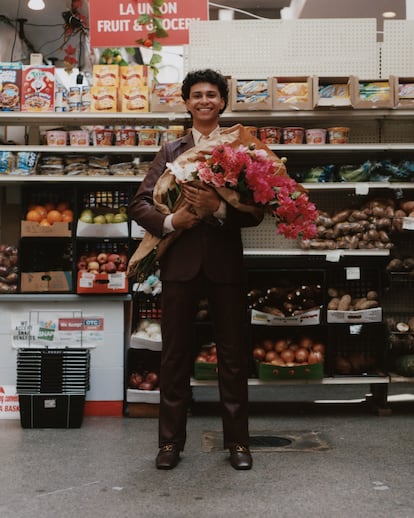
Pepe does not know whether he will reopen the gallery. He laments the gentrification of Loisaida, which has pushed many Puerto Ricans out of the neighborhood. “Back then, this avenue was full of immigrant businesses — a butcher shop, a fish market… All of that went to hell,” he says. The area is now known as the East Village, where the average monthly rent has climbed to around $5,000.
The collector cannot resist reaching for a metaphor to describe Loisaida’s endangered Puerto Rican roots: “What I’m telling you about are things that don’t exist here anymore. That garden is gone now — and without it, those flowers can no longer bloom.”
“We’re still here”
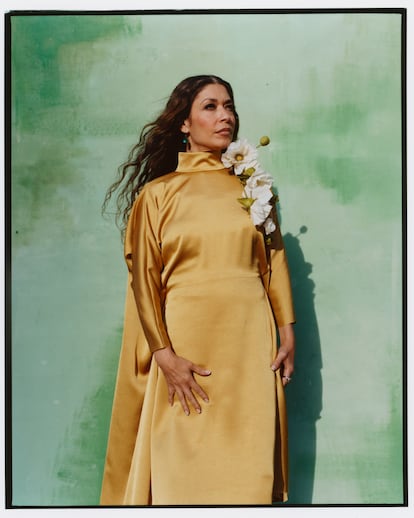
Now it falls to people like Caridad de la Luz — considered one of the guardians of Nuyorican culture in the city — to tend that garden. The 49-year-old poet, better known by her stage name La Bruja, arrives at the Bronx Music Hall wearing a long green lace dress and what she calls “peculiar” shoes. “Do you know La India? She gave me this dress and the shoes. They’re very witchy, right?” she says with her trademark laugh as she walks into the cultural center, where in a few hours she will perform before a sold-out crowd, marking 30 years of her career.
The La India she is referring to is singer Linda Bell Viera Caballero — known as the Princess of Salsa — one of the genre’s most beloved voices, who was raised in the same Bronx neighborhood where De la Luz was born, an area known as the County of Salsa. “The Bronx is like a little Puerto Rico,” the poet explains in Spanglish. “The Bronx is the one borough that is green enough that it’s like you could make it look like Puerto Rico; you feel it here.”
The resemblance is so strong that it is one of the few places outside Puerto Rico where people can eat at an authentic Puerto Rican lechonera: La Piraña, run by Ángel Jiménez, whose nickname gave the business its name. Every weekend, customers wait for hours in line to buy plates of roast pork served with rice and gandules (pigeon peas). Jiménez begins roasting the pigs before dawn and starts selling around noon — only on Saturdays and Sundays, and only until everything sells out.
The Bronx has produced some of the most prominent names in the Puerto Rican diaspora, including Sonia Sotomayor, the first Latina to serve on the nation’s highest court; Alexandria Ocasio-Cortez, widely seen as a leading figure in the future of the Democratic Party; and Jennifer Lopez.
De la Luz’s love of poetry dates back almost to infancy. She learned from her great-grandmother, an illiterate woman who was nonetheless a poet, and began reciting verses in her family’s living room. Growing up in the Bronx, more than an hour by subway from the Lower East Side, De la Luz was unaware of the Nuyorican movement that had been taking shape in Lower Manhattan during her childhood.
That changed when a friend, after hearing her recite, told her she had to perform at the Nuyorican Poets Cafe. “And I was like, Nuyorican? What?” she recalls. She was taken aback that a place would carry the name Nuyorican — a word she had always known as an insult. “But when I went there, it gave me a new appreciation for the contributions Nuyoricans have made,” she says. “It changed my life.”
She first stepped onto its stage at 19, unaware that three decades later she would become the executive director of the café — one of the last enduring pillars of the Nuyorican movement and a place that, for more than 50 years, has nurtured the talents of poets, actors, filmmakers, and musicians.
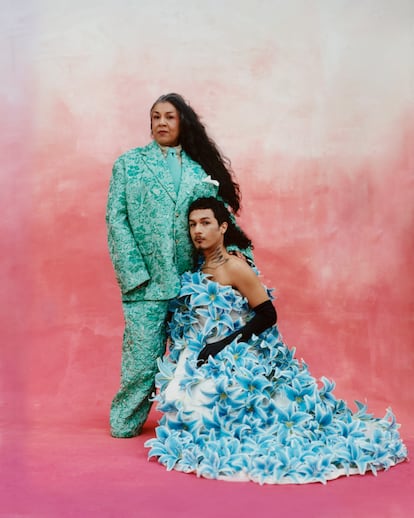
De la Luz took the helm in 2022. A year later, the venue closed its doors for an extensive renovation project costing $24 million, funded by New York City. For La Bruja, amid gentrification and the displacement of the Puerto Rican diaspora in New York, the fact that the city invested in rebuilding an institution like this “is a testament to the cultural contribution the Nuyorican Poets Cafe has made to the fabric of New York. It is a temple of culture in the city.”
The glowing tower to the north
Puerto Rican New York endures. It does so thanks in part to artists like Bad Bunny, who, as Aníbal Arocho — head librarian at the CUNY Center for Puerto Rican Studies — notes, “recognizes and celebrates New York as the glowing tower to the north” of Puerto Rico. It is a place where Puerto Rican culture “refused to die, where it grew and thrived and evolved and continued to perpetuate the beauty of our people.”
It has thrived in Los Pleneros de la 21 in East Harlem, in Pepe’s living room in Loisaida, and in the Nuyorican Poets Cafe. In La Bruja’s poetry and in La Piraña’s lechonera in the Bronx. In San Germán Shop, Radamés Millán’s store in Brooklyn, where he has sold records, clothing, and Puerto Rican food for more than half a century, and in Toñita’s club, which she refuses to sell despite receiving multimillion-dollar offers. It also lives on in the thousands of bodegas scattered across the city — the corner stores where New Yorkers buy their bacon, egg, and cheese every morning and whose name traces back to the Puerto Rican bodegueros who created them.
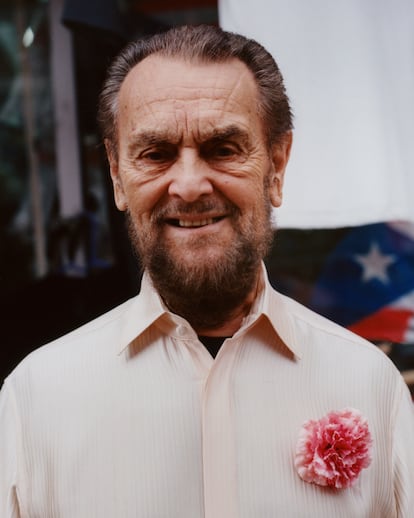
Bodegueros like Arocho’s family, whose grandparents arrived in New York in the 1950s and opened grocery stores along Manhattan’s Ninth Avenue. Over time, those shops came to be known as bodegas, a term that has since become synonymous with the city itself. Every New Yorker has their trusted bodega. And although most owners are no longer Puerto Rican — now many belong to newer immigrant communities, such as Yemenis — they are still called bodegas, in Spanish.
“In my neighborhood I know of exactly one Puerto Rican bodeguero who’s a holdout,” Arocho notes. “And whenever I walk by 10th Avenue and I see his store and I see the Puerto Rican flag hanging there — it’s tattered and faded because he hangs it outside —it’s very poetic because it’s very much faded but not gone.”
Credits
Styling: Lorena Maza @lorenamazastyling
Photography assistant: Ana Aizersztein @fotosdeana_
Makeup: Kaiya Carlin @kaiyacarlin
Casting: Güerxs Casting @guerxs
Studio: Delicia Studio @deliciastudio_
Production: The LTC – @the__ltc
