
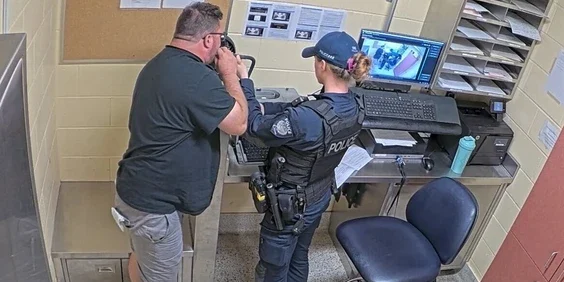
On March 5, 2025, Ottawa city councillor Matthew Luloff was found guilty of impaired driving.
The public discussion around his conviction largely followed a familiar script. A public official made a mistake, apologized, accepted the court’s decision and pledged to learn from it.
But that narrative glosses over several important realities about what happened — and what it says about accountability for elected officials.
First, the idea that Luloff made “one bad decision,” as he reportedly framed it, is simply inaccurate. He made several. He chose to drive to RBC Bluesfest despite knowing he planned to drink. He chose to continue drinking until his blood-alcohol concentration was reportedly about twice the legal limit. And he chose to drive home afterward.
Reducing that sequence to “one bad decision” sanitizes what impaired driving actually is: a chain of preventable choices that culminates in a dangerous act.
But perhaps the most consequential decision Luloff made did not occur that night: pleading not guilty.
After his conviction, Luloff apologized for his “bad decision.” Yet that apology raises an obvious question: if he accepts responsibility now, why did he deny responsibility earlier?
A not-guilty plea is, of course, a legal right. Every accused person is entitled to challenge the evidence against them in court. That right is fundamental to a fair justice system.
But public officials are not just private citizens. They hold positions of trust and authority, and their decisions carry public consequences — including financial ones.
Trials are expensive. They require police officers, prosecutors, court staff and judges. When an accused person ultimately acknowledges the wrongdoing they were accused of, the decision to contest the charge inevitably raises questions about whether public resources were used unnecessarily.
If Luloff now acknowledges the wrongdoing underlying the charge, the public is entitled to ask whether his earlier not-guilty plea was genuine or simply a legal strategy that prolonged the process and increased its cost.
Another striking feature of the public conversation is the lack of comparison with a similar case involving another Canadian municipal politician.
In 2013, Ana Bailão — then a councillor in Toronto — was charged with impaired driving after leaving a holiday party. Bailão initially said she would contest the charge but ultimately pleaded guilty.
Her sentence: a $1,000 fine and a one-year driving prohibition.
By contrast, Luloff received a $4,000 fine and a one-year driving probation, despite pleading not guilty and forcing a trial. Both seem to have gotten off pretty easy for something very serious which raises broader questions about how Canada’s impaired driving laws operate in practice.
Impaired driving remains one of the leading criminal causes of death in Canada. Governments regularly emphasize the dangers of driving under the influence and urge Canadians to plan ahead if they intend to drink.
Yet when public officials are convicted of the offence, the consequences often appear modest — financially manageable for someone with a six-figure salary and politically survivable if the apology sounds sincere enough.
A related issue is the difference between the penalties for drinking and driving and certain gun offences, despite the difference in their potential harm. As Luloff’s case shows, the penalty for drinking and driving, where people choose to risk killing other people – every time – was $4000 and being banned from driving for a year.
By contrast, the maximum penalty for being charged with being in a car where someone else has a gun is ten years in prison. Being in a car with someone else who has a gun never kills people.
Could the difference in penalties be related to the fact that drunk driving is a crime that affects the rich and powerful far more than being caught in a car with someone with a gun?
