
Think about how we commonly seek to motivate human performance in our workplaces: Employees are treated as costs to be minimized rather than people to be invested in. Performance is managed through fear of consequences. Supervisors closely monitor daily tasks, requiring frequent check-ins or reports. Being available at all hours is treated as evidence of commitment. Directives flow one way—downward. Feedback is delivered as judgment rather than support. In practice, if not in intention, we still manage people more like machines than human beings.
How did we get here—and, more importantly, why have we never left?
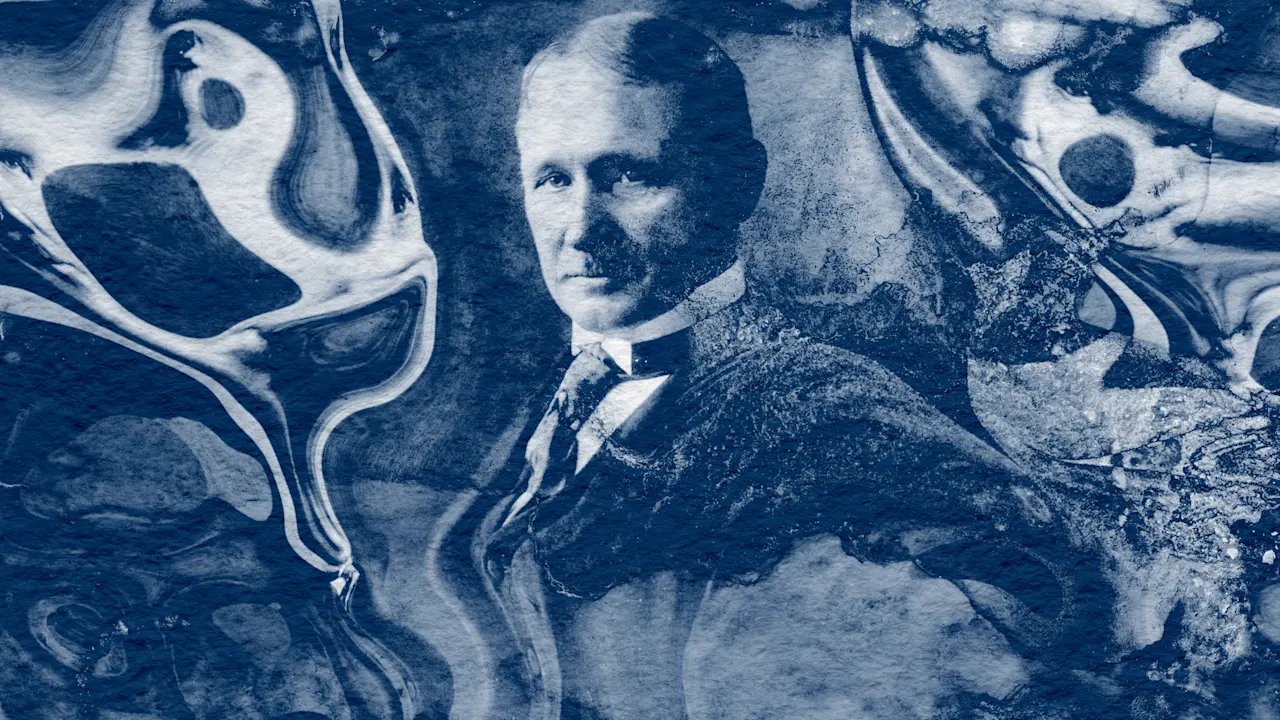
Most of what we call “modern management” isn’t modern at all. It was born on factory floors over a century ago, in an era when work was often dehumanizing: repetitive, physical and performed by people who needed a paycheck and had little choice but to show up. It was Frederick Winslow Taylor—the father of scientific management—who gave it shape. He believed workers were inherently unmotivated and therefore had to be told exactly what to do, how to do it, and when. Control and even micromanagement was seen as essential to driving performance.
The problem isn’t that Taylor was wrong for his time. The problem is that we’re still using his model in a completely different era of work. Today’s workplace runs on judgment, adaptability, creativity, collaboration, and discretionary effort—none of which can be commanded or controlled. When the nature of work changes this fundamentally, the philosophy we use to lead people must change with it. So far, it really hasn’t.
A Deeply Entrenched Mindset
Over time, Taylor’s ideas became the blueprint for how organizations everywhere learned to manage people. They shaped how business schools taught leadership, how organizations were structured, and perhaps most powerfully, how one generation of managers trained the next. The underlying assumption—that people are fundamentally unmotivated and need to be pushed, watched, and held accountable through oversight and intimidation—became so entrenched, it stopped feeling like an assumption at all. It started feeling like common sense.
But it was never really common sense. As far back as the 1920s, the Hawthorne studies revealed that workers became more productive simply when they felt noticed and valued. People, it turns out, want to contribute. They want to grow. They want to do good work—when given the conditions to do so.
Despite these findings, little changed because Taylor’s ideas had already become so deeply rooted in business that his assumptions were no longer questioned. His rigid ideology was simply passed on from one generation of managers to the next.
What The Research Has Been Telling Us For Decades
The research that has accumulated over the past several decades makes one thing unmistakably clear: the fear that giving people more autonomy, trust, and support will come at the expense of performance is empirically and patently wrong. We now know it’s just the opposite.
In 2011, London Business School professor Alex Edmans tracked Fortune’s “100 Best Companies to Work For” over 28 years and found they outperformed their peers by as much as 3.8% annually in stock returns. What distinguished these organizations wasn’t perks or pay—it was how their leaders treated people. They communicated transparently. They empowered rather than micromanaged. They invested in growth. They built cultures where people felt trusted, valued, and respected as human beings. Treating people well, Edmans concluded, isn’t charity—it’s a widely undervalued competitive advantage.
The Conference Board, drawing on decades of human capital research, points consistently in the same direction—leaders who communicate with empathy, build trust, and show genuine care for their people drive stronger commitment, lower turnover, and better organizational outcomes.
Harvard Business School professor Amy Edmondson’s landmark research has demonstrated that psychological safety—the belief that one can speak up, take risks, and make mistakes without fear of punishment or humiliation—is also one of the most enabling conditions for high performance. This includes emotional safety—the confidence that you can bring your whole self to work, express what you genuinely think and feel, and be accepted for who you are across every dimension of your life. And it includes belonging—the felt sense of being genuinely connected to the people you work alongside and truly valued as part of the team. When those conditions exist, people don’t just feel better, they think more creatively, take smarter risks, and collaborate more openly. When they don’t, people hold back. And when people hold back, performance plateaus or declines.
Most recently, the University of Oxford’s Wellbeing Research Centre confirmed in a sweeping meta-analysis of 339 studies covering nearly 1.9 million workers that employee well-being and performance go hand in hand. Their conclusion was clear: higher employee well-being drives more sustainable performance and stronger shareholder returns.
The reality is all of this research—and much more—has been widely communicated. Which means what we’re facing isn’t a lack of evidence. It’s a classic knowing-doing gap. Researcher after researcher, institution after institution, has arrived at the same conclusion. The evidence isn’t emerging—it’s overwhelming. Bottom line, when employees feel genuinely valued and cared for, they bring a level of commitment and discretionary effort that no compliance system can replicate. The only unanswered question is whether leaders and organizations will ever be willing to act on this knowledge and fundamentally rethink how they lead.
The Choice Every Leader (You) Gets to Make
Because the research is both voluminous and irrefutable, what only remains now is a choice. Continue operating from assumptions built for factories in the 1900s—or lead people the way human beings have always deserved, and to which they respond at their best.
At the end of the day, no matter how talented your people are, it’s the system you create that determines what they can achieve. As W. Edwards Deming put it:
“A bad system will beat a good person every time.”
The question is simple, yet profound: will we sustain outdated practices, or design workplaces that cultivate trust, contribution, and human potential? The evidence, the research, and decades of my own leadership experience all point in one direction. The choice is ours and ours alone.
