
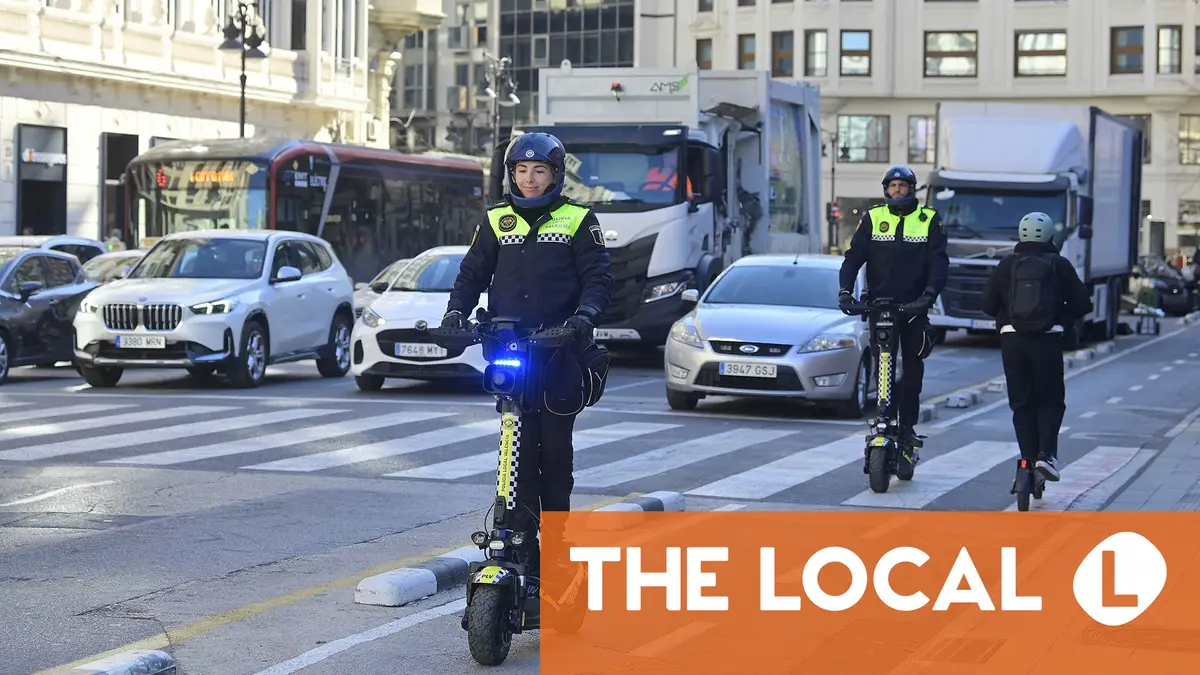
Valencia now has a specialist e-scooter police unit which will monitor other e-scooter users in Spain’s third city.
Police in the Mediterranean city of Valencia have launched a new unit of officers patrolling the streets on electric scooters.
The twelve officers making up the new police unit will not only themselves travel around on scooters instead of cars or mopeds, but also monitor scooter use in the city and patrol bike lanes more broadly.
Valencia has created the scooter unit with the aim of protecting pavements and pedestrian areas, as well as checking that electric scooters in the city are being used in accordance with regulations.
The ‘Cycling Road Inspection and Surveillance Group’ was presented by Mayor María José Catalá and the head of the local police, Ángel Albendín, at the launch on Monday.
Catalá stated that “we are convinced that it’ll be a great success. We are introducing a unit that possibly only exists in Valencia and that will set a benchmark. There are already city councils throughout Spain that have asked us about it and want to know how this unit works.“
“The city has 200 kilometres of bike lanes. We haven’t stopped growing because we’re committed to a city that runs on personal mobility vehicles, but we have always said that we cannot grow without taking safety and pedestrians into account,” she added.
Police hope the scooter patrols will be popular with locals. “It’s going to be the most beloved police unit,” added Valencian city councillor for Mobility and Local Police, Jesús Carbonell, who also attended.
Like in many cities around Spain, the widespread use of electric scooters in Valencia has brought with it new traffic problems and safety concerns among locals, particularly older people.
Advertisement
“Many people have expressed their concerns to us, especially older people, about the issue of accidents involving scooters,” Catalá said.
The unit will be located at points in the city with the highest accident rates on cycle paths. It will also carry out speed checks, as well as alcohol and drug tests, and inspect scooters that may have been modified to increase their speed or that are being ridden illegally.
Another of its responsibilities will be to identify and analyse problem areas on bike lanes in the city, where data will be collected to try to reduce accident rates, as well as reviewing the routes to check their physical condition.
Since the end of January 2026, Spain’s General Directorate of Traffic (DGT) requires all personal mobility vehicles such as e-scooters to have civil liability insurance.
READ MORE: How to complete the mandatory registration of your e-scooter in Spain
