

Resident Evil Requiem is incredibly ambitious.
As the iconic horror series’ latest entry that also coincides with the celebration of its 30th anniversary, Capcom is ostensibly positioning the game as a “best of both worlds” dual-protagonist experience that marries the nail-biting survival horror of RE2 and 7 with the thrillingly visceral action of RE4. And for the first time in the series, Requiem features support for both first- and third-person POVs at launch, further blurring the lines between Resident Evil‘s two main genres. It’s a thoughtful way to honour the series’ storied history, but of course, it could have led to something incredibly disjointed, like Resident Evil 6.
Fortunately, Requiem is much more successful than RE6 in this regard, deftly weaving its many influences and styles into a thoroughly satisfying, if occasionally uneven, experience. In fact, Resident Evil Requiem eventually proves to be one of the series’ most wholly engrossing — and surprisingly emotional — entries to date.
A terrific two-hander
Admittedly, Requiem has some bizarre roots. That’s because one of the game’s two leads is Grace Ashcroft, a young FBI agent who’s actually the daughter of Alyssa, one of the playable characters from 2003’s Resident Evil Outbreak. Centring the narrative around someone tied to an oft-forgotten PS2 spin-off is peculiar, no doubt, but Capcom wisely doesn’t require you to have played it. Instead, this setup serves as the emotional hook for Grace’s story, as her investigation into her mother’s mysterious death leads her to being hunted by a gleefully sadistic former Umbrella researcher named Victor Gideon. Along the way, fan-favourite RE hero Leon S. Kennedy’s own investigation into a string of murders brings him into the fray and uncovers a larger conspiracy surrounding Umbrella, Raccoon City and a mysterious government operation known as Elpis.
The Ashcrofts have been through a lot.
Part of what makes Requiem such a success is how quickly it endears you to Grace. In an early playable flashback, you see Alyssa’s sudden and shocking murder through the young Ashcroft’s eyes, immediately letting you understand why she’s still so shaken up in the present day. Thanks to Angela Sant’Albano’s unflinchingly raw performance, Grace’s jittery, stammering demeanour seamlessly carries over from cutscenes to moment-to-moment gameplay through frantic, anxious breathing that punctuates every bit of exploration.
This struggle to overcome trauma extends to Leon, and it’s a natural extension of his journey thus far in the series. One of the masterstrokes of Capcom’s modern remakes of RE2 and 4 is how they further developed Leon by establishing a deeper through line for his overarching story. Initially, he’s a fresh-faced cop, rough-around-the-edges but infectiously earnest, but after surviving the Raccoon City outbreak, we see him in RE4 as a more hardened survivor who copes with the horrors through snappy one-liners. But of course, you can never quite get over such harrowing experiences, and even 30 years later, Leon still carries those scars with him.

Leon meets Grace.
It’s through this lens that his relationship with Grace proves to be unexpectedly poignant. Forever plagued by a sense of survivor’s guilt and regret over his inability to prevent the destruction of Raccoon City, he dedicates everything to helping her and investigating this larger mystery. All the while, he’s dealing with an unknown infection that’s slowly killing him, adding even more urgency to his quest. This all results in Leon’s most personal and heartfelt outing to date, especially when he eventually returns to the ruins of Raccoon City to directly confront his past in ways that will resonate strongly with longtime fans of the series.
The linchpin to Leon’s gripping character arc is an absolutely sensational performance by Nick Apostolides, who reprises the role from the RE2 and 4 remakes and masterfully blends the character’s signature action hero charm with his tortured, weathered spirit. There are some genuinely touching scenes with Leon that simply wouldn’t work without the haggard physicality and understated pain that Apostolides imbues in him.
Even when Requiem can go over-the-top in tying together elements from the series’ larger lore, especially where the secretive history of Umbrella is concerned, the interwoven stories of Grace and Leon never fail to provide meaningful human stakes that keep you hooked for the 10-plus hour campaign.
Survival horror at its absolute best…

Grace brings a refreshingly raw vulnerability to the series.
Requiem also succeeds in using its two protagonists to explore different flavours of the Resident Evil gameplay experience. As the less-experienced Grace, everything is rooted in traditional survival horror, and it’s simply outstanding. The main reason for that boils down to Grace’s combat options being largely limited beyond her FBI-issued handgun. What’s more, ammo scarcity feels more prominent than ever, even on Standard mode, which places an appreciable emphasis on picking your battles.
Indeed, rarely have I felt so vulnerable in a Resident Evil game, and it greatly heightens the survival horror. It’s common for these games to start you off with a tiny arsenal before you become a walking armoury who easily mows down hordes of zombies, but that refreshingly never happens with Grace. This challenges you to more carefully study the labyrinthine level design, in which you have to run back and forth between dimly lit hallways, dank crawlspaces and the like to obtain items to unlock previously inaccessible paths. Often, I found myself holding my breath as I tried to sneak by enemies, or, when combat was inevitable, flee from them entirely.
None of this is to say that the act of playing as Grace doesn’t evolve at all, though, as Capcom has taken a measured approach to progression. Through exploration and a crafting system, Grace can occasionally obtain items that upgrade her maximum health or firearm damage and stability. But it’s said crafting system that’s particularly appealing for several reasons. In essence, the main resource to produce items is blood, which Grace can siphon from defeated enemies or fixed locations on the map. You can only carry a limited amount of this liquid, however, so you’ll have to decide when to acquire it and when to use it.
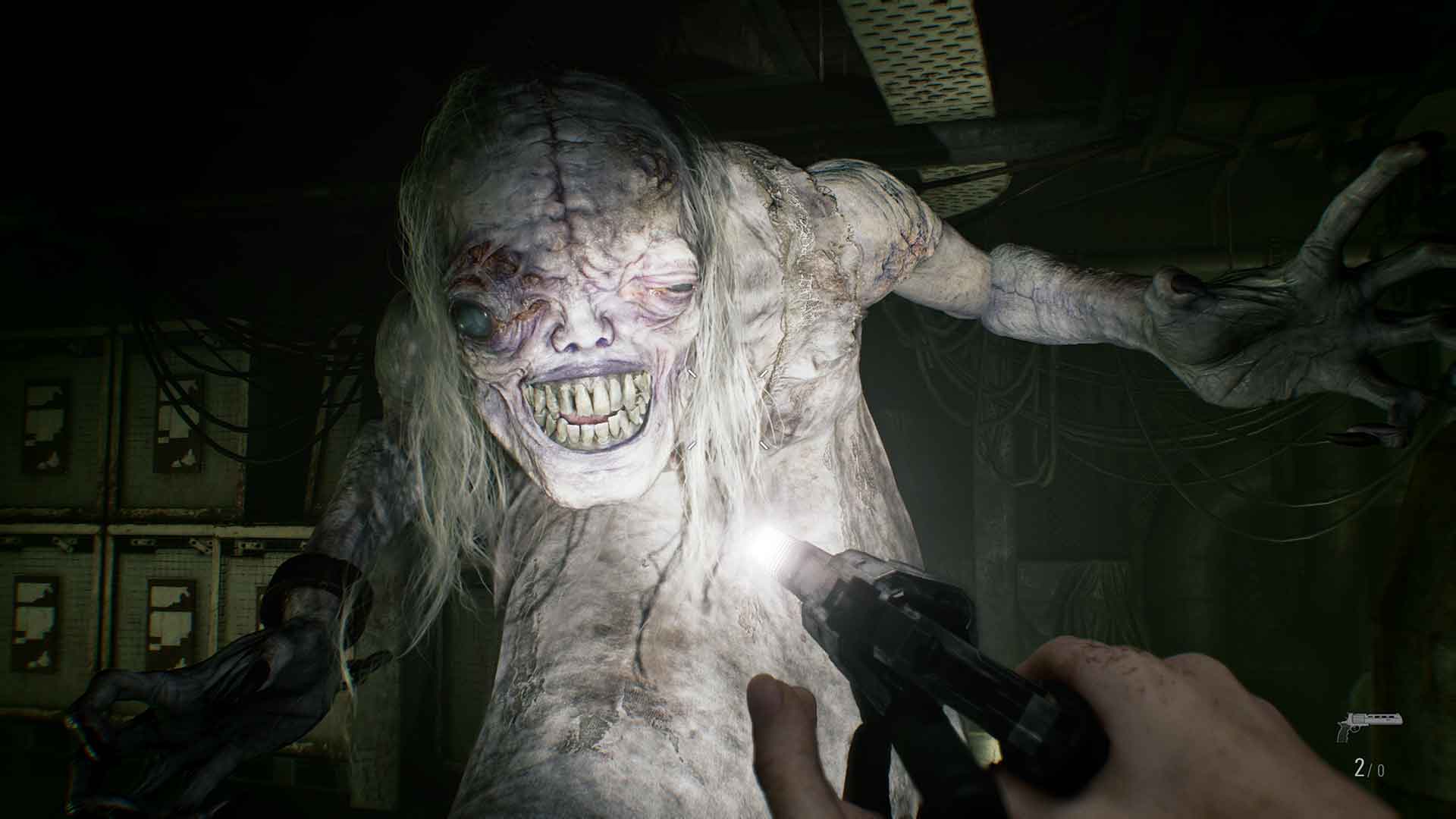
One of the stalker enemies, “The Girl.”
This creates a remarkably compelling risk-reward element. Do you take a gamble on killing enemies or trying to skirt around them to reach a pool of blood? When you’re exploring, is it better to use your hemolytic injector, which costs quite a few resources to craft, to instantly stealth kill a zombie or throw it on a deceased enemy to make sure they don’t return as a more powerful Blister Head variant? (As the name suggests, these are a fun riff on the Crimson Heads from the OG Resident Evil.)
Enhancing this constant sense of fearful desperation is the role of multiple stalker enemies who pursue you à la Tyrant/Mr. X in RE2, Nemesis in RE3 and Jack Baker in RE7. This includes “The Girl,” the towering fanged demon featured prominently in Requiem‘s marketing, and a hulking chef who wields a massive, blood-soaked cleaver. Naturally, their ever-looming presence means you have to be even more careful about when and where to fight, lest you alert them to your presence.
But even outside of these stalkers, the regular enemies are exponentially more memorable this time around because Capcom has given many of them eerily human characteristics. Yes, these particular infected organisms will often speak to you in a chilling reminder of the souls they once carried. Sometimes, they might utter an apology for attacking you as the life leaves their bodies, adding a tinge of melancholy to your victory over them, while in other cases, an otherwise monstrous stalker might scream profanities at you to make them even scarier. My personal favourite enemies? A pair of female zombies who pace back and forth while singing, with their haunting hymns enriching the atmosphere as I roamed the spooky halls of Rhodes Hill Chronic Care Center.
This section effectively makes up nearly half of the game, and in Grace’s segments, it represents some of the absolute best survival horror in all of Resident Evil. But of course, you also get to play as Leon, and that’s a decidedly different affair — for better and worse.
…But only until the action takes over
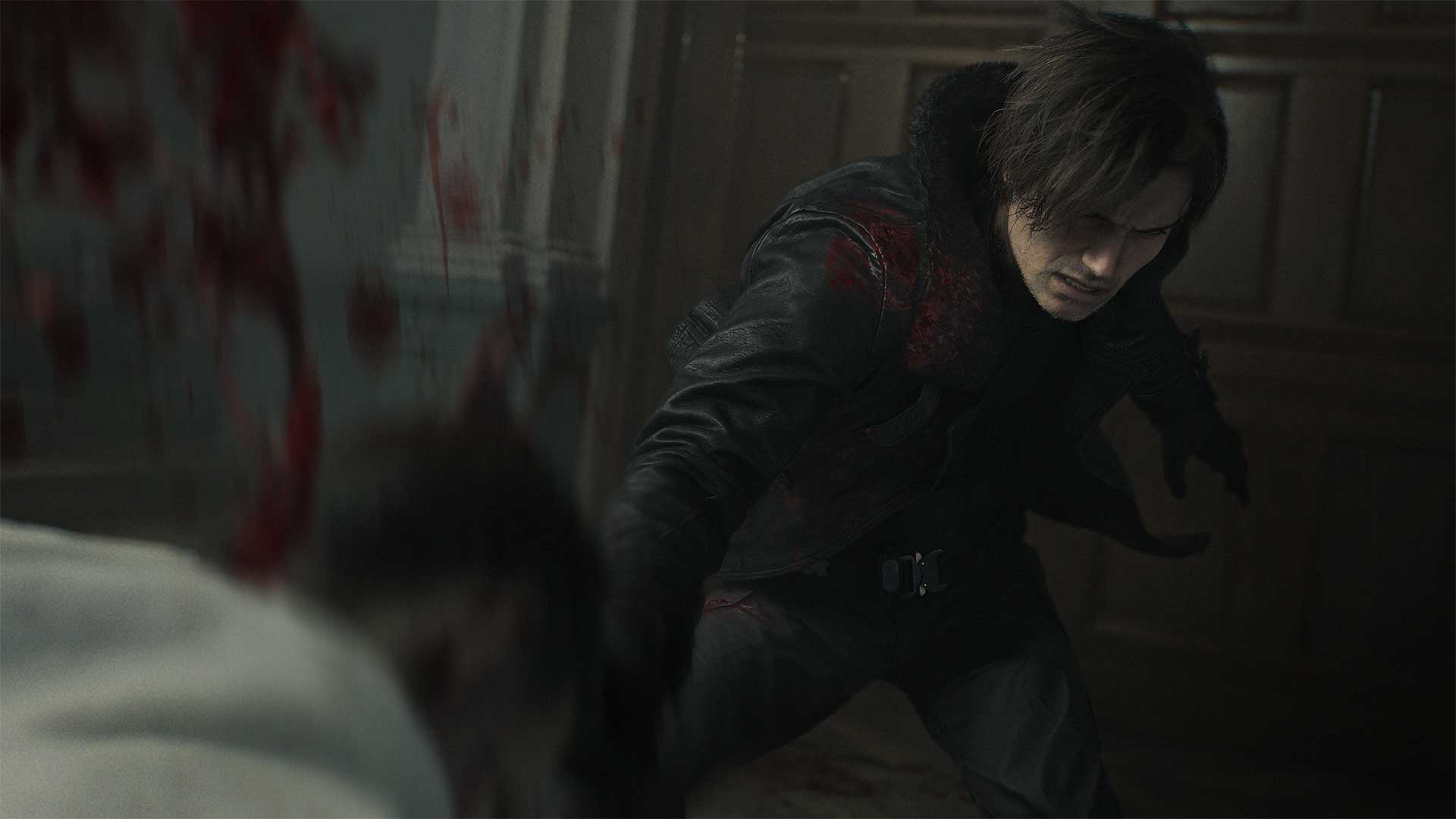
Leon and his trusty hatchet.
Since Leon’s reveal at The Game Awards in December, Capcom has been candid about the fact that his parts of the game will be far more action-heavy à la RE4. After all, it wouldn’t make sense for this grizzled survivor to be as frightened and vulnerable as Grace. It was ultimately a shrewd move, as periodically switching between Grace and Leon after cliffhanger, TV episode-esque endings lends Requiem a captivating rhythm. With a full arsenal that includes the likes of rifles, shotguns, and machine guns, playing as Leon feels like a reward for having guided Grace to survival for just a bit longer, your very own himbo super weapon that you get to briefly unleash on enemies that once utterly terrified you.
It’s reminiscent of RE4 in the best way, creating palpable tension through hordes of enemies and challenging you to analyze your threats in real-time and exercise crowd control while juggling your deadly, expansive loadout. This means that it’s once again important to shoot enemies in the leg or head, thus stunning them and leaving them open to a powerful melee attack. These moves now even have gloriously flashy contextual animations, like Leon brutally kicking an enemy’s head into a wall before crushing it in a dazzling pool of blood and gore that paints the surrounding environment.
But Requiem‘s biggest innovation is Leon’s hatchet, which works as an evolved version of his knife from the RE4 remake. As in that game, Leon can use his bladed weapon for basic slashes and even parries to incoming blows and projectiles, with durability wearing down each time. That said, the hatchet can’t fully break (unlike the RE4 knives), with Leon instead having to take a few moments to sharpen it to restore durability. It’s a smart way to ensure that combat maintains propulsive, especially since you’ll be fighting many powerful enemies.
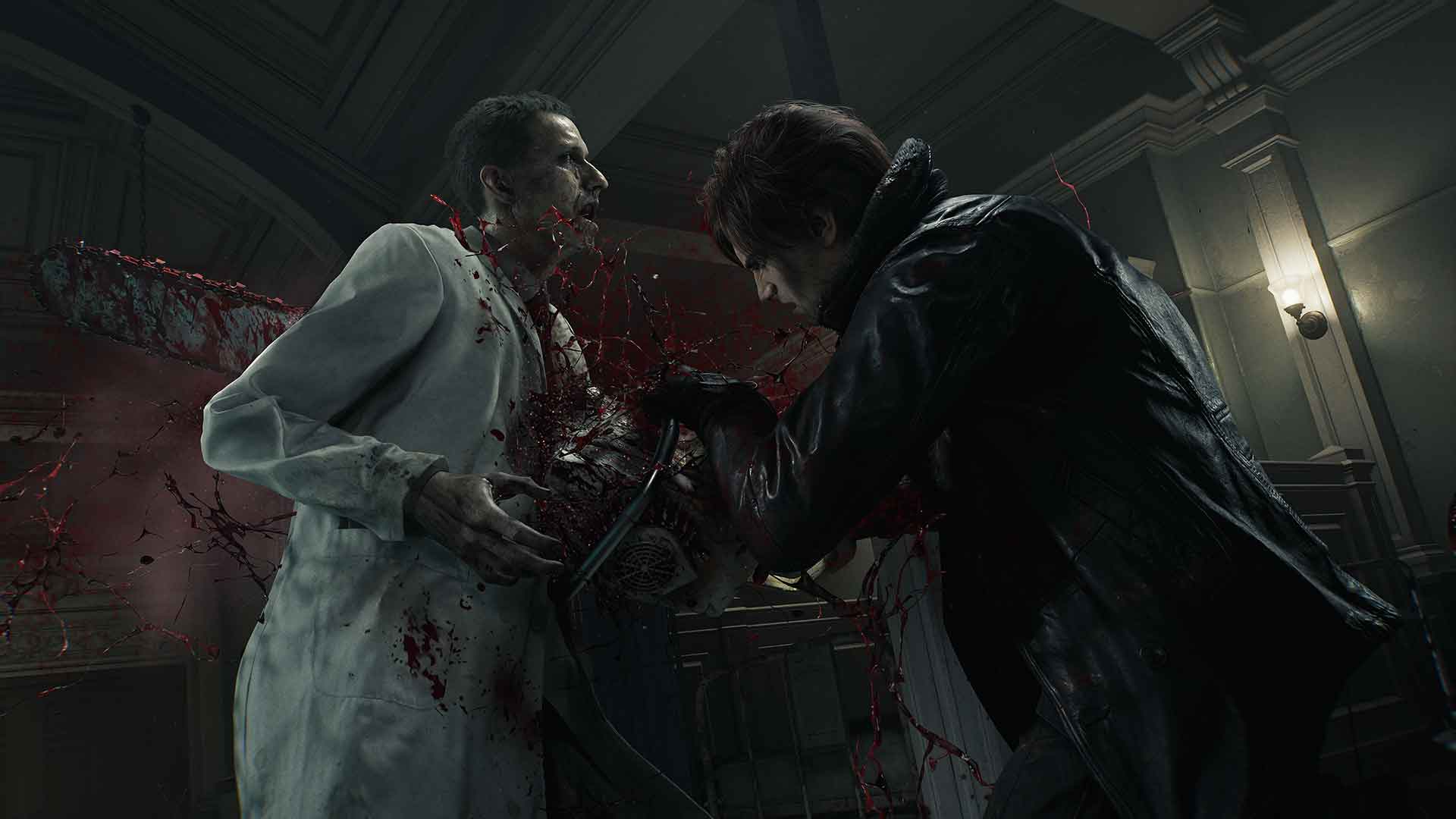
Dr. Salvador, eat your heart out.
These include those with chainsaws and other weapons, which Leon can actually use once he defeats them. With the chainsaw, Leon can hack his way through hordes like he’s in Dead Rising, while other items, like spears and propane tanks, can be picked up and tossed at enemies. All of this creates a balletic, crunchy rhythm to combat, as you’re constantly mixing up gunfire, stuns, hatchet attacks and throwable objects. It’s a level of cathartic brutality that meaningfully builds on the white-knuckle intensity of RE4, making Leon’s sections a genuine blast to play.
The problem with all of this action, though, is that it can sometimes dominate the entire experience. After the stellar Rhodes Hill section, you head to Raccoon City for the latter half of the game and largely control Leon, outside of some extended Grace sequences. Given how well Requiem had meticulously balanced the ebb-and-flow between terrifying survival horror and pulse-pounding combat, it’s somewhat disappointing to see how it’s discarded in those later hours.
Worse still, there are some pacing problems when you first arrive in Raccoon City, with Leon going on an extended quest to search for explosives through various abandoned buildings. While there’s a pervasive melancholy in rummaging through these ruins, this area goes on too long and drains the game of some of its otherwise strong narrative momentum. Thankfully, Requiem does stick the landing, bringing together all of its plot threads and gameplay mechanics into a stirring final area that does justice to both Leon and Grace. I just wish the road to get there was a bit smoother.
An unforgettable experience
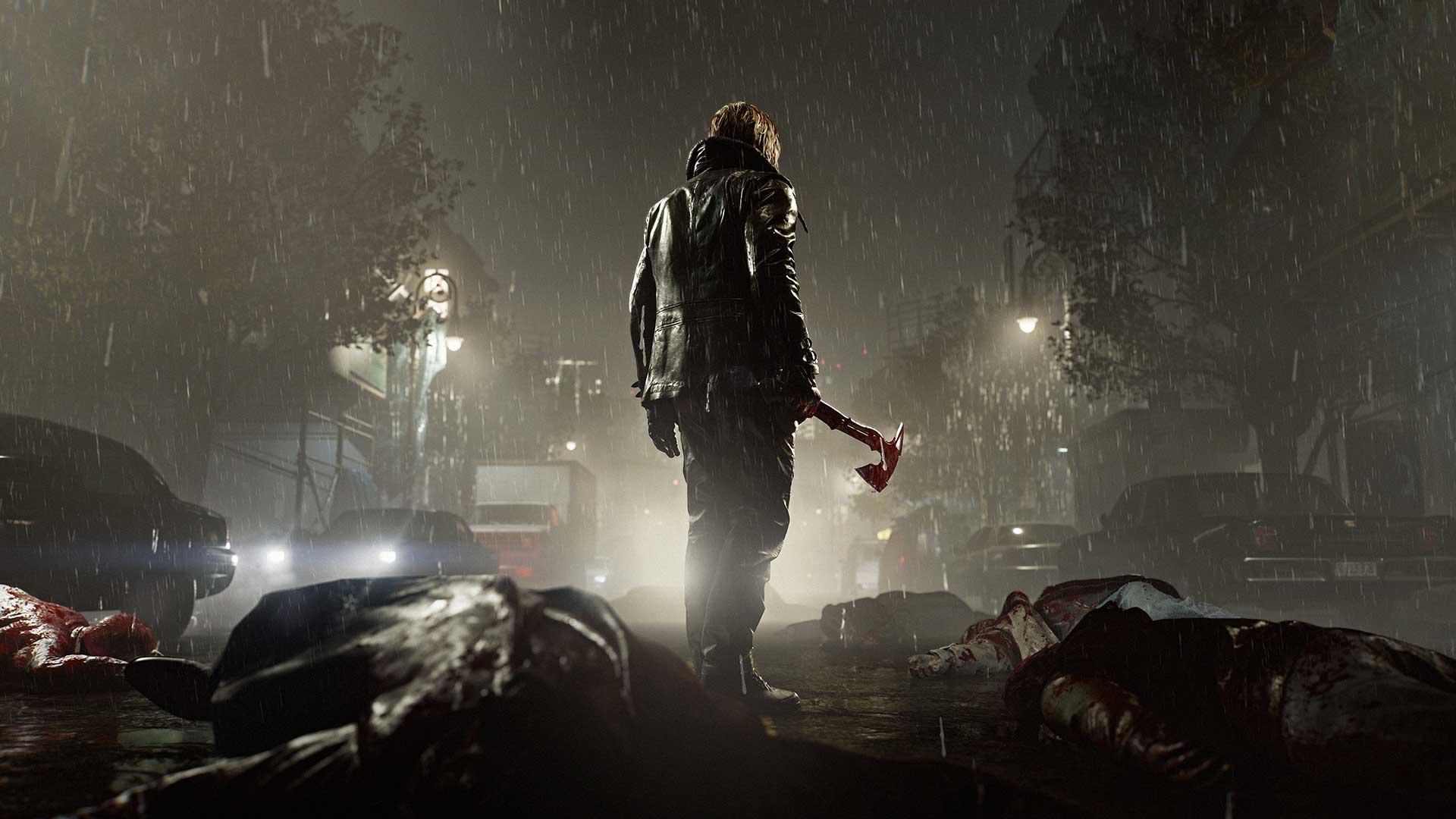
Nobody aura farms like Leon S. Kennedy.
In so many ways, Requiem feels like the ultimate Resident Evil game. It takes the numerous disparate survival horror and action elements of its predecessors and dials them both up to eleven. It gives us a stellar new lead and a best-ever depiction of a fan-favourite, both of which have intimate and heartfelt journeys that bring new levels of emotional depth to Resident Evil. And it brings together a plethora of the series’ long-running story threads to expand the universe in some truly fascinating ways.
Even if it doesn’t always come together in a fully cohesive manner, Requiem overall represents Resident Evil at its best, making it both a must-play and an early Game of the Year contender.
Resident Evil Requiem launches on February 27 on PS5, Xbox Series X/S, Nintendo Switch 2 and PC.
Image credit: Capcom
