
– BERLINALE 2026: Kosara Mitić’s blistering debut feature might stun viewers as she seeks to continue a long-overdue conversation on the quotidian nature of sexual violence
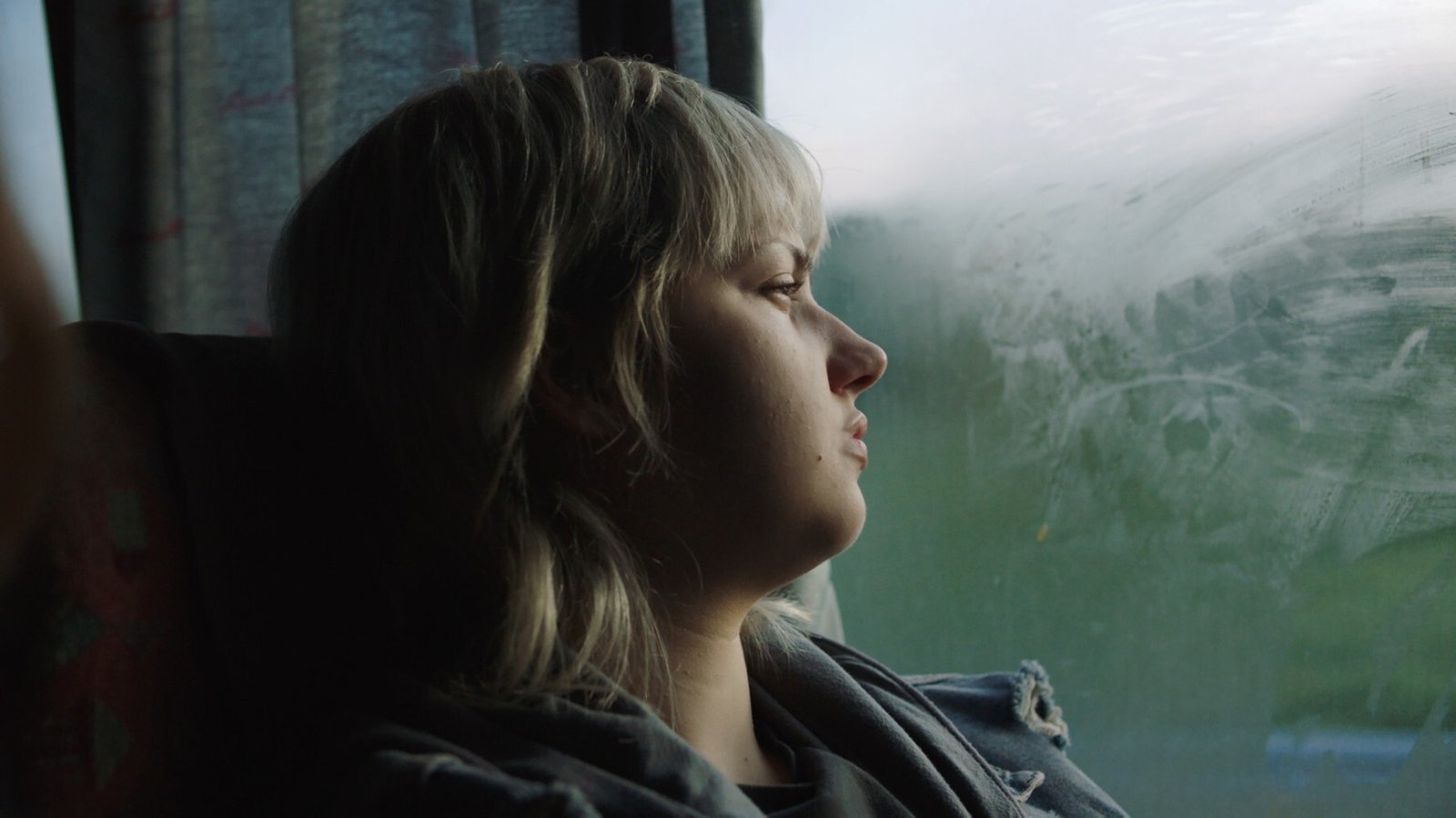
Eva Kostić in 17
Every so often, a news article about a sexual assault case gone to trial shakes us from our reverie – fury and outrage ensue, but then, everything quickly goes back to normal. “Normal” here, however, is the operative word, as a culture has been fostered around violence – and, more specifically, sexual violence – as an everyday occurrence. News reports inherently omit everything that doesn’t make it to that stage: those who are frightened into not speaking out or are socially disciplined into being ashamed. This is the reality of today, says Skopje-born director Kosara Mitić, in which we are constantly reminded of horrifying experiences but lulled into forgetting about them just as quickly. She brings her first feature, 17 [+see also:
interview: Kosara Mitić
film profile], co-written by Mitić and Ognjen Sviličić, to world-premiere in the Perspectives competition of the 2026 Berlinale, with the winner to be announced on the evening of the 21st.
Mitić’s protagonist is Sara (Eva Kostić), a 17-year-old girl who comes off as an outsider with her aloof personality, baggy clothing and hair. However, from the movie’s first moments, we are privy to what might have put Sara into this state of near-walking zombiehood: a sexual encounter months earlier with two teenage boys turns brutal as they assault her and laugh. Mitić does not hold back, leading the film to be potentially divisive in how it depicts sexual violence so vividly on screen from its first moments in the dark. Interestingly, the director says the accounts are taken from real-life cases shared by her actors (most of them non-professionals and drama students), a fact that, in some ways, makes 17 all the more disturbing – but also, arguably, an ethical way to capture and portray stories consensually.
After this first scene, the film takes place over two life-changing days on a school bus trip from North Macedonia to Greece, where the work ends as the group crosses the border into the latter. The young men on the trip, especially Filip (Dame Joveski), are menaces to everyone around them: demanding, entitled, manipulative and openly threatening. Meanwhile, the teachers are more concerned about getting everyone to the museum on the itinerary, but even they, too, give in to the whims of the class’s bossiest boys out of fear.
This behaviour makes viewers wonder how true to life it is, or whether it is hyperbolised for the movie. Yet 17 is lensed by Naum Doksevski in such a level-headed fashion and without cinematographic fanfare – handheld for much of it, right alongside Sara, as if she’s afraid to stray too far – that it’s impossible not to read it as a real account of how young men are encouraged to act and how the system allows this behaviour to thrive. When Lina (Martina Danilovska), a girl who wants to fit in, goes to a party in the hotel with popular girl Nina (Eva Stojchevska) and others, Sara tries to hold her back. The inevitable can be seen from a mile away, and yet the director still shows us all of what happens in the film’s most visually intense scene. We are witness to an act of excruciating violence in the same room where teens are happily drinking, smoking and playing video games, seemingly oblivious to what their classmate is suffering just metres away from their faces.
Once Sara intervenes in the violence, the bond between her and Lina is sealed forever into the feature’s second half. Yet the director doesn’t let up: the picture’s final sequence is so visceral and psychologically abrasive even without showing us much on screen, in part owing to the performance of Kostić as she experiences these moments alone.
Yes, 17 is a hard watch. But this is the reality, Mitić seems to say, so do not look away. Choosing to look away from a fictionalised scenario might mean you’ll turn away even faster from a real one.
17 is a production by North Macedonia’s Black Cat Production, co-produced by Serbia’s Art&Popcorn and Slovenia’s December. Paris-based Totem Films holds the rights to its world sales.
