
– BERLINALE 2026: An intercontinental story connecting characters from Canada and Ghana is at the core of Jérémy Comte’s ambitious, albeit uneven, debut film
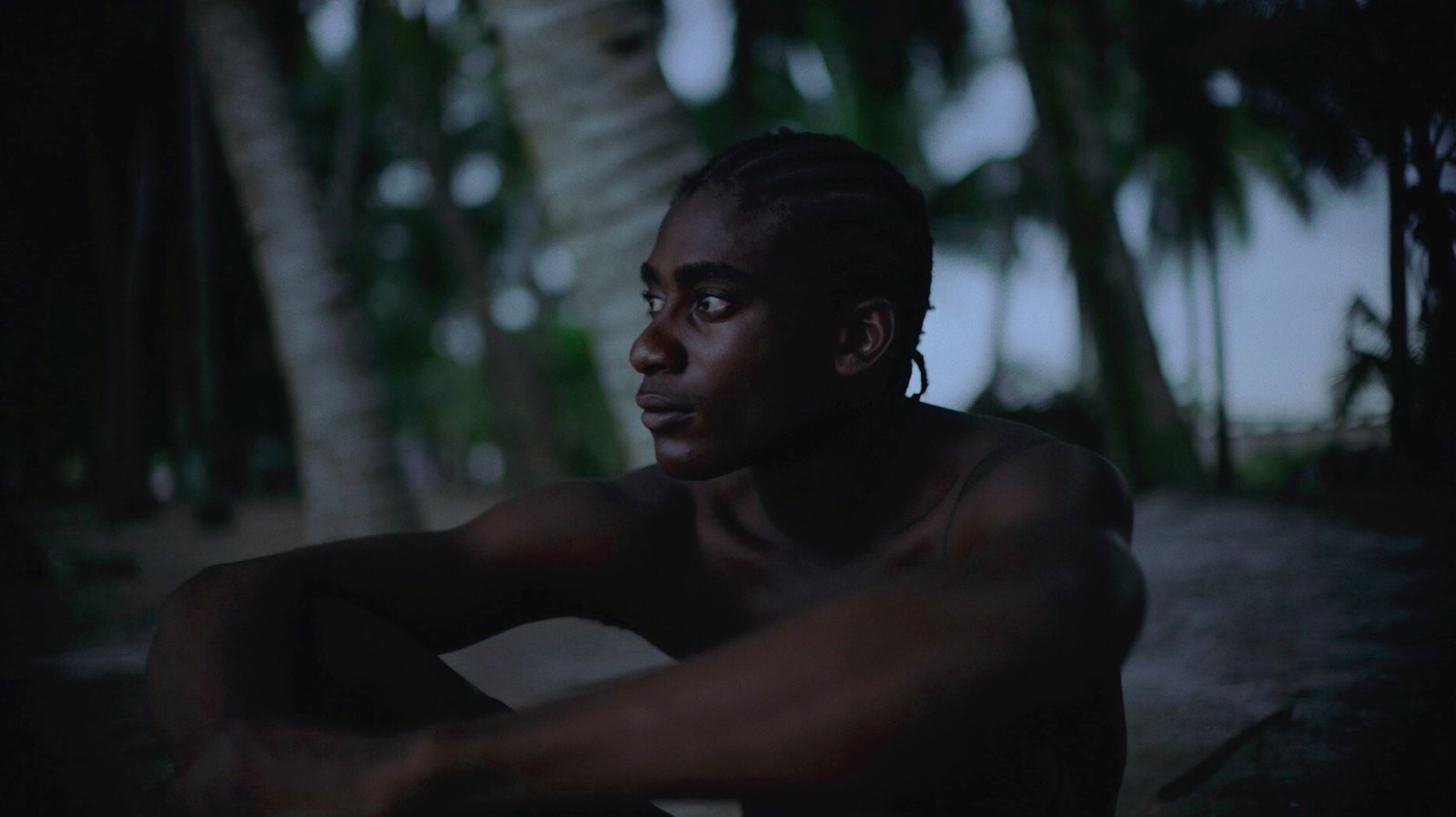
Daniel Atsu Hukporti in Paradise
When life is defined by absence, rather than presence, it’s easy to chase shadows and phantasmagorias, instead of something real and tangible – and thus possibly end up empty-handed. At least, that seems to be the overall concept in Paradise, the debut film by Jérémy Comte, showing in the Panorama section of the Berlinale. The director, who spent nearly a decade preparing the movie, connects characters from Canada and Ghana through a storyline that at times feels over-engineered. What he lacks in plot, he makes up for with intentions that come across as genuine: Comte doesn’t judge his protagonists or the cultures they come from. However, such symmetry also has its pitfalls, as when you talk about human needs in general, the psychological and emotional picture you end up with is equally general, without a strong authorial voice guiding it.
The story begins one night on the Ghanaian coast – the night is stylishly blue, the fog is mystical, and a spider walking along the beach signals danger. After teenager Kojo (Daniel Atsu Hukporti) loses his fisherman father to the sea, he joins an illegal group to make a living. He doesn’t sell drugs or guns, but his occupation – revealed later on in the story – is not exactly harmless. On the other side of the Atlantic, another fatherless teen, Tony (Joey Boivin Desmeules), is about to have his life altered. He leaves with his single mother, Chantal (Evelyne de la Chenelière), who is engaging in a long-distance relationship with a mysterious ship captain. Tony assumes – or rather hopes – that it’s his dad, whom he has never met. Soon, it becomes clear what connects this constellation of characters, and that, in the end, everyone has the same need for stability and connection, regardless of their socio-economic circumstances. The initial stereotypical picture – that people from developing countries need money first and foremost, while those from privileged backgrounds are looking for love – is nicely subverted by the end.
Comte executes his intentions ably, mixing dynamic scenes from the bustling streets of Accra with quieter character observations, aptly defining his characters through the music they listen to, the way they move in the frame and how they relate to others. Both Kojo and Tony strive for as much agency as they can get, their youth and lack of foresight often acting as their biggest adversary. Comte’s strong suit is also creating moody, stylish scenes of Ghana’s nights and rituals with a priest, although these moments at times feel clichéd – as if it weren’t possible to show Africa without a touch of exoticisation.
What is less clear in the film is its philosophical framework: neither Comte nor his co-writer, Will Niava, can decide what ultimately determines human fate: people’s own choices, the society they live in, or a mysterious force that takes the form of the ocean, fire and wind in the film. Then again, nothing is possible without motivation and ambition, and the road to this Paradise was clearly paved with both.
Paradise is a co-production involving Canada, France and Ghana. It was produced by Entract Studios, Ema Films, Constellation Productions, ARTE France Cinéma and I60 Productions. German outfit Global Constellation handles the world sales.
