
– Inka Achté playfully revisits a curious episode of collective escapism and national hysteria sparked by the runaway success of the daytime soap The Bold and the Beautiful in Finland
In the early 1990s, Finland experienced one of the deepest economic crises in its modern history. The collapse of the Soviet Union – an essential trading partner – triggered a recession that reshaped the country’s social fabric, bringing unemployment, uncertainty and widespread disillusionment. Against this bleak backdrop, an unlikely cultural phenomenon emerged: the extraordinary popularity of the US daytime soap The Bold and the Beautiful. In Soap Fever, Finnish director Inka Achté revisits this moment of collective escapism, exploring how glossy television melodrama became an emotional refuge for a nation in turmoil.
World-premiering in the International Competition of the Thessaloniki International Documentary Film Festival, the 78-minute documentary unfolds with a confident sense of rhythm and clarity. Achté builds her film largely around archival television footage and interviews with Finnish fans who experienced the early-1990s craze first-hand. The format itself is not especially adventurous: talking heads alternate with period clips capturing the astonishment surrounding the arrival of The Bold and the Beautiful actors in Finland, whose promotional tours triggered scenes of near-hysterical adulation.
Yet the pic’s strength lies less in formal experimentation than in its anthropological approach. Through testimonies and contextual material, Achté sketches a portrait of a society seeking emotional release. As unemployment surged and traditional community structures weakened, the daily ritual of watching the soap provided viewers with a sense of continuity and belonging. What might otherwise appear as a quirky footnote in television history emerges as a revealing case study on how escapist entertainment can fulfil deeper psychological needs during periods of collective hardship.
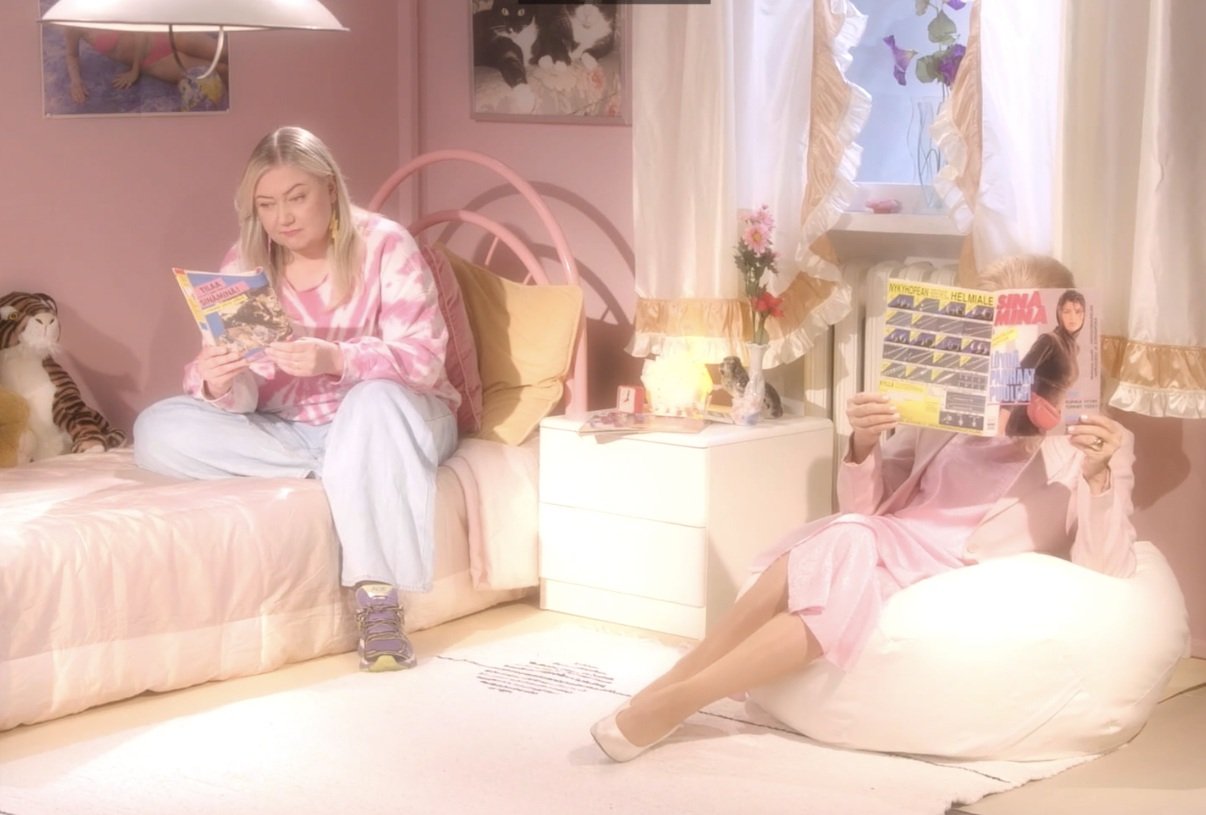
Visually, the documentary adopts a restrained but thoughtful aesthetic. Several interviews are staged in what resembles a child’s bedroom from the late 1980s or early 1990s – a tasteful, subtly nostalgic setting that evokes the formative years of many participants. The choice reinforces how deeply the series became woven into everyday life. Magnus Svensson’s editing keeps the film brisk, ensuring that archival material and testimonies interact fluidly, rather than simply illustrating one another.
A particularly astute decision concerns the role of the US actors. Although footage from the soap and its publicity tours appears throughout, the performers themselves remain firmly in the background. The absence of present-day interviews ultimately proves beneficial: their star power might easily have overshadowed the film’s real subject – namely, the Finnish audiences that projected their hopes and fantasies onto the glamorous characters. Preserved in archival images – young, luminous and somewhat mythologised – the actors retain the aura that once fuelled the frenzy.
Beyond nostalgia, Achté situates the craze within a broader historical framework. The documentary draws connections between the soap’s popularity and Finland’s geopolitical and cultural position at the time. Before joining the European Union in 1995, and long before the era of low-cost airlines, the country remained comparatively isolated from global popular culture. For many Finns, the arrival of US television stars felt like a rare and electrifying brush with the wider world.
The film also touches on other facets of Finnish society during the period, from the national obsession with ice hockey to the lingering fascination with the United States as a symbol of glamour and possibility. These intersections enrich the narrative, suggesting that the soap’s success was not merely about entertainment, but also about aspiration, identity and the longing for connection beyond national borders.
While the analysis sometimes remains surface-level, rarely probing its interviewees’ memories in great depth, the film nonetheless captures the emotional atmosphere of the period with clarity. What emerges most vividly is the sense of shared experience: a moment when millions of viewers gathered daily around the same fictional world.
Soap Fever was produced by Finland’s napafilms together with Sweden’s Story AB. Raina Films handles its world sales.
