
– Thanasis Neofotistos’s debut feature blends coming-of-age themes with magical realism, tracking a teenager accused of carrying a curse in the northern Greek mountains
Giorgos Karydis in The Boy with the Light-Blue Eyes
Following shorts at Venice and Locarno, Greek filmmaker Thanasis Neofotistos has premiered his long-gestating debut feature, The Boy with the Light-Blue Eyes, at SXSW London, marking a lower-profile launch than expected. Uneasy and unconvincing, but laden with moments of visual vibrancy and dynamism, the film teeters between artistic success and failure with each new scene that passes – yet, its gusto and originality command attention, especially bearing in mind the conservatism we see in arthouse debuts of this type.
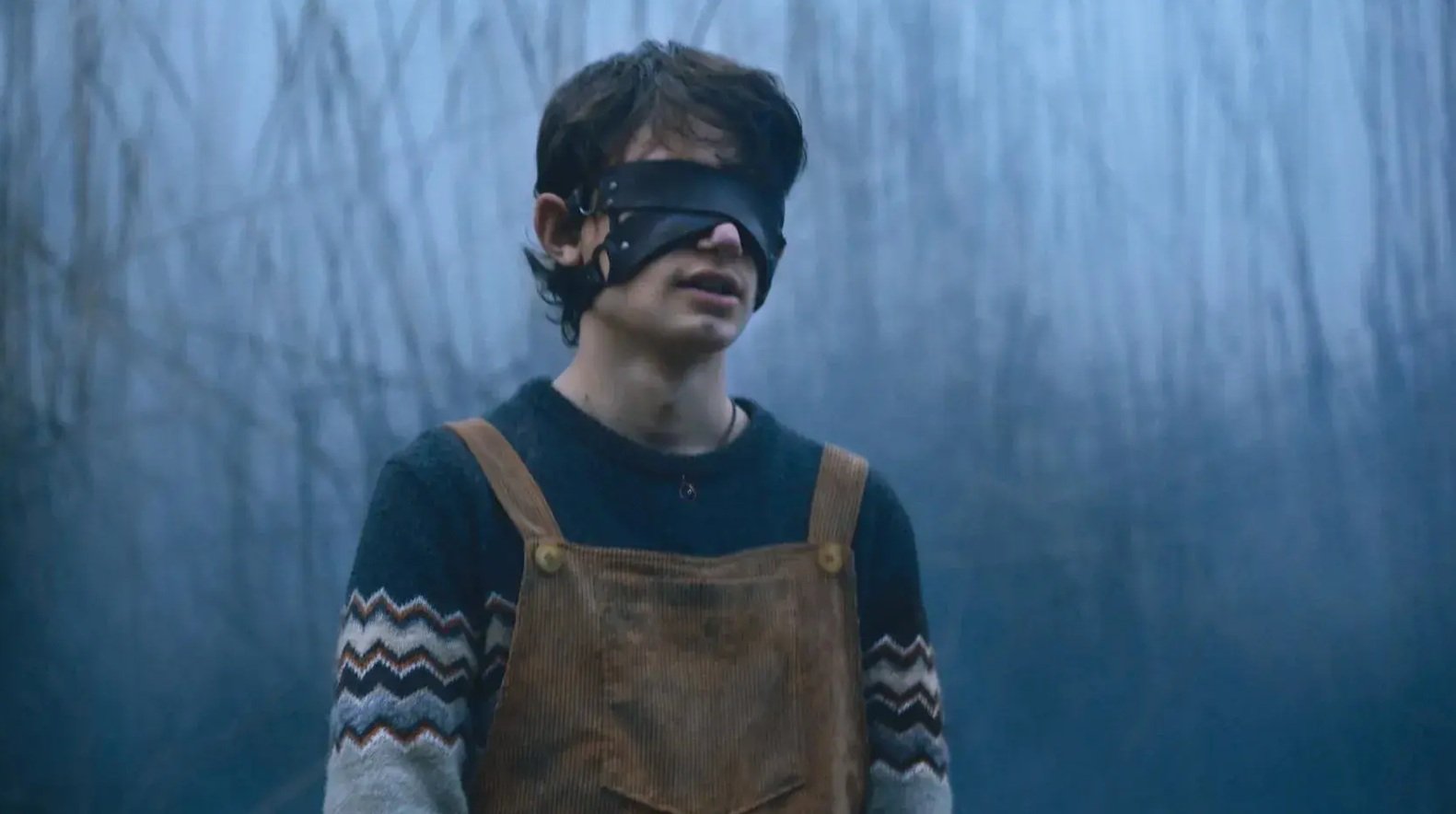
Inspired by the filmmaker’s difficult upbringing in Epirus, a mountainous area of Greece close to the border with Albania, he allegorises his discovery, and the external suspicion, of his queerness through lead character Petros (Giorgos Karydis), who’s forced by his mother, Lemonia (Syrmo Keke), and grandmother, Margarita (Sofia Filippidou), to wear ungainly, protective goggles to counter his eyes’ alleged high photosensitivity. With Margarita acting as a matriarchal leader to the small village, the community is still under the sway of archaic superstitions like the “evil eye”, and it’s immediately clear that Petros’s own blue eyes are perceived as an uncanny threat. Petros is also building an intimate friendship with Aemon (Pablo Soto), a local kid his age, and his growing realisation of his queer identity is thematically linked by Neofotistos and co-screenwriter Grigoris Skarakis to the “othering” he faces as a result of the village’s bizarre folk beliefs.
Neofotistos forgoes subtlety in his storytelling by attaching himself so closely to Petros’s travails, following him on a scarcely explained exploratory boat adventure through a swamp and towards a wind turbine, which Margarita also turns the townspeople against, seeing this modern power source as justification for them to depart the area altogether. The exterior locations and even the natural light are bathed in blue, evoking Petros’s distorted perception from the goggles, and also the psychic pain of nearly everyone he meets, bar Aemon, considering him a threat. As the film reaches its final act, direct references to the Greek myths of Medusa and Oedipus show Neofotistos attempting to work in a familiar national lineage, granting the narrative a sense of catharsis and fatalism.
Bookended with the frame stretching to 1.85:1 widescreen, but settling in Academy ratio for the main portion, The Boy with the Light-Blue Eyes shows a kinship with Xavier Dolan’s Mommy, which tried a similar visual gambit in its exploration of an unruly queer coming of age, whilst its feverish magical-realist touches and remote setting also show the influence of Alice Rohrwacher’s work. The screenwriting has little of the latter’s sophistication – or its class analysis, for that matter – but Neofotistos’s visuals and tonal control exhibit rare talent, allowing its fantastical imagery to have teeth and avoid any semblance of kitsch.
The Boy with the Light-Blue Eyes is a co-production by Croatia, Cyprus, Greece, North Macedonia, Romania, Serbia and the USA, staged by Argonauts Productions. Atalante, Y.E. Films, Sektor Film, Studio Corvus, Sense Production, Luna Film and ERT SA also co-produce. Gersh handles its US sales.
