
– BERLINALE 2026: In her female-centred narrative, Sophie Heldman zooms in on a judicial case emblematic of the oppression exerted by social conformity against aspirations to difference
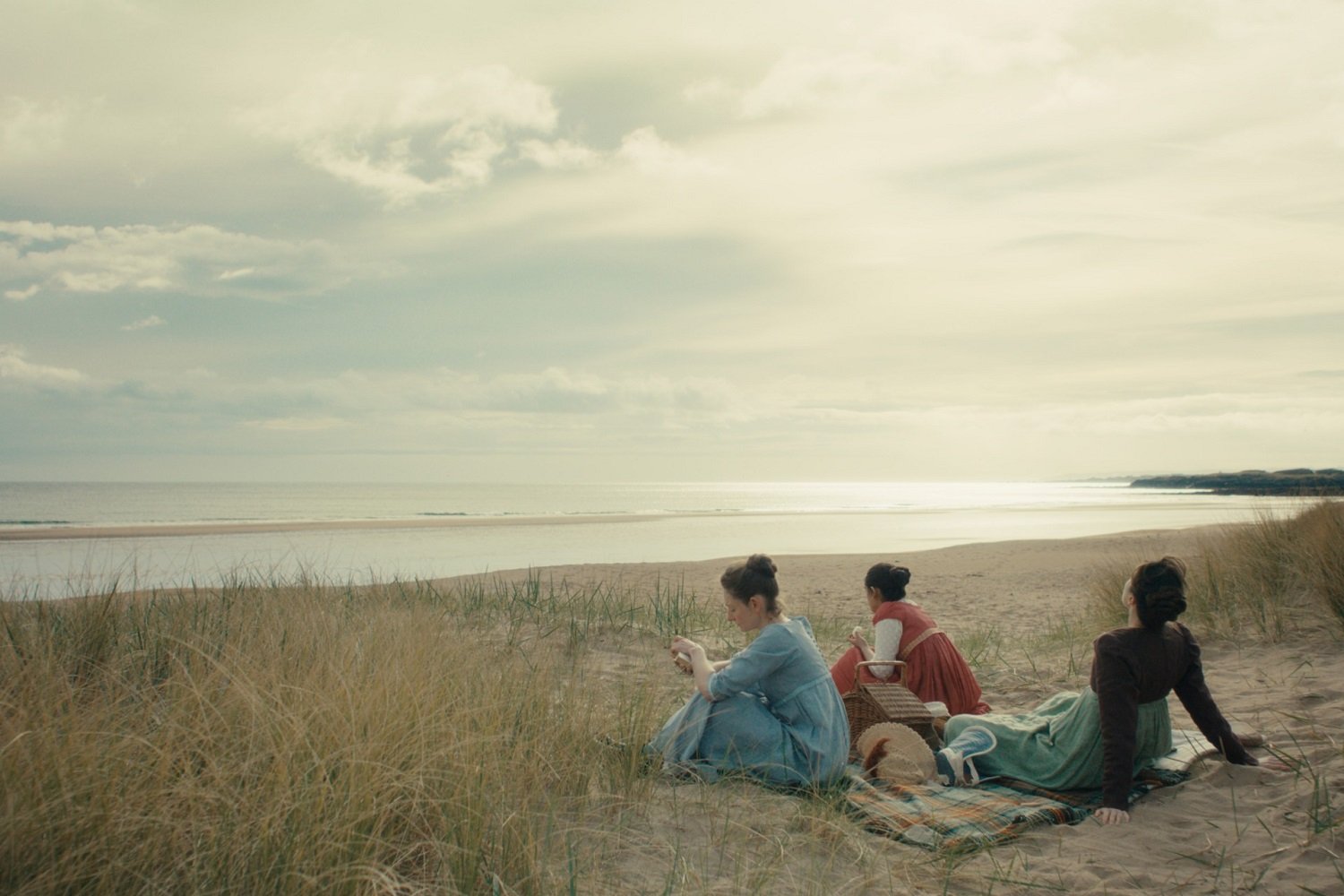
Flora Nicholson, Mia Tharia and Clare Dunne in The Education of Jane Cumming
“We have done nothing wrong.” It is an unflinching true story from the early nineteenth century – one that still resonates with striking clarity today – which Sophie Heldman brings back to the surface with the excellent The Education of Jane Cumming, unveiled in the Panorama section of the 76th Berlinale. At once a delicate romantic narrative, an exploration of the roots of an illuminating legal case and an intimate portrait of a society caught between rigid rules strictly dividing social classes and the Romantic era’s hopes of female emancipation, the German filmmaker’s second feature succeeds – through superbly controlled minimalism – in revealing multiple facets of a tableau that powerfully reminds us how much women have had, and still have, to struggle against adversity and obscurantism that condemns difference to the stake.
“Why are two women engaged in business together? – We are friends; we combine our strengths in order to offer an excellent education for young ladies.” We are in Scotland, in 1810. Former governesses bearing the finest references, Jane Pirie (Flora Nicholson) and Marianne Woods (Clare Dunne), have opened, in Drumsheugh in the countryside near Edinburgh, a boarding school for young ladies of good standing. The teaching is modern (including science and the benefits of nature), yet it does not neglect the customs of a highly conventional milieu (“Greek is all very well, but one must also know the dance steps”), as the school must remain financially viable.
Three new pupils then arrive, accompanied by their grandmother, the very wealthy and influential Lady Cumming Gordon (Fiona Shaw). Among them stands out a particularly singular case: Jane Cumming (Mia Tharia), born of an affair in colonial India involving the family’s late son. Ostracised by her classmates, the troubled 15-year-old girl is taken under the protective wing of the two teachers, with Lady Cumming Gordon’s blessing – she is keen to provide the girl with a proper education without granting her the same status as her other granddaughters. Yet this close relationship will lead to tragic consequences, with misunderstandings gradually turning into revelations…
Adapted by the director and Flora Nicholson from Lillian Faderman’s book Scotch Verdict: Miss Pirie and Miss Woods v. Dame Cumming Gordon, which had already inspired the stage play The Children’s Hour (brought to the screen in 1961 by William Wyler), The Education of Jane Cumming is a film that subtly approaches what, in the final stretch of the narrative, becomes the first defamation trial brought by women against an accusation of lesbianism. A very gradual narrative development that gives pride of place to excellent actresses, the modest, gentle and sensitive emergence of restrained feelings, and a sharp description of a society that is ruthless when reputation is at stake, a subject that remains highly topical. A compelling whole that the filmmaker handles with considerable directorial skill, avoiding the stiffness often associated with period reconstructions, without sacrificing realism and lending a subtle air of modernity to a case that Scotland’s male-dominated justice system kept hidden from the public for 100 years.
The Education of Jane Cumming was produced by German company Heimatfilm GmbH + CO KG, and co-produced by Swiss company Dschoint Ventschr Filmproduktion and Scottish company Sylph Productions. Global Constellation handles international sales.
(Translated from French)
